How Long Does Burnout Recovery Take? What Seven Years of Swedish Data Show
Evidence Review · The Reading Room, Vol. 111 · 9 min read · what seven years of follow-up in Sweden found, and why the honest answer is longer than a holiday and shorter than you fear
“How long does burnout recovery take” is usually typed by a woman who has just taken a week off, felt no different, and quietly panicked. The best long-term data come from Sweden, where severe burnout is diagnosed and followed for years. The numbers are sobering in one direction and reassuring in another, and both matter.
The short answer: recovering from burnout takes longer than most people expect, and how long depends on how deep it went. Milder exhaustion often eases over weeks to months once the load changes. Severe, clinically diagnosed burnout takes much longer: in a Swedish study of 217 former patients, about a third were still judged clinically exhausted seven years later, yet 87% were not on sick leave.¹ Recovery is real, usually uneven, and rarely a straight line.
Based on the published research of
Kristina Glise, M.D., Ph.D.
Senior physician and researcher, Institute of Stress Medicine, Region Västra Götaland, and the University of Gothenburg; lead author of “Long-term follow-up of residual symptoms in patients treated for stress-related exhaustion,” published in BMC Psychology in 2020.
Institute of Stress Medicine profile · University of Gothenburg · ResearchGate
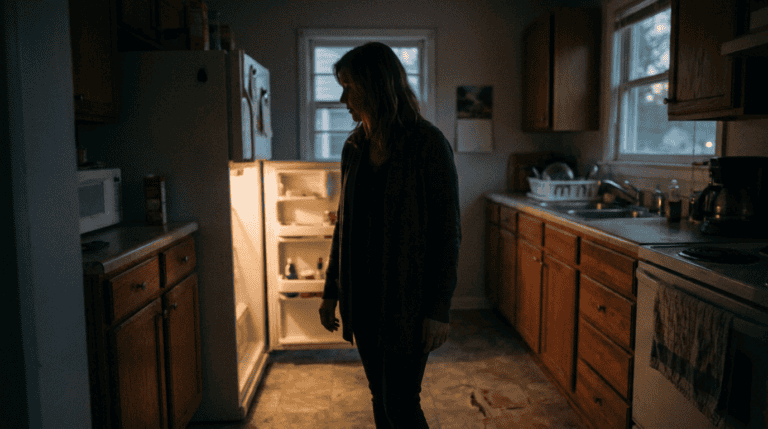
She booked the week in the Algarve in March, when things were at their worst, and told herself she would come back a different person. She read two novels. She slept nine hours a night. On the flight home she felt, for the first time in months, almost normal. By Wednesday of the following week she was exactly where she had been before she left, and something about that frightened her more than the tiredness ever had. If a week off did nothing, what would?
That question is the one this article answers, as honestly as the research allows.
The skim version
- Sweden diagnoses severe burnout as “exhaustion disorder” and has followed patients for years.
- Of 217 former patients, 74% of them women, almost half still reported fatigue seven years after first seeking care.¹
- 73% reported decreased tolerance for stress at seven years, and 43% memory problems.¹
- At the same time, 87% were not on sick leave: most had returned to working life.¹
- Interviews with 38 people six to ten years on described recovery as “a long and rocky road,” with recovery activities needed at every stage.²
Jump to: Why a holiday doesn’t fix it · What seven years of data show · What recovery actually looks like · Where you probably are · Matching rest to the stage · Questions women actually ask
Why didn’t a week off fix my burnout?
Because burnout is not a sleep debt. A week off repays tiredness, and tiredness is only one of burnout’s three dimensions. The other two, pulling away from the work in your head and feeling that what you do no longer matters, are tied to the conditions of the job, and those conditions were waiting for you on Monday morning. We set out the three dimensions in tired is not the test.
The Algarve week was not wasted. It showed you something useful: that rest alone was not enough, which means the thing to change is what you return to, as well as how much you rest. That is uncomfortable information. It is also the information that makes recovery possible.
How long does burnout recovery take, according to the research?
The clearest long-term evidence comes from Sweden, where severe burnout is formally diagnosed as exhaustion disorder and patients are followed over time. In 2020, Kristina Glise and colleagues at the Institute of Stress Medicine in Gothenburg, including Ingibjörg Jonsdottir, published a follow-up of 217 former patients, 74% of them women, assessed at two, three, five and seven years after treatment.¹
The sobering part first. Seven years after seeking care, almost half still perceived fatigue. 73% reported a reduced tolerance for stress. 43% reported memory problems, and many had disturbed sleep. About one in three was still clinically judged to have exhaustion.¹
Now the part that is easy to miss. At seven years, 87% were not on sick leave.¹ The large majority had gone back to working life. So the picture is not of people who never recover. It is of people who recover enough to live and work, often while carrying some lasting sensitivity, particularly to stress, that asks to be managed rather than ignored.
If recovery is going to depend on what you return to, it helps to see exactly what that is. The Quiet Audit lays out everything you are carrying, at work and outside it, in ten minutes. Start here.
What does recovery from burnout actually look like?
A 2024 study from Umeå University gives the texture that numbers cannot. Researchers including Hanna Malmberg Gavelin interviewed 38 people, average age 52, 32 of them women, six to ten years after they had been treated for exhaustion disorder.² Their accounts fell into three themes.
“A long and rocky road.” Recovery went up and down rather than steadily up. Poor working conditions and caregiving duties held people back; changes at work, supportive relationships and reduced stress helped them forward.²
“Recovery activities are needed every step of the way.” What helped changed over time. Early on, people needed long periods of low-effort recovery. Later, shorter and more active recovery worked better.²
“Reorienting to a new place.” Some symptoms lingered, and understanding and accepting that changed functioning was part of building a meaningful life afterwards.²
The second theme is the most practical thing in this article. It explains why so much burnout advice misfires: a woman in the early stage is told to take up running, and a woman further on is told to rest, when each needs roughly the opposite.
| Heavy tiredness, still coping | Severe, diagnosed burnout | |
|---|---|---|
| Typical picture | Exhausted but working, weekends lost to recovery | Unable to work, marked cognitive and physical symptoms |
| Usual time frame | Weeks to months, once the load changes | Often years, with lasting stress sensitivity for many¹ |
| What helps first | Reducing load and protecting daily recovery time | Medical care, sick leave, long low-effort recovery² |
| What helps later | Changing the parts of the job that caused it | Shorter, more active recovery; work adjustments² |
| Where the evidence comes from | Mostly inferred; few long-term studies | Swedish clinical follow-ups¹ ² |
So how long will mine take?
It depends on where you are, and it is worth being honest that the best data describe the severe end. Most women reading this are still working, still performing, and running on far too little. That is real burnout territory, but it is not the same as being signed off work for months, and there are fewer long-term studies of it.
For that middle ground, a reasonable expectation is weeks to months of steady improvement once something in the load genuinely changes, and very little improvement if nothing does. If you are well past that point, if you have been unable to work, if concentration and memory have gone, or if the flatness reaches beyond the job, the Swedish data are the relevant ones, and the right first step is a doctor. The sentence to take in: “I think I’m severely burned out. I’m exhausted, I can’t concentrate, and rest isn’t helping. I’d like to be assessed properly.” There are also medical causes that mimic burnout, which we set out in is this burnout, or is something actually wrong with me.
How to recover from burnout: what speeds it up
Two things, in the research. Changing the conditions that caused it, and giving recovery its own daily space, matched to the stage you are in.²
The practice is a daily recovery block, and its content depends on how depleted you are. At the depleted end, it is twenty minutes of genuinely low-effort recovery, arriving at the same time each day: after you get in from work, before anything else starts. Sitting in the garden. A bath. Lying down with the radio. Nothing with a goal. As you improve, the block can become shorter and more active: a walk, a swim, twenty minutes of something absorbing. The rule is simply to notice which you need, rather than doing what the internet says a recovering person should do.
The other half is harder and matters more. Pick one condition at work, from the burnout research’s list of workload, control, reward, community, fairness and values, and change one thing about it. Without that, the daily block is keeping you afloat in the same water. With it, you are slowly moving towards the shore.
If what stands between you and time off is the belief that you can’t be spared, that has its own piece: the vacation you didn’t take.
Questions women actually ask about this
How long does it take to recover from burnout?
It varies with severity. Milder burnout often eases over weeks to months once the load changes. Severe, clinically diagnosed burnout can take years: in a Swedish study, about a third of patients were still clinically exhausted after seven years, though 87% were not on sick leave.¹
What are the stages of burnout recovery?
There is no single agreed set of stages. Long-term interviews describe recovery as uneven, with early periods needing long, low-effort rest and later periods benefiting from shorter, more active recovery, alongside gradually accepting any lasting changes.² Lists of fixed stages online are organising ideas rather than research findings.
Can you fully recover from burnout?
Many people recover well enough to return to full working life, and in the Swedish follow-up most had. A substantial share carried some lasting symptoms, most often reduced stress tolerance.¹ Full recovery is possible for many; for others, recovery means a good life with a new awareness of limits.
Why do I still feel burned out after a holiday?
Because a holiday repays tiredness but does not change the work conditions behind burnout. The detachment and sense of futility that define burnout are tied to the job itself, so they tend to return with it. Recovery usually needs both rest and a change in what you go back to.
Should I quit my job to recover from burnout?
Not necessarily. Many people recover by changing conditions within a job, and the Swedish data show most former patients returning to work.¹ Leaving is one option among several. Deciding while severely depleted is hard, so it often helps to stabilise first and decide second.
If you want to see the full pattern of burnout that looks like coping from the outside, and what it tends to cost, our burnout guide is the place to start: everyone keeps telling you how well you’re handling this.
The one move
Tomorrow, when you get in from work, take twenty minutes of recovery before anything else starts, matched to how depleted you are. Then choose one condition at work to change this month.
If you would like to see everything you would be returning to before deciding what to change, the Quiet Audit lays it out in ten minutes. Start here.
What this article is built on
Long-term follow-up of residual symptoms in patients treated for stress-related exhaustion. Glise K, Wiegner L, Jonsdottir IH. BMC Psychology, vol. 8, 2020. The source for the 217-patient, seven-year follow-up. Free full text.
“Recovery activities are needed every step of the way”: exploring the process of long-term recovery in people previously diagnosed with exhaustion disorder. Aronsson I, Stigsdotter Neely A, Boraxbekk C-J, Eskilsson T, Gavelin HM. BMC Psychology, 2024. The source for the three themes. Free full text.
Who else has measured this
Ingibjörg H. Jonsdottir, Ph.D., Professor, Institute of Stress Medicine, Region Västra Götaland, and the University of Gothenburg. Senior author of the seven-year follow-up; her research covers stress-related exhaustion and its long-term course. Institute of Stress Medicine profile · ScienceDirect author page
Hanna Malmberg Gavelin, Ph.D., researcher, Umeå University. Senior author of the 2024 interview study on long-term recovery; her work covers cognitive function and rehabilitation in exhaustion disorder. Umeå University profile · ResearchGate · ORCID via DiVA
About the researcher
Kristina Glise, M.D., Ph.D. is a senior physician and researcher at the Institute of Stress Medicine in Region Västra Götaland and is affiliated with the Department of Public Health and Community Medicine at the University of Gothenburg. Her research covers the symptoms, course and treatment of stress-related exhaustion. She is lead author of the 2020 seven-year follow-up of patients treated for exhaustion disorder. She has not reviewed this article and has no connection to Blue Leaf Journal. Institute of Stress Medicine profile · University of Gothenburg · ResearchGate · LinkedIn
On the research. Both studies followed people with severe, clinically diagnosed exhaustion in Sweden, which has a formal diagnosis and generous sick leave. Their results describe the severe end of burnout and may overstate how long milder cases take. The seven-year study lost some participants along the way, and the interview study is qualitative by design.
Disclosure
This article is informational and reflects published research. It is not a substitute for speaking with a qualified physician or therapist. Informational, not medical advice. See your clinician.
Blue Leaf Journal is not staffed by clinicians. We read published research and translate it into plain English.
We have no affiliation with, and no endorsement from, Dr. Kristina Glise, Lilian Wiegner, Dr. Ingibjörg H. Jonsdottir, Ingela Aronsson, Dr. Anna Stigsdotter Neely, Dr. Carl-Johan Boraxbekk, Dr. Therese Eskilsson, Dr. Hanna Malmberg Gavelin, the Institute of Stress Medicine, the University of Gothenburg or Umeå University. Naming their work is citation, not partnership.
Every figure was checked against the source listed in the references on 27 September 2026. If you find an error or a broken link, write to editor@blueleafjournal.com and we will correct it and date the correction.
References
1. Glise K, Wiegner L, Jonsdottir IH. Long-term follow-up of residual symptoms in patients treated for stress-related exhaustion. BMC Psychology. 2020;8.
2. Aronsson I, Stigsdotter Neely A, Boraxbekk C-J, Eskilsson T, Gavelin HM. “Recovery activities are needed every step of the way”: exploring the process of long-term recovery in people previously diagnosed with exhaustion disorder. BMC Psychology. 2024.
Read this next
If you are not yet sure whether what you have is burnout or a very heavy season, the next piece gives you the three questions the research actually uses to tell them apart: am I burned out, or just exhausted.
Written by Tomasz Nowak for Blue Leaf Journal.