
The Driveway Pause: The Minutes Before the Second Shift Starts
Load · The Reading Room, Vol. 69 · 7 min read · the second shift, named, and the ninety-second threshold breath
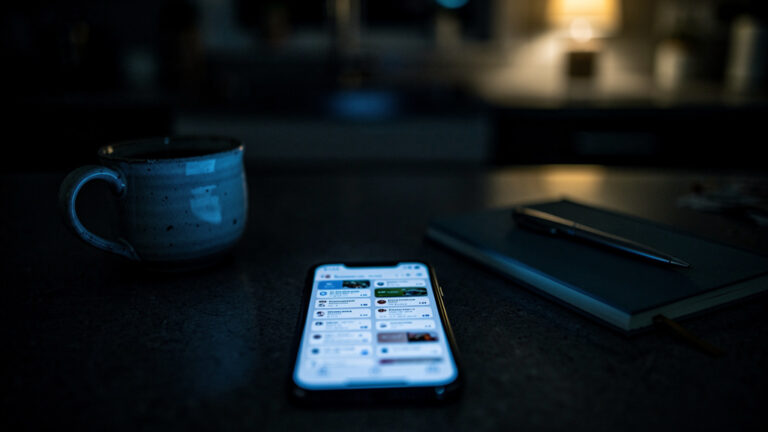
The engine’s off. The podcast’s still playing because you haven’t touched the dial. Through the windshield the porch light is on, someone already knows you’re home. You don’t move yet. Keys in your lap, bag on the passenger seat, and for a few minutes, you just sit there, not going in.
You’re not avoiding anyone. You couldn’t say what you’re doing, except that the second that door opens, the second shift starts.
The short answer: sitting in the car before going inside is a real, well-documented pattern researchers call a micro role transition, a brief pause people take between one role and the next when there’s no formal boundary between them.¹ It isn’t avoidance. It’s the only transition ritual most days actually leave you.
Key takeaways
- Sitting in the car before going inside is a documented “micro role transition,” not avoidance or a red flag.¹
- The brain doesn’t switch roles instantly. It needs a buffer to close one and open the next, especially when the two ask completely different things of you.¹
- What sociologists call “the second shift” is real: paid work followed by a second, unpaid shift of household and caregiving labor that often lands hardest on women.²
- How you spend the pause matters. Scrolling or rehashing a hard meeting tends to drain you further; a few minutes of quiet or a short breathing count tends to reset you.
- The whole practice is three breaths, on purpose, before the door opens.
In this article: Why the pause happens · The second shift, named · The threshold breath · FAQ
Why does sitting in the car before going inside actually help?
Because you’re not just changing location, you’re changing roles, and roles don’t hand off instantly just because you turned off the engine. Organizational researchers who study this call it a micro role transition: a small, everyday boundary-crossing between one identity, employee, manager, the one who caught the error, and another, the one who’s about to ask how everyone’s day was while still holding the first one in her chest.¹ Work has no clean edge anymore for most people. No shift bell, no locker room, no commute long enough to do the job on its own. So the brain finds its own edge: a few minutes in a parked car, engine off, before the door opens.
The pause isn’t dodging what’s inside. It’s closing a loop the workday didn’t close on its own: the unanswered email, the thing you’ll fix tomorrow, the version of you that was performing competence for eight straight hours. Researchers describe this kind of everyday boundary work as something most people do without ever naming it, a private ritual squeezed into whatever gap the day happens to leave.¹ Yours happens to be a driveway.
Notice what the pause is not. It’s not the fifteen minutes you spend scrolling in the parking lot at lunch, and it’s not collapsing on the couch the second you’re inside with the door still swinging shut behind you. Both of those are real, and neither one is doing the same job. A lunch scroll is an escape from the first shift while you’re still in it. A collapse on the couch is running the second shift on empty because nothing closed out the first one. The driveway pause sits in the gap between the two, on purpose, before either shift claims you.
What is “the second shift,” and why does it make the pause heavier?
Definition: the second shift is a term from sociology for the unpaid work, household management, childcare, emotional labor, that begins the moment paid work ends, disproportionately carried by women even in households where both partners work full time.
It’s worth sitting with how ordinary this term has become without the underlying arrangement changing much. Plenty of women can define “the second shift” instantly, the way you’d define a word from your own job. Fewer have had the conversation at home about what redistributing it, even slightly, would actually look like this month. Naming a pattern is not the same as renegotiating it, and the pause in the driveway is not a substitute for that harder conversation. It’s just the one part of the day that’s entirely, briefly yours before the conversation has to happen again.
Sociologist Arlie Hochschild named it decades ago, and the pattern she documented hasn’t disappeared: factoring in paid work, childcare, and housework together, women in dual-income households often put in the equivalent of an extra month of labor a year compared with their partners.² That’s not a complaint about any one evening. It’s the actual shape of what’s waiting on the other side of your car door, which is exactly why the pause before it exists in the first place. You’re not stalling before “home.” You’re stalling before a second job that doesn’t pay and doesn’t clock out.
If the load on the other side of that door has a name you haven’t said out loud yet, why the mental load tends to land on you specifically goes further into what the second shift is actually made of.
| The first shift | The second shift | |
|---|---|---|
| Where | Office, laptop, calls | Home, kitchen, homework, laundry |
| Paid | Yes | No |
| Clock-out | Has one, even if you ignore it | Rarely has one at all |
| Who typically carries more of it | Varies by household | Women, even in dual-income households² |
If the pause is the only part of the day that belongs to you, the Quiet Audit is ten minutes on why the rest does not. Start here.
How do I use the pause instead of just enduring it?
Not by cutting it short out of guilt. The pause isn’t the problem. An unspent one might be. What separates a pause that resets you from one that drains you further is mostly what you do with the minutes, not how many of them you take.
The threshold breath (ninety seconds, engine off)
- Turn the key. Leave the radio or podcast off, or let it finish its sentence and stop.
- Three slow breaths, longer exhale than inhale. Nothing else yet.
- One line, said or just thought: name what you’re setting down from the first shift. The budget email can wait until nine tomorrow.
- One line for what you’re picking up. Dinner, then twenty minutes before anyone needs anything from me.
- Open the door.
Ninety seconds isn’t long enough to solve anything, and it isn’t meant to. It’s long enough to hand off between roles on purpose instead of dragging the first one through the door still running in the background. The alternative, scrolling for ten minutes or replaying a hard call, tends to leave both shifts partly open at once, which is the version that actually leaves you depleted by nine.
Author and researcher Brené Brown has written about the cultural habit of treating exhaustion as a status symbol and rest as something earned only after enough has been produced.³ The driveway pause is a small, unglamorous version of refusing that trade: a few minutes that don’t have to be justified by how hard the day was to count.
Ninety seconds is a floor, not a rule. Some days it’s genuinely all you have before someone needs you at the door. Other days, if the parking spot is there and nobody’s waiting, it can stretch to five or ten minutes without becoming avoidance. The test isn’t the clock. It’s whether you walk in afterward more able to be present than you were when you pulled in, or whether the extra time was really just delay wearing a calmer name.
If getting to this pause at all has meant skipping breaks you were owed earlier in the day too, the pattern behind unused vacation days is worth a look, permission to pause tends to be one habit, not two. And if the family group chat is part of what’s waiting on the other side of that door, typed, deleted, retyped as something smaller, the pattern behind that specific habit covers the version of this that happens over text instead of in person.
None of this requires a perfect driveway or even an actual car. The same three-breath handoff works in a parking garage stairwell, the elevator up from the subway, the last block of a walk home, wherever the gap between roles happens to fall for you. What matters isn’t the location. It’s that you claim some small, specific piece of transition time on purpose instead of letting the two shifts blur into each other by default, one long undifferentiated stretch with no seam in it at all.
Frequently asked questions
Is sitting in the car before going inside a bad sign?
No. Research on role transitions describes this as a normal, useful buffer between work and home identities, not withdrawal or avoidance. It’s worth a second look only if the pause has stretched long most days, or if what’s waiting inside feels unsafe rather than just tiring.
Why does this happen more on some days than others?
Roles that are further apart take longer to switch between. A day that demanded a harder version of “competent and composed” at work usually needs a longer pause before “present at home” than an easier day does.
Does the second shift really fall more on women?
Both the original research and more recent data back it up. Even in households where both partners work full time, women tend to carry more of the planning and monitoring work at home, not just the visible tasks.²
What if my family notices me sitting out there?
A short, honest line covers it: “Two minutes to switch gears, then I’m in.” Naming the pause out loud tends to make it feel more legitimate, to you and to them, than pretending you were checking your phone.
Is it wrong to want the pause even on a good day?
No. The pause isn’t only for hard days. Even a good first shift is still a full role you’re stepping out of, and a good second shift still needs you to arrive in it on purpose rather than mid-sentence from something else.
If you want the next quiet step
The driveway isn’t really about the driveway. It’s the one place all day where nobody’s asking anything of you yet. The Quiet Audit is a short, private set of questions about what the second shift has actually been costing you. No performance required, no one else sees your answers. Start here.
Tomorrow the podcast will still be running when you park. Let it finish its sentence. Then go in.
References
1. Ashforth, B. E., Kreiner, G. E., & Fugate, M. (2000). All in a Day’s Work: Boundaries and Micro Role Transitions. Academy of Management Review, 25(3), 472–491. journals.aom.org/doi/10.5465/amr.2000.3363315
2. Hochschild, A. (Wikipedia) & Machung, A. The Second Shift: Working Families and the Revolution at Home. en.wikipedia.org/wiki/The_Second_Shift
3. Brown, B. (Wikipedia, LinkedIn, Instagram). The Gifts of Imperfection (the “Wholehearted Living” guidepost on cultivating rest and play, letting go of exhaustion as a status symbol and productivity as self-worth).
That pause exists because the job doesn’t end when you park — what the mental load actually costs, hour by hour.
Disclosure
This article is informational and is not medical or psychological advice.
We are not clinicians or psychologists. We read the published work and translate it into plain English.
Blue Leaf Journal has no affiliation with, and no endorsement from, any researcher or institution named above.
No commercial relationship exists with any person, institution, book or method mentioned here.
Every quotation and figure above was checked against the primary source on 6 September 2026. Corrections: the comment field below this article reaches the editor. We amend errors in place and note the change and its date here.
On the researcher: the role-transition framework (Ashforth, Kreiner & Fugate) and Arlie Hochschild’s second-shift research are peer-reviewed sociology and management scholarship; Brené Brown’s cited work is a research-informed trade book, not a peer-reviewed study.
Written by Nora Whitfield for Blue Leaf Journal. Updated: July 23, 2026.