The Bedroom Door Stays Open Now. So Why Do You Feel Made Redundant?
Load · The Reading Room, Vol. 118 · 8 min read · what the research on parents whose children leave home actually found, and why the quiet can feel like losing a job
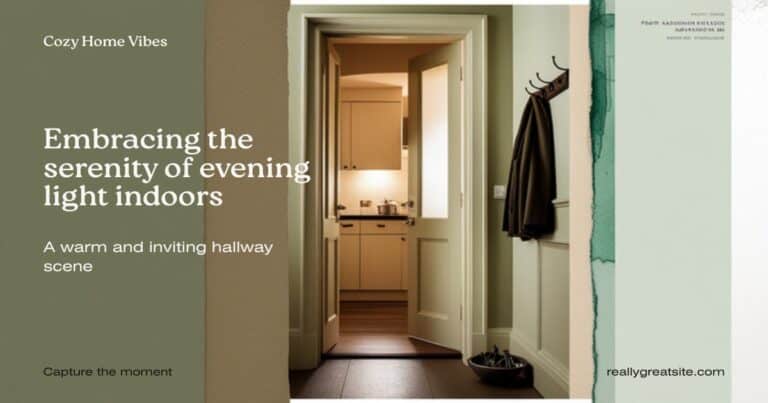
The bedroom door stays open now. The fridge stays full. You were ready for the sadness, and you have felt some. What you did not expect was the other feeling: that someone has quietly removed the job you were best at, and nobody has told you what the new one is.
The short answer: an empty nest identity crisis is less common than its reputation, and more understandable than it feels. In a study of 316 parents, only a minority reported the depression and distress usually called empty nest syndrome.¹ In an 18-year study of women, marital satisfaction actually rose after children left home.² What many high-functioning mothers describe instead is a loss of role: the job that organised the household, and a large part of the self, has ended without a replacement.
Based on the published research of
Barbara A. Mitchell, Ph.D.
Professor of Gerontology and Sociology, Simon Fraser University; lead author of “The Empty Nest Syndrome in Midlife Families,” published in the Journal of Family Issues in 2009, and author of The Boomerang Age.
SFU Gerontology profile · SFU Sociology profile · Vanier Institute profile
For eighteen years you knew where everyone needed to be and what they needed when they got there. Kit lists, dentist reminders, the lift at eleven at night, the form due Friday. You did it while working full time, and you did it well enough that nobody noticed how much of it there was.
Now the last one has gone. The calendar has gaps. You find yourself in the supermarket buying for four. You text a question about the laundry and get a thumbs-up two days later. You are proud of them, and relieved, and something else you cannot quite name. It feels a little like being made redundant from a role no one else knew you had.
The skim version
- A study of 316 parents in Metro Vancouver found that only a minority reported empty nest syndrome.¹
- Cultural background and relationships influenced who was likely to report it.¹
- An 18-year study of women found marital satisfaction increased once children left home.²
- The improvement came from better quality time with a partner.²
- The harder part for many women is losing a role that ran the household, and much of the mental load that came with it.
Jump to: What it is · How common it is · Why it feels like losing a job · What the long studies found · When everything changes at once · The freed-hours list · Questions women actually ask
What is an empty nest identity crisis?
It is the sense, after the last child leaves home, that you no longer know who you are or what you are for. It often arrives alongside other changes in the same few years: perimenopause, ageing parents, a career that has plateaued or is winding down. That stacking is part of why it can feel so large.
For women who have been running a household alongside a full career, the loss is often less about missing the children, though that is real, and more about losing a function. You were the one who kept it all moving. The role was invisible to others, and so its ending is invisible too.
Is empty nest syndrome common?
Less common than the phrase suggests. In 2009, Barbara Mitchell of Simon Fraser University and a colleague studied 316 parents from four cultural backgrounds in Metro Vancouver, using both surveys and interviews. Overall, only a minority of parents reported having experienced the empty nest syndrome. Cultural background and other social and relationship factors influenced the likelihood of reporting it.¹
That finding is worth holding onto if you are struggling. It does not mean your feelings are unusual or wrong. It means a hard transition is not the default, and that the factors around it, including how much else you are carrying, make a difference.
If the quiet has made you notice how much else you are still holding, work, parents, a partner, yourself, it helps to see all of it on one page. The Quiet Audit does that in ten minutes. Start here.
Why does my identity feel gone now the kids have left?
Because a role has ended, and for high-achieving women roles do a lot of identity work. For many years, being the default parent meant being the person who remembers, plans and anticipates for everyone. We looked at how that load builds up in the default parent. When the children leave, some of that load disappears overnight. What is left can feel strangely weightless.
Three things often happen next. Some women fill the gap immediately, usually with more work or more care for someone else. Some discover that the load has not ended so much as moved: to phone calls, bank transfers, and late-night texts about a landlord. And some notice, for the first time in years, that they are not sure what they would choose to do with an evening that belongs to them.
| Empty nest syndrome (as studied) | Loss of role | |
|---|---|---|
| Core feeling | Sadness and distress at the departure¹ | Disorientation, “what am I for now?” |
| How common | A minority of parents¹ | Widely described, less often measured |
| What it looks like | Low mood, tearfulness | Filling every gap with more work or care |
| What helps | Time, connection, support | Deciding what the freed hours are for |
Does life get better after the kids leave?
For many women, parts of it do. Researchers at the University of California, Berkeley, including the psychologist Oliver John, followed around 100 women from the Mills College longitudinal study, assessing them at ages 43, 52 and 61. Marital satisfaction increased when the children left home.²
The detail that matters is why. The improvement came from the quality of the time these women spent with their partners, once the daily demands of parenting eased.² The time became freer and more their own. The same principle applies well beyond marriage: freed time improves life when it is actually protected, and much less when it is immediately given away.
If what you notice most right now is that you have no time for yourself even with an empty house, that pattern has its own article: I have no time for myself.
Why does it hit harder when everything else is changing too?
Because for many women the last child leaves in the same few years that several other things shift at once. A parent needs more help. Sleep has changed. Work has either become more senior and more political, or started to feel like it is winding down. Each of these would be manageable on its own. Together, they remove a lot of the structure that used to tell you who you were each day.
The children leaving is often the most visible of these changes, so it gets the blame for all of them. That can make the feeling seem out of proportion, and that in turn can bring on shame: other women seem to cope, so why can’t you? It is worth separating the strands. Write down what else has changed in the last three years. For many women the list is longer than they expected, and seeing it written down is a relief in itself. It explains the tiredness without turning it into a personal failing.
It also points to where to start. If the heaviest item is caring for a parent, that is a load problem with load solutions. If it is work, it may be the job. If it is the empty house, that is the one this article is about.
How do I find myself after the kids leave?
You probably will not find yourself by thinking about it on a Sunday night. You find out who you are now by watching what you do with the hours that have come free, then deciding on purpose. The practice is the freed-hours list, and it takes about fifteen minutes.
On one side of a page, write down every task that has ended or shrunk since the last child left: the lifts, the meals, the admin, the listening at eleven at night. Estimate the hours per week. On the other side, write honestly what has filled those hours since. For many women the second column says “work” or “Mum” or “I don’t know.”
Then take one of those hours and assign it, deliberately, to something that is for you alone. Not a project. Not self-improvement. Something you would do if nobody needed you for an hour. Keep it for a month before you judge it. If the hard part is that you genuinely no longer know what you would choose, we wrote about that in I don’t know what I want anymore.
Questions women actually ask about this
How long does empty nest syndrome last?
There is no fixed timeline. Research suggests that only a minority of parents report the syndrome at all,¹ and for many the adjustment eases over months as new routines form. If low mood lasts or deepens, speak to your GP.
Is it normal to feel lost when your kids leave?
Yes. Losing a daily role that organised your time and identity can feel disorienting, even when you are proud of your children and relieved at the same time.
Can empty nest cause depression?
It can contribute to low mood in some parents. In one study, only a minority reported the depression and distress described as empty nest syndrome, and background and relationships influenced who did.¹ Persistent low mood deserves a conversation with a doctor.
Does marriage improve after the kids leave?
An 18-year study of women found marital satisfaction increased after children left home, driven by better quality time with a partner.²
Why do I feel relieved and then guilty about it?
Both feelings make sense. Relief reflects how much the role demanded, often on top of a full-time job. Guilt tends to follow because relief does not fit the story of how a good mother is supposed to feel. Neither cancels your love for your children.
What if I’m also burned out?
Then the quiet may reveal exhaustion that was hidden by constant activity. Our guide to burnout that looks like coping is a good place to start.
The one move
List the hours that came free when the last child left, and what has filled them since. Take back one hour a week, for you alone, and keep it for a month.
If you would like to see everything you are still carrying before you decide what the next chapter holds, the Quiet Audit lays it out in ten minutes. Start here.
What this article is built on
The Empty Nest Syndrome in Midlife Families: A Multimethod Exploration of Parental Gender Differences and Cultural Dynamics. Mitchell BA, Lovegreen LD. Journal of Family Issues, vol. 30, no. 12, 2009. The source for the study of 316 parents and how often empty nest syndrome was reported.
Contextualizing change in marital satisfaction during middle age: an 18-year longitudinal study. Gorchoff SM, John OP, Helson R. Psychological Science, vol. 19, no. 11, 2008. The source for the Mills College findings on marital satisfaction after children leave. UC Berkeley press release.
Who else has measured this
Oliver P. John, Ph.D., Distinguished Professor of Psychology, University of California, Berkeley. Co-author of the 18-year study of marital satisfaction in middle age. UC Berkeley Psychology profile
About the researcher
Barbara A. Mitchell, Ph.D. is Professor of Gerontology and Sociology at Simon Fraser University in British Columbia. Her research covers families and ageing, intergenerational relationships and life-course transitions, and she is the author of The Boomerang Age: Transitions to Adulthood in Families. She has not reviewed this article and has no connection to Blue Leaf Journal. SFU Gerontology profile · SFU Sociology profile · Vanier Institute profile
On the research. The Vancouver study relied on parents’ own reports and was not limited to women. The Mills College study followed a specific group of college-educated women born in the late 1930s, and it measured marital satisfaction, not identity. Neither study measured the mental load directly; that part of this article draws on what women describe, not on a trial.
Disclosure
This article is informational and reflects published research. It is not medical, psychological or relationship advice.
Blue Leaf Journal is not staffed by clinicians. We read published research and translate it into plain English.
We have no affiliation with, and no endorsement from, Dr. Barbara A. Mitchell, Dr. Loren D. Lovegreen, Dr. Oliver P. John, Dr. Sara M. Gorchoff, Dr. Ravenna Helson, Simon Fraser University or the University of California, Berkeley. Naming their work is citation, not partnership.
Every figure was checked against the source listed in the references on 28 September 2026. If you find an error or a broken link, write to editor@blueleafjournal.com and we will correct it and date the correction.
References
1. Mitchell BA, Lovegreen LD. The Empty Nest Syndrome in Midlife Families: A Multimethod Exploration of Parental Gender Differences and Cultural Dynamics. Journal of Family Issues. 2009;30(12):1651-1670.
2. Gorchoff SM, John OP, Helson R. Contextualizing change in marital satisfaction during middle age: an 18-year longitudinal study. Psychological Science. 2008;19(11):1194-1200.
Read this next
If the role that ended was the one where you remembered and planned for everyone, the next piece looks at how that load built up in the first place: the default parent.
Written by Tomasz Nowak for Blue Leaf Journal.