Page One Cannot Agree What It Means. The Woman Who Coined It Can.
Load · The Britannica Series, Vol. 9 · 11 min read · the 1983 definition word for word, how the term drifted, and why the drift cost you the argument
Based on the published work of Arlie Russell Hochschild, PhD, Professor Emerita of Sociology at the University of California, Berkeley, who defined emotional labor in The Managed Heart in 1983, and on the sociologists who have tracked what happened to the term since. Berkeley faculty page · her curriculum vitae · American Philosophical Society oral history · Britannica
The term was built to describe feeling that is sold for a wage. It now mostly describes feeling that is given away for free, which is a different thing, and the confusion is costing you the argument you are trying to have.
You used it in the kitchen on Sunday. You said you were doing all the emotional labor in this house, and you meant the birthdays and the school forms and the being the one who notices when your mother sounds off on the phone. And whoever you said it to did that small flinch people do at a phrase they have decided is jargon, and the conversation went nowhere.
Then you looked it up, because you are the sort of person who looks things up, and page one did not help. A psychology magazine said it is about controlling your emotions to do your job. A wellness site said it is unpaid work done to keep others happy. A meditation app said it is managing your own feelings while considering other people’s. A university lab said it is regulating emotional expression as part of a professional work role. Those are not variations. Two of them are the opposite of the other two on the single question of whether anyone is paying you.
So it is worth settling what is emotional labor, because the answer is documented, it is forty-three years old, and the woman who wrote it is still alive and has said out loud what she thinks of what happened to it. This is a reading of published sociology. We are not sociologists. The findings belong to the researchers and institutions named and linked below, and the plain-English version is ours.
The short answer: Arlie Russell Hochschild defined it in 1983 as the management of feeling to create a publicly observable facial and bodily display that is sold for a wage.¹ Sold for a wage is not decoration in that sentence, it is the whole definition. She built it from studying flight attendants and bill collectors: workers whose employers specified which emotion to display and checked that they displayed it.¹ ² In 1983 she estimated that roughly one third of American jobs involved some element of it, falling disproportionately on women in the service sector.¹ The thing you are doing at home is real, it is heavy, and it is a different thing with a different name. Calling it emotional labor makes it easier to dismiss, not harder.
The skim version
- 1983. The term is coined in The Managed Heart, defined as feeling managed into a display and sold for a wage.¹
- Flight attendants and bill collectors were the two case studies: one paid to produce warmth, one paid to produce pressure.¹ ²
- About one third of American jobs involved emotional labor by her 1983 estimate, disproportionately women’s jobs in services.¹
- Surface acting and deep acting are the two modes: displaying a feeling you do not have, or working yourself into actually having it. The second is the more expensive.²
- Hochschild has publicly called the newer usage concept creep, saying it makes the idea blurrier and is sometimes applied to things that are simply labor.²
- The honest part: we could not open the 2018 magazine interview where she says this directly, so we have taken it from the documented summary rather than quoting her words. No sentence in this article is presented as a quotation from her.
In this article: The split on page one · What she actually wrote in 1983 · How the term escaped · Three centuries of managed feeling · What the drift costs you · Questions people ask
The split on page one, and which half is right
Search the term and you get two incompatible families of answer sitting next to each other.
The academic family says it is a work-role concept. The Workplace Emotional Labor and Diversity Lab at Pennsylvania State University defines it as regulating or managing emotional expressions with others as part of one’s professional work role.³ A University of Washington piece puts it as the process by which workers manage their feelings in accordance with the expectations of jobs.⁴ Both are recognisably Hochschild’s idea.
The wellness family says something else entirely. One widely ranked health site defines it as unpaid work done to keep others happy, invisible and uncompensated. A meditation app defines it as the effort of managing your own emotions while considering other people’s feelings. A forum answer near the top of the results sums it up as parenting your partner.
We are naming those pages and not linking them, which is a deliberate choice explained at the foot of this article. The point is not that they are wicked. The point is that on the single decisive question, whether a wage is involved, page one of the internet gives you both answers with equal confidence and no dates.
What is emotional labor, as she actually wrote it in 1983
Hochschild’s definition, as published: the management of feeling to create a publicly observable facial and bodily display that is sold for a wage.¹
Read that slowly. Three conditions have to hold. There is a feeling being managed. The management produces something another person can see, a face, a voice, a posture. And it is sold. Someone is buying the display, specifying what it should be, and can sanction you for failing to produce it.
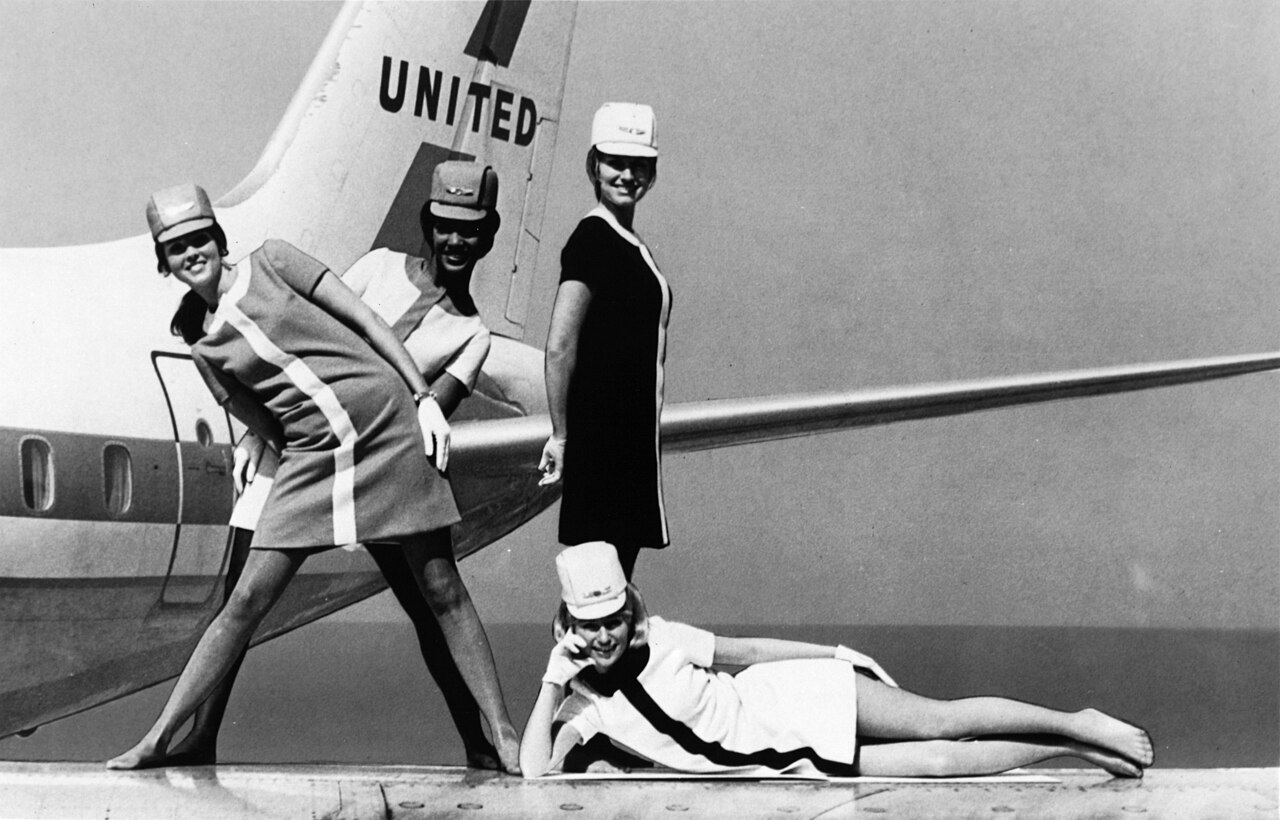
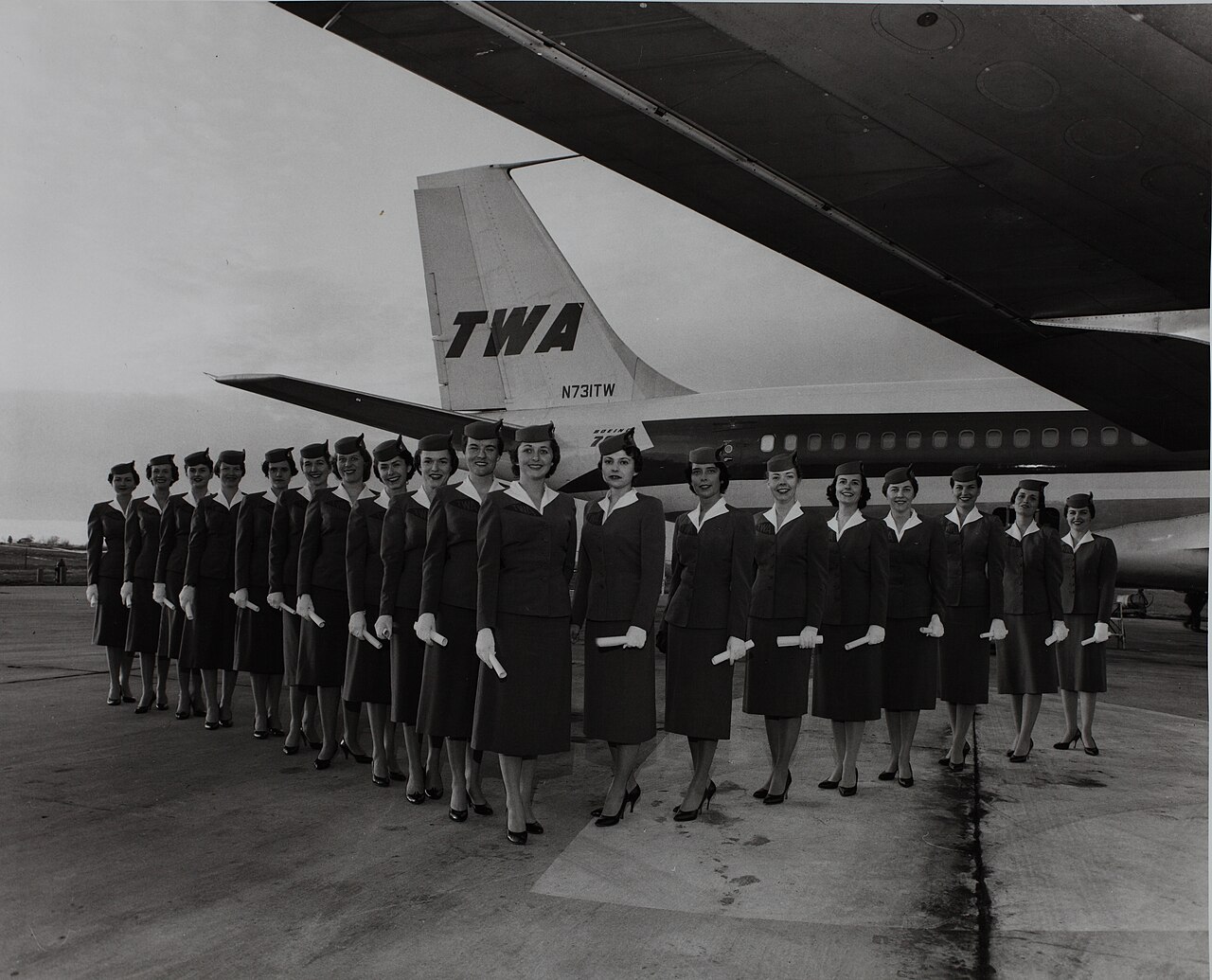
Her case studies make the third condition concrete. She studied flight attendants, whose employers trained them in producing warmth and monitored whether the warmth arrived, and bill collectors, whose employers trained them in producing the opposite.¹ ² The same mechanism, pointed in two directions, both bought.
She also gave us the distinction that makes the concept useful rather than merely descriptive. Surface acting is displaying an emotion you do not feel, which is exhausting in the way that holding a plank is exhausting. Deep acting is the effortful process of changing what you actually feel so that the display becomes genuine, which is more sustainable in the short run and more costly in the long one, because the thing being altered is you.²
And her estimate: roughly a third of American jobs in 1983 carried some element of it, concentrated in the service sector and therefore concentrated on women.¹
If you are reading this because you recognised deep acting rather than surface acting, the version where you have quietly rearranged your own feelings so the performance stops costing so much, that is worth ten quiet minutes on its own terms. Start here.
How the term escaped, and what its author said about it
The escape happened in the 2010s, and it happened because the term was useful and there was nothing else available.
Women had a real thing to describe: the remembering, the anticipating, the smoothing, the managing of other people’s moods inside a household, none of it paid and most of it invisible. There was no widely known name for it. Emotional labor was lying around, it sounded exactly right, and it spread.
Stephanie Alice Baker, Professor at City St George’s, University of London, and Michael James Walsh, Associate Professor in Social Sciences at the University of Canberra, tracked the drift in a 2022 piece for The Conversation.¹ Their account is that the concept applies specifically to paid work where an employer controls the emotional performance, and that it has since expanded to cover unpaid domestic work such as maintaining to-do lists, remembering birthdays and pursuing perfectionism.¹
Hochschild herself has not been quiet about this. Interviewed about the shifting usage, she described the term as having undergone concept creep, said it made the idea blurrier, and observed that it was sometimes being applied to things that were simply labor.² Not a complaint about women, and not a defence of husbands. An objection from the person who built the tool, that a tool stretched to fit everything stops gripping anything.
What the research found
The definition has three parts and the third is load-bearing. Management of feeling, a publicly observable display, and a wage.¹ Strip the wage and you have removed the thing that made the concept researchable: a specifiable employer, a specifiable rule, a specifiable sanction. That is why the academic literature has kept the narrow meaning while the popular usage has not.¹ ³ ⁴
The scale. Roughly one third of American jobs in 1983, disproportionately women’s.¹ Surface acting and deep acting are the two modes, and the research interest has always been in what sustained deep acting does to a person over years.²
The limitation: the one-third figure is a 1983 estimate for one country and has not, as far as we can establish, been re-estimated on the same basis since, so it should be read as an order of magnitude and not a current statistic. We also could not open the 2018 interview in which Hochschild discusses concept creep, so her position here is taken from the documented summary of it rather than from her own sentences, and nothing in this article is presented as a quotation from her. And the unpaid work at the centre of the confusion remains the least measured thing in the field, which is exactly why a borrowed word had to do the job.
The source for this piece
Arlie Russell Hochschild, PhD
Professor Emerita of Sociology, University of California, Berkeley. Author of The Managed Heart: Commercialization of Human Feeling, University of California Press, 1983, which introduced emotional labor, and of The Second Shift with Anne Machung. Elected to the American Philosophical Society in 2021. Her doctorate is in sociology; she is not a clinician, and nothing here is clinical advice.
What we read: the published record of The Managed Heart and its definition, her Berkeley curriculum vitae, and the sociologists who have since documented how the term travelled.¹ ² ³ ⁴
Where to follow her work: Berkeley Sociology · her CV · the book, at University of California Press
Three centuries of managed feeling
The work is old. Only the vocabulary is new, and each century has had a different reason to look away from it.
| 19th century | 20th century | 21st century | |
|---|---|---|---|
| What it was called | Good breeding. Accomplishment. Being a lady | Customer service. Then, from 1983, emotional labor¹ | Emotional labor, meaning almost anything |
| Who bought it | A husband, a household, a marriage market | An airline, a bank, a collections agency¹ | An employer by day, and nobody at all by evening |
| How it was enforced | Reputation, and the cost of losing it | Training, supervision, the performance review¹ | A satisfaction score, and a group chat |
| Was it measured | No | Yes, from 1983: about a third of jobs¹ | The paid half is. The unpaid half still is not |
| The cost, named | Nerves. Delicacy. A rest cure | Burnout, and the surface versus deep acting distinction² | Your Sunday evening, and an argument that goes nowhere |
Who else has measured this
Stephanie Alice Baker, PhD, Professor at City St George’s, University of London, works on social media, expertise and misinformation, and co-authored the 2022 account of how emotional labour drifted from its original meaning. She was Senior Lecturer in Sociology when that piece was published; her faculty page now lists her as Professor.¹
faculty page · the work · Google Scholar
Michael James Walsh, PhD, Associate Professor in Social Sciences at the University of Canberra, co-authored the same piece and works on the sociology of everyday digital life.¹
research portal · The Conversation profile · Google Scholar
The Workplace Emotional Labor and Diversity Lab, Pennsylvania State University, is where the narrow, researchable version of the concept is still being worked on. Its published definition is the one this article treats as correct.³
the lab’s own definition
The University of Washington Department of Geography published a plain-language account that keeps the work-role framing intact, and is a useful check on any definition you meet elsewhere.⁴
the University of Washington piece
Encyclopaedia Britannica supplies the scaffolding the term sits on: what an emotion is, a complex experience of consciousness, sensation and behaviour reflecting the personal significance of a thing or event, and what a service industry is, the sector where emotion started being bought at scale.⁵ ⁶
Britannica on emotion · Britannica on the service industry
The word got bigger. The thing got harder to see.
What the drift costs you, specifically
Three things, and the third is the one that matters on a Sunday.
It hands the other person an exit. A term that means four incompatible things is a term anyone can decline to accept. When you say emotional labor and he has read the version that means parenting your partner, you are not describing your week, you are proposing a diagnosis of him, and the conversation is over before it starts.
It loses the sharpest edge of the original. The 1983 concept comes with a brutal insight attached: that the cost is highest when you succeed. Deep acting, genuinely rearranging your own feelings so the display stops being a strain, is the efficient strategy and the expensive one, because what wears out is not your patience but your access to your own reactions.² That is a far better description of what fifteen years of being the reasonable one does to a person than any amount of talk about invisible tasks.
It leaves the real thing unnamed. The household work you were describing is documented, it has its own research literature under headings like the mental load and cognitive labour, and it has measurable gender gaps. It is not weaker than emotional labor. It is a separate, well-evidenced claim that you are currently making under the wrong heading, which is why it keeps getting waved away as a feeling rather than treated as a finding.
What this actually changes
You get a more precise vocabulary, and precision is leverage when you are the person in the room who is always accused of exaggerating.
At work, where an employer specifies the face you wear, emotional labor is the correct term and the literature is on your side. At home, what you are carrying is the mental load and the coordination, and there is data on that too. Using the right one in the right room means you stop having to win a definitional argument before you can start the real one.
None of this makes the Sunday evening lighter. It does mean that when you name it, the name holds.
The one move
Next time you are about to say emotional labor at home, say the specific thing instead, in one sentence with a noun and a number in it.
Not “I do all the emotional labor here.” Try “I am holding four appointments, two birthdays and your mother’s follow-up, and none of them is written down anywhere except in me.” It is harder to shrug at, it cannot be redefined by the person hearing it, and it is the version that is actually true.
Questions people ask about this
What are examples of emotional labor?
In the original sense: a flight attendant trained to produce warmth and monitored for producing it, a bill collector trained to produce pressure, a nurse managing her own fear so a frightened patient does not catch it, a receptionist required to sound pleased at the fortieth call.¹ ³ The common thread is that an employer specifies the emotional display, and can sanction you for failing to deliver it. The household examples that dominate search results, remembering birthdays and managing everyone’s moods, are real work, but they fall outside the 1983 definition because nobody is buying the display.
What is emotional labor in psychology?
Psychology tends to focus on the two strategies rather than the economics. Surface acting means displaying an emotion you do not feel. Deep acting means changing what you actually feel so the display becomes genuine.² The research interest is in the long-term cost of each, and the consistent finding of concern is that sustained deep acting alters the worker, not just the performance. Pennsylvania State University’s Workplace Emotional Labor and Diversity Lab defines the field’s scope as regulating emotional expressions as part of a professional work role.³
What are the signs of emotional labor?
In the work sense, the signs people report are a face that stays on after the shift, difficulty locating what you actually feel about something, and exhaustion that does not match the physical demands of the job. Because the demand is emotional rather than physical, it is routinely under-reported by the person doing it and invisible to anyone measuring workload. This is a description of a documented pattern and not a diagnosis of anything; if the flatness is persistent, it is worth saying out loud to a clinician rather than to a search engine.
What is another word for emotional labor?
It depends which half you mean, which is the whole problem. For the paid version, emotion work and emotion management are the closest neighbours in the literature. For the unpaid household version that most people now mean, the accurate terms are the mental load and cognitive labour, both of which have their own research and their own measured gender gaps. Using those instead is not a concession, it is an upgrade, because they mean what you are actually claiming.
So was everyone using it wrong?
Using it loosely, which is what happens to every good term. Words move, and a word moving is not a moral failure. What is worth noticing is what the move cost: a concept built to make invisible work measurable became one that is hard to measure, and the household work that borrowed the word is still waiting for a name of its own that lands as hard. That is a loss to the people the word was helping, which is why the sociologists keep pointing at it.¹ ²
Ten quiet minutes, when you want them
The one move
Swap the phrase for the specific thing, with a noun and a number in it. It cannot be redefined by the person hearing it, and it is harder to shrug at.
And if the reason this landed is that you have been managing everyone’s weather for so long you have lost track of your own, that is the thing worth ten quiet minutes. No advice, no programme, just the document. Start here.
The flinch at the kitchen table was not about your week. It was about a word that has been asked to carry four meanings, and drops all of them.
Related reading: where the famous second-shift figure actually came from, the work of holding everyone’s schedule in your head, and why resentment shows up towards the people you chose to help.
On the sources. This volume is built on one landmark book, one peer-reviewed-adjacent academic explainer by two named sociologists, two university research pages, one reference wiki and two encyclopaedia entries. It contains no quotation from Hochschild, because we could not open the interview in which she discusses the term’s drift and will not quote a person from a second-hand summary. We name the popular pages whose definitions we are correcting and deliberately do not link them, because a link is a recommendation and these are the pages we are asking you not to rely on.
Disclosure
This article is informational and reflects published social research. It is not advice of any kind, and nothing in it is medical or psychological advice.
We are not sociologists or psychologists. We read published research and translate it into plain English. The findings belong to the researchers and institutions named and linked above.
Blue Leaf Journal has no affiliation with, and no endorsement from, Professor Arlie Russell Hochschild, the University of California, Berkeley, University of California Press, Professor Stephanie Alice Baker, City St George’s, University of London, Associate Professor Michael James Walsh, the University of Canberra, The Conversation, Pennsylvania State University, the University of Washington or Encyclopaedia Britannica. Naming their work is citation, not partnership.
No commercial relationship. Nobody named above paid for or was paid for this coverage. No book or product is sold or linked for commission here, and there are no affiliate links in this article.
Every figure was checked against the source listed below on 22 September 2026. If you find an error or a broken link, write to corrections@blueleafjournal.com and we will correct it and date the correction.
References
1. Baker, S. A. and Walsh, M. J. “What is emotional labour, and how do we get it wrong?” The Conversation, 2022. Source for Hochschild’s 1983 definition as published, for the flight attendant and bill collector case studies, for the one-third of American jobs estimate, and for the account of how the term expanded to unpaid domestic work.
2. “Emotional labor.” Wikipedia. Source for the surface acting and deep acting definitions, and for the documented summary of Hochschild describing the shift in usage as concept creep.
3. “What is emotional labor?” Workplace Emotional Labor and Diversity Lab, Pennsylvania State University. Source for the work-role definition used in the current literature.
4. “What Is Emotional Labor and Why Is It Important?” Department of Geography, University of Washington, March 2022.
5. “Emotion.” Encyclopaedia Britannica. Source for the definition of emotion as a complex experience of consciousness, sensation and behaviour.
6. “Service industry.” Encyclopaedia Britannica.
7. Hochschild, A. R. The Managed Heart: Commercialization of Human Feeling. University of California Press, 1983.
8. Beck, J. “The Concept Creep of ‘Emotional Labor'” The Atlantic, November 2018. The interview in which Hochschild discusses the drift. Linked so you can read her in her own words; we could not open it, so nothing from it is quoted here.
About the researcher
Arlie Russell Hochschild is Professor Emerita of Sociology at the University of California, Berkeley. She coined emotional labor in The Managed Heart (1983), measured the household side of the same problem in The Second Shift (1989, with Anne Machung), and was elected to the American Philosophical Society in 2021. Her later books include Strangers in Their Own Land, a finalist for the National Book Award.
Berkeley faculty page · National Book Foundation · The New Press author page · APS oral history · The Managed Heart, University of California Press
Her PhD is in sociology. She is not a medical doctor or a therapist, and she studies feeling as a social fact, not as a clinical one.
If you read one more thing after this, read the volume on the second shift, because it is the same author, five years later, on the other half of the same problem.
Written by Nora Whitfield for Blue Leaf Journal. Updated: 22 September 2026.