
You Didn’t Sleep Badly. Your Day Never Ended.
Load · The Reading Room, Vol. 83 · 6 min read · Why the full night stopped working, and the hours nobody counted
Based on the published research of Akiko Morimoto and colleagues, Osaka Metropolitan University, whose 2026 study measured total daily working hours — paid plus unpaid — against sleep and mental health in midlife adults. Researcher profile
You got the hours in. You woke up unrefreshed anyway. A 2026 study of nearly four thousand people aged 40 to 64 measured which hours actually predict that — and they were not the paid ones.
For about two years I told my GP I had a sleep problem. I said it with real confidence, the way you say a thing you have never once examined.
I bought the ring. You know the ring. Every morning it told me, in a cheerful lilac font, that I had slept seven hours and eleven minutes and that my readiness was Good. I would read this at 6:40 while unloading the dishwasher I had loaded at 11:15 the night before.
My sleep score was 84. Had the ring been measuring my actual life, it would have come back as a small controlled brush fire.
It took me embarrassingly long to notice that the number was fine and I was not. Seven hours was going in. Nothing was coming out.
The short answer: the variable that was wrecking me was never how long I was in bed. It was how long the day had been before it — and the day is considerably longer than the payslip suggests. There is now a study that adds up all of it, paid and unpaid, and looks at what that total does to sleep and mood in people exactly our age.¹
The skim version
- Sleep that doesn’t restore you has its own name in the research — nonrestorative sleep — and it is measured separately from how many hours you got.
- A 2026 study in Social Science & Medicine surveyed 3,959 working people aged 40 to 64 and added up their total daily working hours: paid work plus housework, childcare and caring for a parent.¹
- Around 90% of the women did household chores. Around 40% of the men did.¹
- Women’s total working hours came out higher than men’s — despite fewer paid hours.¹
- Longer total hours predicted nonrestorative sleep in both sexes, and predicted poor mental health in the women specifically. Paid hours on their own did not.¹
In this article: The shift you are not counting · Telling the two apart · The move · FAQ
Informational, not medical advice. Please see your clinician.
The shift you are not counting
Here is the arithmetic nobody does out loud.
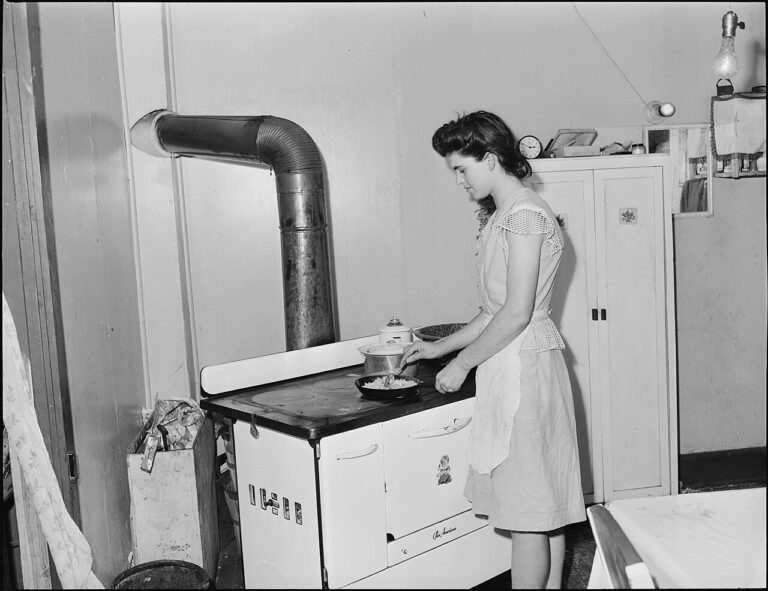
You finish paid work at six. You are not off. You are between shifts. What happens next — the meal, the tidy, the form, the phone call to the pharmacy, the load moved from washer to dryer, the fifteen minutes of finding out whether your mother has actually eaten — is work. It has a start time. It has tasks. It has a person who gets blamed if it doesn’t happen.
The only thing it doesn’t have is a clock-off, an employer, or anyone who thinks of it as hours.
So the day is not eight hours plus an evening. It is eleven or twelve hours of work, four of which are invisible, arranged so that the invisible ones land in exactly the window your body was supposed to be winding down in.
That is the mechanism. You are not going to bed after a rest.
You are going to bed after overtime.
And this is why the sleep advice keeps missing. Blackout blinds, magnesium, the phone out of the bedroom, a cooler room — all reasonable, all aimed at the eight hours in bed. None of them touch the four hours before it. You can optimise a night’s sleep beautifully and still be attempting recovery from a shift you did not know you were on.
What the research found
Akiko Morimoto and colleagues at Osaka Metropolitan University surveyed 3,959 healthy employed adults aged 40 to 64 across five Japanese cities, 2,059 women and 1,900 men. Instead of counting only paid hours, they added the unpaid work on top: housework, childcare, and care of an older relative. After adjusting for the obvious confounders, longer total working hours predicted higher odds of nonrestorative sleep in both men and women, and predicted poor mental health specifically in the women. Total daily working hours predicted this better than paid hours alone.¹
The limitation: this is cross-sectional, a photograph, not a film. It cannot tell you which way the arrow points, and it is at least plausible that sleeping badly makes the evening feel longer rather than the other way round. The hours were self-reported, the sample was Japanese, employed and healthy, and household norms differ by country.¹
At 6:40 in the morning, both problems look identical
This is the frustrating bit. A genuine sleep disorder and an hours problem produce the same face in the same mirror. They separate on the details.
| Ask yourself | More like a sleep problem | More like an hours problem |
|---|---|---|
| Getting to sleep | Takes 45 minutes, or you wake at 3 and stay awake | You are unconscious in four minutes, most nights |
| A week off | Roughly the same — the pattern travels with you | Day three of a holiday and you are a different person |
| Weekends | No better, sometimes worse | Saturday is fine. Sunday, when the week gets prepared, is not |
| Snoring, gasping, morning headache | Present — this one needs a doctor, not an article | Absent |
| What time the last task ended | Eight-ish, and then you had an evening | You genuinely do not know, because it blurred into going upstairs |
If the last row landed, that is your answer. The people with an hours problem cannot say when the day ended, because it didn’t. It thinned out.
And if the fourth row landed — snoring, gasping, waking with a headache — please take that one seriously and get it looked at. In women it very often does not look like the textbook version.
If the eight hours are there and the hours before them never really ended, the Quiet Audit is ten private minutes on what is still running when you get into bed. Start here.
The source for this piece
Akiko Morimoto and colleagues
Researchers at Osaka Metropolitan University who study occupational health, sleep and the division of paid and unpaid labor across the working day.
What we read: the 2026 cross-sectional study of total daily working hours, nonrestorative sleep and mental health in 3,959 middle-aged Japanese adults, published in Social Science & Medicine, which underlies the mechanism this piece describes.¹
Where to follow the work: Researcher profile
Who else has measured this
The uneven split between paid and unpaid hours, and what it costs, has been documented from other directions too.
Arlie Russell Hochschild, Professor Emerita of Sociology at the University of California, Berkeley, coined the term “the second shift” in her landmark research on the unpaid work that begins when the paid day ends, the same shift this piece describes. Faculty profile
Lonnie Golden, PhD, Professor of Economics and Labor and Employment Relations at Penn State Abington, has published widely on how total working hours, not just scheduled paid hours, affect health and wellbeing. Faculty profile
The move, and it is smaller than you want it to be
You cannot fix this by sleeping better. You have already tried sleeping better; it is the single most attempted project of the last decade.
What you can do is find out what the number actually is. For one week, write down two things at the end of each day:
- The time your last task for another person finished. Not when you went to bed. Not when you sat down. When you stopped doing things on behalf of other people.
- Roughly how many unpaid working hours the day contained. Chores, admin, care, the phone calls, the remembering. A rough number is fine. It is going to be higher than you think.
Then, and only then, move one recurring task out of the last two hours of the day. Not all of them. One.
Bins to the morning. The lunchboxes done at seven while you are already in the kitchen instead of at ten while you are not. The pharmacy call moved to a Tuesday lunch break, where it is somebody’s paid time, including yours.
The point is not efficiency. Efficiency is how you got here. The point is to end the working day at a time, on purpose, so that the hours in bed have something to actually restore.
The sentence, if you want one
“After nine, nothing gets done for anybody. It can be wrong until the morning.”
You are not announcing a boundary. You are setting a closing time, which every other workplace on earth already has.
Not the total, at first. One task out of the evening is a rounding error against everything you carry, and I am not going to pretend otherwise.
What changes is that the day acquires an edge. There is a point after which you are not on. And the strange thing about having an edge is that the hours before it stop feeling infinite, which is most of what made them heavy.
I kept the ring for a while after that. It still said 84. But the 84 finally started to mean something, because there was a gap between the last task and the bed for the sleep to land in.
Frequently asked questions
Is nonrestorative sleep a diagnosis?
Not on its own. It’s a measured symptom used in sleep and occupational research, distinct from insomnia (trouble falling or staying asleep) or sleep apnea (a breathing disorder). You can get a full eight hours, sleep continuously, and still score high on nonrestorative sleep.¹
Could this just be perimenopause instead?
It could be both at once. The study doesn’t rule out hormonal causes of poor sleep; it isolates total working hours, paid plus unpaid, as a predictor that holds up after adjusting for other factors. The two mechanisms aren’t competing explanations, they can stack.¹
What if my last task doesn’t have a clear end time?
That blur is itself the finding. The people whose days run fine tend to know, specifically, when the last task ended. Not knowing is a sign the day never actually closed.
Does this apply if I don’t have caregiving responsibilities?
The mechanism is about total working hours, however they’re made up. If your unpaid load is genuinely low, paid hours and their own scheduling become the main variable, which is the territory ordinary occupational sleep research already covers.
The one move
For seven days, write down the time your last task for another person finished. Then move one recurring job out of the final two hours — permanently, not just this week.
If you suspect the unpaid hours are the real number and you have never once seen them written down, the Quiet Audit is ten minutes of getting them onto paper where the size of it is visible. No advice, no programme. Start here.
On the researcher. Akiko Morimoto and colleagues are occupational health researchers, not treating clinicians: their study describes a population-level pattern in working hours and sleep, and doesn’t diagnose any individual reader’s sleep.
Sourcing, disclosure and disclaimers
This is not medical advice. Blue Leaf Journal publishes general information for a general readership. Nothing here is a diagnosis, a treatment recommendation, or a substitute for care from a licensed clinician who knows your history. Please see your clinician if snoring, gasping or morning headaches are present.
We are not clinicians. Blue Leaf Journal is an independent publication. We read published research and translate it. The findings belong to the researchers named and linked above; the plain-English rendering, and the personal account woven through it, are ours, and so is any error.
No affiliation and no endorsement. Blue Leaf Journal is not affiliated with Akiko Morimoto, Arlie Russell Hochschild, Lonnie Golden, Osaka Metropolitan University, the University of California, Berkeley, or Penn State University. None of them has reviewed, approved or endorsed this article, and none of them is responsible for it. They are cited because their published research is the basis for what it says.
No commercial relationship. Nobody named above paid for or was paid for this coverage. There are no affiliate links, no sponsored placements and no gifted products in this article.
How this was checked. Every figure above is drawn from the primary source, linked in the references, and can be verified there. Sources were checked on 7 September 2026. If you find something we have got wrong, write to norawhitfield@blueleafjournal.com and we will correct it and say that we did.
References
1. Morimoto, A., Furuki, H., Sugita, N., Hayashi, R., & Sonoda, N. (2026). Associations of total daily working hours encompassing unpaid care and domestic work with nonrestorative sleep and mental health in middle-aged Japanese men and women: a cross-sectional study. Social Science & Medicine. DOI: 10.1016/j.socscimed.2026.118965
The hours are one half of it. The other half is the thinking that runs underneath them — the four-part job researchers measured, and the second shift you do after the first one. And if the problem is that you cannot fall asleep rather than that sleep isn’t working, that is a different mechanism entirely.
Jo Brennan writes the Load desk at Blue Leaf Journal — the invisible work, the admin, and the jobs that are technically nobody’s and are therefore hers. The ring now lives in a drawer, where it is presumably getting an excellent night’s sleep.
Written by Jo Brennan for Blue Leaf Journal. Updated: 7 September 2026.