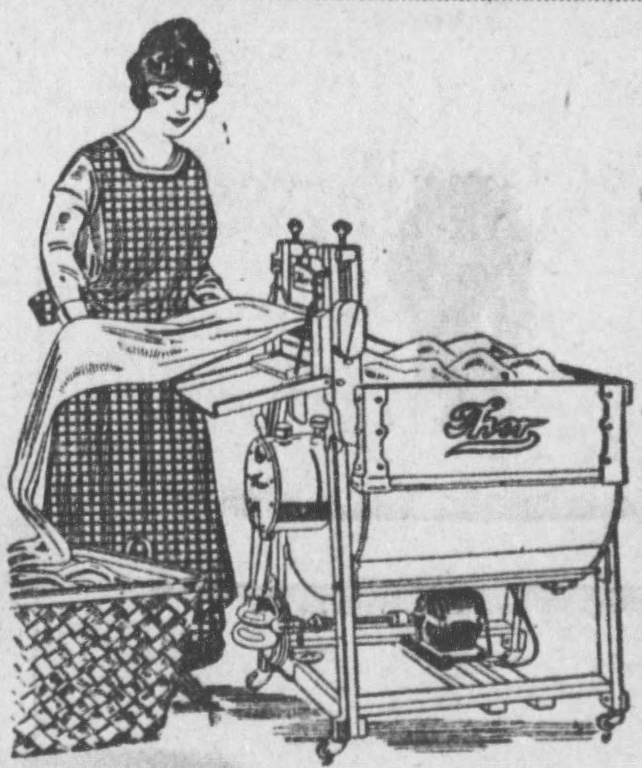
The 1971 Essay About Wives That Still Makes Women Laugh
Load · The Britannica Series, Vol. 3 · 11 min read · Why the same joke about wives has worked in three centuries, who made it work, and what it does to the woman reading it
Based on the published research of Amy Erdman Farrell, PhD, the James Hope Caldwell Memorial Chair and Professor of American Studies and Women’s, Gender and Sexuality Studies, Dickinson College, and on the reference scholarship of Encyclopaedia Britannica. Faculty profile · Radcliffe Institute, Harvard · Google Scholar
It is not an argument. It is a list. That is the entire trick, and it has been working on women since 1855.
Someone drops it into the group chat at twenty to eleven on a Tuesday. Fifteen paragraphs, nearly every one of them starting with the same four words.
You read it standing up, coat half off, one shoe still on. By the fourth paragraph you are laughing. By the ninth you have stopped laughing, and you are reading much more slowly.
The I Want a Wife essay is fifty-five years old this year, and the reason it keeps circulating is not nostalgia. It is that the list is still broadly accurate, and a list is much harder to argue with than a complaint. This is a reading of published scholarship and reference works; we are not historians, and the findings below belong to the researchers named and linked, with the plain-English version ours.
The short answer: Judy Brady first read the piece aloud at a rally in San Francisco in August 1970, and it was printed in Ms. and in New York magazine in late 1971.¹ It works because it never asks anyone to agree with anything. It simply itemises what a wife was expected to do, in the flat voice of somebody placing an order, and lets the reader do the arithmetic. That technique is not a 1970s invention. Fanny Fern was paid a hundred dollars a week to do it in the 1850s,² Erma Bombeck did it in more than 900 newspapers,³ and a French cartoonist did it again in 2017 to an audience of millions.⁴ Every time, the effect on the woman reading is the same, and it is the point: the shame moves off her and onto the arrangement.
The skim version
- Britannica records that Fanny Fern was “not only one of the first woman columnists in the field of journalism” but also one of the first to use satire on the position of women, and that from 1855 the New York Ledger paid her 100 dollars a piece, every week, for the rest of her life.²
- Judy Brady, born 1937, read the essay aloud at a San Francisco rally in 1970 marking fifty years of women’s suffrage. It reached print in 1971.¹
- Britannica calls Ms. “the first nationally circulated women’s magazine to bring feminism and the issues of the women’s rights movement into the mainstream.”⁵
- Erma Bombeck ran the same technique as a column in more than 900 newspapers.³
- Emma’s comic on the mental load was published on 20 May 2017 and went round the world in days.⁴ Two years later Allison Daminger published the peer-reviewed anatomy of exactly what it described.⁶
- The honest gap: nobody has tested whether recognition changes anything. Daminger measured how cognitive labour is divided. No study has asked whether a woman who reads one of these lists ends up carrying a shorter one.
The source for this piece
Amy Erdman Farrell, PhD
The James Hope Caldwell Memorial Chair and Professor of American Studies and Women’s, Gender and Sexuality Studies at Dickinson College. Her research covers second wave feminism, the history of girls and women in the United States, and how feminism has been represented in popular culture.
What we read: Yours in Sisterhood: Ms. Magazine and the Promise of Popular Feminism, her study of the magazine and its readers, published by the University of North Carolina Press in 1998.⁷
Where to follow her work: Dickinson College · Radcliffe Institute · Google Scholar
In this article: The 19th century · What the essay said · All three, side by side · The 21st century · What nobody has measured · What this actually changes · When it belongs with a doctor · The one move · FAQ
The 19th century: the woman paid a hundred dollars a week to be funny about marriage
Before there was an essay, there was a column, and before the column there was a woman with no money at all.
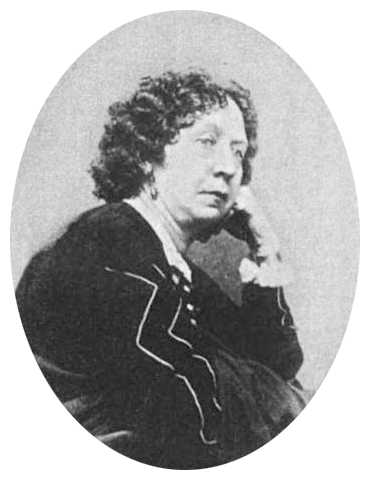
Sara Payson Willis Parton was widowed, remarried badly, left, and found herself in the 1850s with two children and no income. She started writing short pieces for periodicals under the name Fanny Fern.
Britannica’s account of what happened next is worth reading slowly. She “was not only one of the first woman columnists in the field of journalism, but she was also one of the first to employ satire to comment on affairs of the day, particularly the position of women and the poor in society.”² From 1855 the New York Ledger paid her a hundred dollars for a weekly column and kept paying it until she died in 1872.²
A hundred dollars a week, in 1855, for a woman writing about marriage. That was not a token. It was a wage that made her one of the best-paid columnists in America, and it was paid because readers turned to her first.
What she gave them was not advice. Her pieces on marriage read as flat, cheerful reportage on an arrangement she declines to defend, delivered with a straight face. The joke is never that the husband is a monster. The joke is that the terms are absurd when you say them out loud, and nobody had been saying them out loud.
That is the whole technique, invented and paid for in the 1850s, and it is the same one the 1971 essay uses.
What the I Want a Wife essay actually said
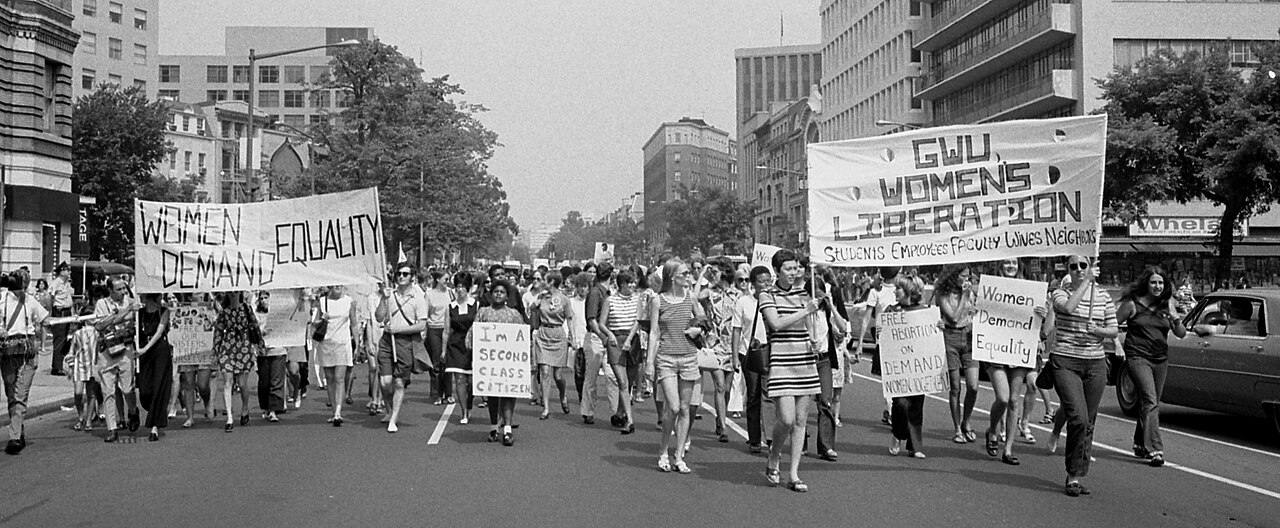
On 26 August 1970, fifty years to the day after American women won the vote, tens of thousands of them stopped work and came out into the street.
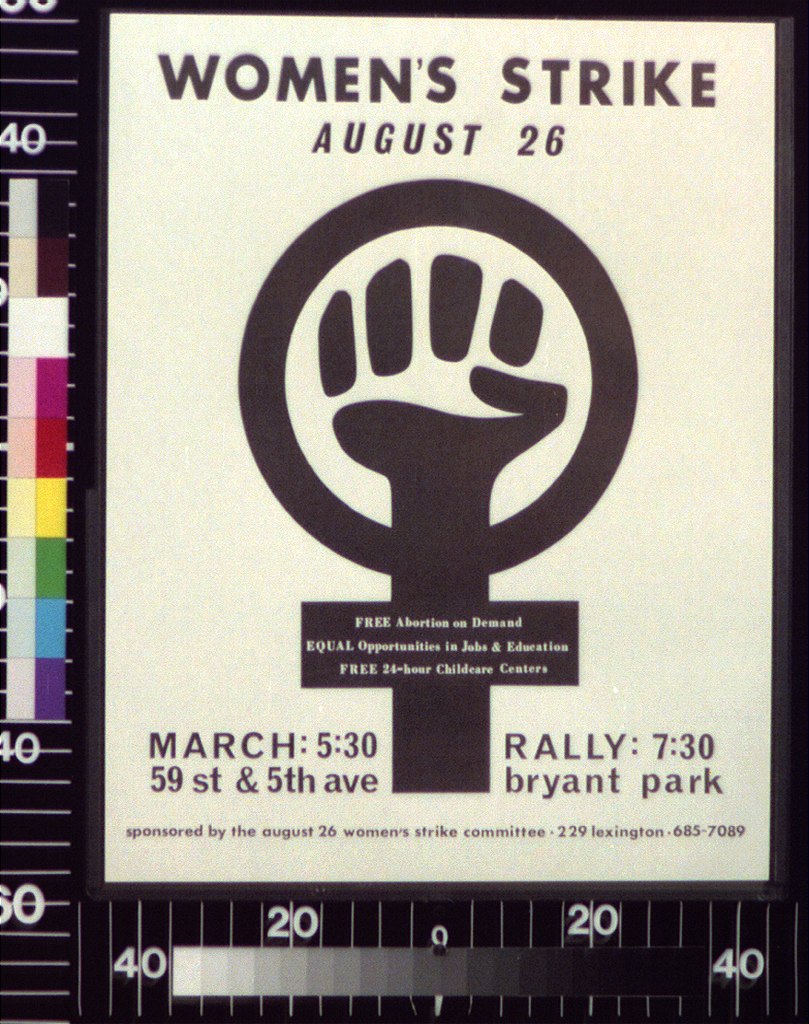
At the San Francisco rally that day, a thirty-three-year-old housewife and mother of two called Judy Syfers stood up and read out a short piece she had written.¹ She had come to it, by her own account, at a consciousness-raising session, while complaining about her own week.
The structure is one sentence, repeated until it stops being funny. She wants a wife who will work and send her to school. A wife who keeps the clothes clean, ironed, mended and replaced. A wife who handles the children’s appointments, the meals, the social calendar, the guests, and her own moods on a schedule that suits somebody else. Then the last line, which is why people remember it: My God, who wouldn’t want a wife?¹
Nowhere does she argue that any of this is unfair. She never uses the word. She just puts the whole job description on one page in the voice of the person who benefits from it, and the reader supplies the conclusion.
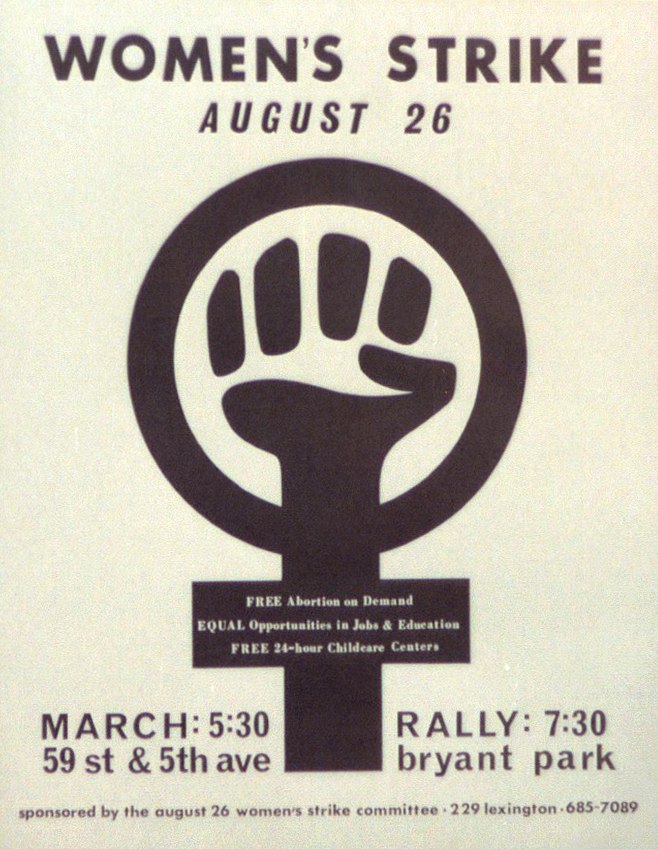
It reached print in late 1971, in the first issue of Ms. and in New York magazine’s issue of 20 to 27 December.¹ Britannica describes what Ms. was doing as bringing feminism “into the mainstream” for the first time in a nationally circulated women’s magazine, on the working assumption that “the editors of the magazine assumed that their readers were interested in more than new recipes and household hints.”⁵
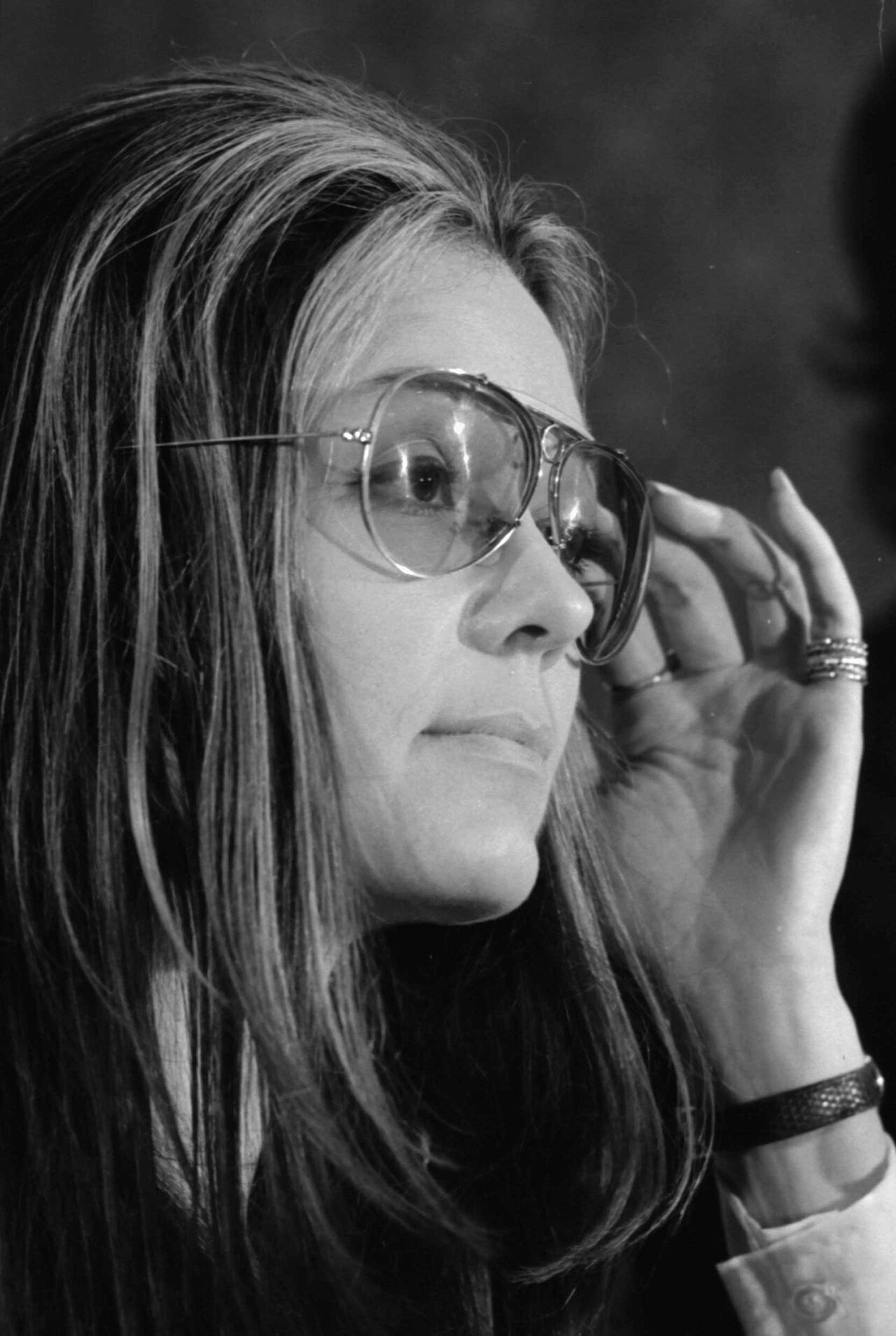
Amy Farrell’s study of the magazine and its readers is a book largely about the letters. Women wrote in, in enormous numbers, and what they mostly wrote about was not policy. It was recognition: the experience of finding their own week described accurately by a stranger, in print, for the first time.⁷ That is the product Ms. was actually selling, and the Brady essay is its purest example.
If reading a list like that is uncomfortable because it is close to your own, the useful next step is seeing your own version of it written down rather than felt. Start here.
One more thing about Judy Brady, because it changes how the essay reads. She was diagnosed with breast cancer in her forties and spent the rest of her life as an activist on the environmental causes of cancer, editing 1 in 3: Women Confront An Epidemic and helping to found Greenaction for Health and Environmental Justice.⁸ She died in 2017, aged eighty. The woman who wrote the funniest thing anyone has written about wives spent forty years afterwards refusing to accept that a problem affecting millions of women was a private misfortune. It is the same argument both times.
Three centuries, side by side
The same six questions, put to all three.
| 19th century | 20th century | 21st century | |
|---|---|---|---|
| Who said it out loud | Fanny Fern, in a weekly newspaper column | Judy Brady, at a rally and then in a magazine | Whoever posts it, and then everyone who shares it |
| The form | A column, roughly 800 words, every week | A single page, fifteen paragraphs, one repeated sentence | A comic strip, a thread, a screenshot in a group chat |
| How long it took to reach women | A week, by rail and newsstand | Months, by subscription | About four hours |
| What it was paid | 100 dollars a week, from 1855 | A magazine fee, once | Usually nothing |
| The reaction it wanted | A laugh, then a pause | A laugh, then a pause | A laugh, then a pause |
| What changed afterwards | The writing was read. The arrangement held | The arrangement moved, slowly, and not everywhere | Being measured now. Still moving slowly |
Read the fifth row across. Three centuries, three technologies, one instruction to the reader, and it has never once been “get angry.” It has always been “look at the whole thing at once.”
The 21st century: the same essay, drawn
On 20 May 2017 a French engineer and cartoonist publishing as Emma posted a comic strip about a woman whose partner keeps saying that he would have helped if she had only asked.⁴
The strip does what Brady did and what Fern did. It does not argue. It draws the list: the noticing, the remembering, the scheduling, the anticipating, the delegating that costs more than doing it. Within days it had been translated and shared across the world, and it put the phrase “mental load” into ordinary conversation.

Then something happened that had not happened to Fern or Brady. Two years later, the sociologist Allison Daminger published a peer-reviewed study in the American Sociological Review taking the thing the comic had drawn and breaking it into four measurable parts: anticipating a need, identifying the options, deciding, and monitoring the result.⁶ She found the anticipating and the monitoring falling disproportionately on women, which is precisely the half nobody sees.
A joke, then a measurement. That sequence is new, and it is the strongest thing this century has going for it.
What nobody has measured
The honest limits of everything above, including the ones the researchers state themselves.
Farrell’s book is a study of a magazine and its readers, not a controlled anything. It tells you what women wrote in letters, which is evidence of what they felt, not proof of what changed in their houses.⁷ Daminger’s study is US, based on interviews with a modest number of couples, and skews educated and professional, which she says plainly.⁶ The Fanny Fern record is a nineteenth-century paper trail, and paper trails preserve the women who got published.
And the biggest gap sits directly under the thesis of this article. Nobody has run the study that asks whether recognition does anything. We know women recognise themselves in these lists, in numbers, across three centuries. We do not know whether a woman who reads one ends up carrying a shorter list a year later. The mechanism this piece describes is well documented as an experience and undocumented as an intervention, and anybody telling you otherwise is selling something.
Who else has measured this
Stephanie Coontz, Professor of History and Family Studies at The Evergreen State College and Director of Research and Public Education at the Council on Contemporary Families, wrote the book on what happened when women read The Feminine Mystique. Her finding, drawn from interviews with women who read it at the time, is that the recognition itself was the event: many described the book as telling them something they already knew and had not been able to say.⁹ Faculty and research profile · Her site · Her social
Regina Barreca, PhD, Board of Trustees Distinguished Professor of English at the University of Connecticut, has spent a career on the specific question of what women’s humour is for. Her argument, across They Used to Call Me Snow White, But I Drifted and the collections she has edited, is that women’s comedy is strategic rather than decorative: it is how a person says the unsayable and stays in the room.¹⁰ Faculty profile · Her site
Allison Daminger, PhD, sociologist at the University of Wisconsin, Madison, produced the peer-reviewed anatomy of the thing Emma’s comic drew, splitting cognitive household labour into anticipation, identification, decision-making and monitoring, and showing where each part lands.⁶ Faculty profile · Her research · The paper
A cultural historian, a scholar of humour, and a quantitative sociologist. Three methods, one shape: the list is real, saying it out loud is the move, and saying it as a joke is what gets it heard.
She never argued. She just read the list out.
What this actually changes
It moves the thing you are carrying from the private column to the historical one.
A woman reading Brady’s essay in 1971 was not learning a fact. She already knew every item on that list, because she was doing them. What she was getting was the discovery that the list was a list: a structure, describable, the same in other houses, and not a running tally of her own shortcomings.
That is the shift, and it is the only one on offer here. Nothing in this article makes anyone else load the dishwasher. What it does is put a date on the thing you have been treating as evidence about your character. It was documented in 1855, read aloud in 1970, printed in 1971, drawn in 2017, and measured in 2019. It is older than you, it is wider than your house, and it has a research literature.
You may notice a particular kind of relief when you read one of these lists. It is not because somebody agreed with you. It is because the case you have been quietly building against yourself lost its main exhibit.
When this belongs with a doctor
Recognising yourself in a fifty-five-year-old essay is not a medical event. But the tiredness underneath the joke sometimes is, and it is worth knowing which markers are worth an appointment rather than another early night.
Book one if the exhaustion has been most days for more than a fortnight; if it now covers the things you used to look forward to rather than only the chores; if sleep, appetite or mood have shifted with it; if you are waking at three and not getting back; or if you have stopped being able to concentrate on a page of a book you chose yourself.
One sentence you can say at the appointment: “I am functioning fine at work and I am exhausted in a way that sleep is not fixing, and it has been going on for months. I would like to rule out the physical causes.” That sentence is hard to dismiss, and it asks for something specific.
The one move: read it out loud
Three minutes tonight, and no writing at all.
Take the last thing that annoyed you at home, the one you have been rehearsing a reasonable-sounding version of, and instead say it the way Brady would: as a flat list, out loud, to nobody, in the voice of somebody reading out an order. Every item, in order, with the reasons and the history left out. Just the list, said in a level voice, in an empty kitchen.
Two things tend to happen. The first is that it takes longer than you expected. The second is that somewhere in the middle you laugh, which is the mechanism this whole article is about, working on you in real time, for free, in your own kitchen. You are not being asked to show the list to anyone. You are being asked to hear its actual length once.
Common questions about the I Want a Wife essay
What is the main message of Judy Brady’s essay “I Want a Wife”?
That the role of a wife, itemised honestly, is a job nobody would agree to if it were offered as one. Brady never states this. She lists the duties in the voice of somebody who wants the benefits, and closes with “My God, who wouldn’t want a wife?”, leaving the reader to notice that no wife in the essay gets a wife of her own.¹
When was “I Want a Wife” published?
It has three dates, which is why sources disagree. Brady read it aloud at a rally in San Francisco on 26 August 1970. It was printed in the first issue of Ms. and in New York magazine’s 20 to 27 December 1971 issue, and that issue of Ms. carries a Spring 1972 cover date.¹
Who was Judy Brady?
Judy Brady, also published as Judy Syfers, was born in San Francisco in 1937 and was a housewife and mother of two when she wrote the essay. After a breast cancer diagnosis in her forties she became a full-time activist on the environmental causes of cancer, edited 1 in 3: Women Confront An Epidemic, and helped found Greenaction for Health and Environmental Justice. She died in 2017.⁸
Is the essay saying men do nothing?
No, and reading it that way is the quickest route to missing it. There is no husband character in the piece. There is a role, a list of duties attached to it, and a narrator who would very much like somebody else to hold it. The target is an arrangement that both people were handed, which is exactly why it survives being read aloud in mixed company and why it still gets shared by men.
Why does an essay from 1971 still get shared?
Because the list has shortened but not changed shape. The physical items are fewer; the anticipating, remembering and monitoring are not, and those are the parts Daminger measured and found landing disproportionately on women in 2019.⁶ A satire stops working when it stops being accurate. This one has not stopped.
If you want the next quiet step
The one move
Tonight, say the last thing that annoyed you at home as a flat list, out loud, in an empty room. No reasons attached. Just the length of it.
If the list runs longer than you expected, that is worth ten quiet minutes with it written down. The Quiet Audit is a private pass through where your hours and your attention are actually going. Start here.
Fifty-five years is a long time for a joke to keep landing. It would be nice to be the generation it stops working on.
Related reading: the same list turns up in the mental load and why you carry what nobody notices, in the four phases of housework and the two nobody sees, and in the question of who ends up holding the calendar.
On the sources. Amy Farrell is a historian of American culture and Regina Barreca a literary scholar; neither is a clinician, and their work explains how these texts were written and received, not what any individual woman should do. Allison Daminger is a sociologist reporting on how couples divide cognitive labour. Britannica is a reference work, cited here for dates, definitions and historical framing rather than original research.
About the researcher
Amy Erdman Farrell, PhD
Amy Erdman Farrell holds the James Hope Caldwell Memorial Chair at Dickinson College, where she is Professor of American Studies and Women’s, Gender and Sexuality Studies. She was a Harvard Radcliffe Fellow in 2021 to 2022. Her research covers the history of girls and women in the United States, second wave feminism, representations of gender in popular culture, and the history of the body.
Credential precision: Farrell holds a PhD and is a historian of American culture. She is not a physician, and nothing in her work is clinical advice.
Books: Yours in Sisterhood: Ms. Magazine and the Promise of Popular Feminism (University of North Carolina Press) and Fat Shame: Stigma and the Fat Body in American Culture (New York University Press).
Find her work: Faculty profile, Dickinson College · Radcliffe Institute, Harvard University · Google Scholar
Sourcing, disclosure and disclaimers
This is not medical advice. Blue Leaf Journal publishes general information for a general readership. Nothing here is a diagnosis, a treatment recommendation, or a substitute for care from a clinician who knows your history.
We are not historians or clinicians. Blue Leaf Journal is an independent publication. We read published research and reference scholarship and translate it. The findings belong to the researchers and institutions named and linked above; the plain-English rendering is ours, and so is any error in it.
No affiliation and no endorsement. Blue Leaf Journal is not affiliated with Amy Erdman Farrell, Stephanie Coontz, Regina Barreca, Allison Daminger, the estate of Judy Brady, Emma, Encyclopaedia Britannica, Ms. magazine, Dickinson College, the Radcliffe Institute, The Evergreen State College, the Council on Contemporary Families, the University of Connecticut or the University of Wisconsin, Madison. None of them has reviewed, approved or endorsed this article, and none of them is responsible for it. They are cited because their published work is the evidence for what it says.
No commercial relationship. Nobody named above paid for or was paid for this coverage. There are no affiliate links, no sponsored placements and no gifted products in this article. Book links go to the publishers, not to retailers. Historical images are public domain, sourced through Wikimedia Commons from the Library of Congress, and credited under each image.
How this was checked. Every quotation and date above was checked against the cited source on 10 September 2026, and each source is linked in the references. If you find something we have got wrong, write to norawhitfield@blueleafjournal.com and we will correct it and say that we did.
References
1. Brady (Syfers), J. “I Want a Wife,” first read at a San Francisco rally, 26 August 1970; published in Ms. and in New York magazine, 20 to 27 December 1971. Publication history and quoted lines: Ms. magazine.
2. Encyclopaedia Britannica, “Sara Payson Willis Parton”. Fanny Fern’s career, her use of satire, and the New York Ledger terms from 1855.
3. Encyclopaedia Britannica, “Erma Bombeck”. Syndication in more than 900 newspapers.
4. Emma, “You should’ve asked”, 20 May 2017.
5. Encyclopaedia Britannica, “Ms.”. The magazine’s founding, purpose and place in the mainstream press.
6. Daminger, A. (2019). “The Cognitive Dimension of Household Labor”. American Sociological Review. Author profile, University of Wisconsin, Madison.
7. Farrell, A.E. (1998). Yours in Sisterhood: Ms. Magazine and the Promise of Popular Feminism. University of North Carolina Press. Author profile, Dickinson College.
8. Obituary, Judith Ellen Brady, Veteran Feminists of America. Dates, the essay’s origin, and her environmental health activism.
9. Coontz, S. (2011). A Strange Stirring: The Feminine Mystique and American Women at the Dawn of the 1960s. Basic Books. Author site.
10. Barreca, R. They Used to Call Me Snow White, But I Drifted: Women’s Strategic Use of Humor. Author profile, University of Connecticut.
Nora Whitfield writes for Blue Leaf Journal, where the working rule is that a mechanism you can name is easier to live with than one you cannot. She reads the limitations section before the conclusion, and passes on what she finds there.
Written by Nora Whitfield for Blue Leaf Journal. Updated: 10 September 2026.