
Adrenal Fatigue: What 58 Studies Measured, and What They Found
Evidence Review · The Reading Room, Vol. 4 · 10 min read · What 58 studies measured, what the tests being sold actually assess, and what the label does and does not describe
Is adrenal fatigue real? A systematic review screened 3,470 papers, assessed 58, and concluded the condition has no substantiation. An evidence review of what was tested, and what exhaustion still deserves.
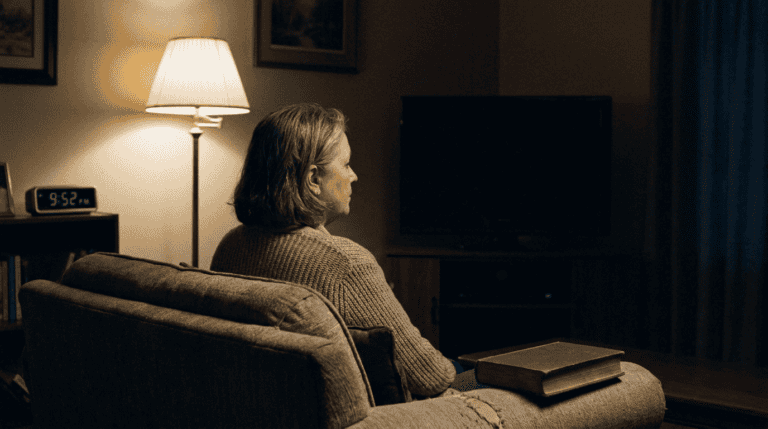
The term arrives at a specific moment. A woman has been exhausted for eighteen months, her standard blood panel came back unremarkable, and somewhere on the internet a page explains that her adrenal glands are depleted and offers a saliva kit that will demonstrate it.
The offer is precise where medicine has been vague, which is exactly why it lands. This review sets out what has been measured, by whom, and what the measurements showed. It is a reading of published endocrinology; we are not clinicians, the findings belong to Cadegiani and Kater and to the Endocrine Society, and only the plain-English rendering is ours.
The short answer: adrenal fatigue is not a substantiated medical condition, and the specific reason matters more than the verdict. A 2016 systematic review screened 3,470 papers, assessed 58, and found they were not measuring the same thing: nine different cortisol methods, no agreed standard, and no defined cut-off separating a “fatigued” result from an ordinary one.¹ That absence has a name worth having, because it is what you are actually buying when you buy the kit: the missing threshold. The panel returns a real number. There is nothing established to compare it against.
- 3,470 articles were screened for the 2016 systematic review; 58 met inclusion criteria and were assessed.¹
- Those 58 studies used nine different methods of assessing cortisol (the hormone the theory is built on), with no agreed standard between them.¹
- Study sizes ranged from 16 to 4,299 participants, with a median of 72.¹
- The review’s stated conclusion is that there is no substantiation that adrenal fatigue is an actual medical condition.¹
- The Endocrine Society states separately that no scientific proof exists to support adrenal fatigue as a true medical condition, and that the tests sold for it are not based on scientific facts.²
The source for this review
Flávio A. Cadegiani and Claudio E. Kater
Both physicians at the Adrenal and Hypertension Unit, Division of Endocrinology and Metabolism, Escola Paulista de Medicina, Federal University of São Paulo — the affiliation printed on the paper. Kater (ResearchGate · Scholar · UNIFESP faculty page) is the senior author and a long-standing adrenal researcher; Cadegiani (ORCID · LinkedIn) is the first author.
What we read: Cadegiani & Kater, BMC Endocrine Disorders 16:48 (2016), and the erratum published the same year.¹ The review is open access, so every figure below can be checked at source.
Where to read it: The review in full · The erratum · The Endocrine Society statement
Scope and method of this review
This piece covers one question: whether the diagnostic entity commonly sold as adrenal fatigue is supported by the published literature. It draws on the largest systematic review of the question, published in BMC Endocrine Disorders in 2016, and on the position statement of the professional body for endocrinology.¹²
What it does not cover is equally important. It does not address adrenal insufficiency (a genuine and serious endocrine disorder in which the adrenal glands do not produce enough hormone, diagnosed by defined testing and treated with replacement). It does not evaluate whether exhaustion in midlife is real, which is not in dispute. And it does not assess any individual product, because the review assessed the underlying claim rather than the market built on it.
Sources were selected on two criteria: the systematic review with the largest published sample of studies on this specific question, and the statement of the relevant professional body. Both are linked in full below.
What the studies measured
The review’s central finding is not that the studies disagreed about an answer. It is that they were not measuring the same thing.
| Assessment method | Studies using it | Limitation named by the review |
|---|---|---|
| Direct awakening cortisol | 29 | No agreed cut-off defining a “fatigued” result |
| Cortisol awakening response | 27 | Sampling protocols varied between studies |
| Salivary cortisol rhythm | 26 | Methodology not endorsed for this purpose by endocrinologists |
| Morning serum cortisol | 22 | Single time point, wide normal range |
| Night salivary cortisol | 22 | Validated for a different clinical question |
| Dexamethasone suppression test | 9 | Used in only a minority of the 58 studies |
| 24-hour urinary free cortisol | 3 | Too few studies to compare against the rest |
Source: Cadegiani & Kater (2016), BMC Endocrine Disorders 16:48. Counts are of studies within the 58 assessed; several studies used more than one method.¹
The review names four problems across this body of work: heterogeneity of study design, the descriptive rather than analytical nature of most studies, poor quality of fatigue assessment, and the use of an unsubstantiated methodology for cortisol assessment that endocrinologists do not endorse.¹
The fourth is the one that matters commercially. A saliva panel sold to demonstrate adrenal fatigue is generally performing a measurement that has no validated threshold for the condition it claims to detect, which is a different failure from the test being inaccurate.
Exhaustion that has lasted eighteen months is usually being produced by something, and the search for a laboratory value can quietly displace an honest look at the load itself. The Quiet Audit is a private ten-minute pass through what the week is actually costing. Start here.
Key terms
Adrenal insufficiency is a diagnosed endocrine condition in which the adrenal glands do not produce enough hormone. It is real, it is uncommon, and it has defined diagnostic criteria and established treatment.
Cortisol is a hormone that follows a daily rhythm, ordinarily highest shortly after waking and lowest late at night. Its level at any single moment is a poor summary of that rhythm.
Cortisol awakening response is the rise measured in the first 30 to 45 minutes after waking. It is a legitimate research measure with well-known sensitivity to sampling timing and to what the participant did that morning.
Dexamethasone suppression test is a clinical test in which a synthetic steroid is given and hormone levels are measured afterwards to see whether the system responds normally. It is used for defined endocrine questions rather than for fatigue.
How strong is this evidence?
Strong, and pointing in one direction. A systematic review of 58 studies and the position of the relevant professional body agree that adrenal fatigue is not a substantiated medical condition, and that the tests marketed for it are not validated for the purpose.¹²
What the grade does not cover: this is strong evidence that a label is unsupported. It is not evidence about any individual woman’s exhaustion, and the review itself criticises how poorly fatigue was assessed across the studies it examined.¹ A confident finding about a category is compatible with an unanswered question about a person.
Where the argument gets misread
Two errors run in opposite directions and both are common.
The first treats the review as a verdict on the symptoms. It is not. Nobody in this literature disputes that people arrive exhausted; the dispute is about whether a specific proposed mechanism and a specific set of tests describe it. The Endocrine Society, having said the condition is unproven, goes on to list what those symptoms may instead represent, including adrenal insufficiency, depression, and obstructive sleep apnoea, and states that getting a real diagnosis matters.²
The second error treats the absence of a validated test as proof that nothing is wrong. That does not follow either. A measurement problem is a measurement problem. It is not information about the person being measured, which is why the useful next step after an unrevealing panel is a different question rather than a private conclusion. A normal result is itself a finding, and the decision about whether to buy a cortisol test has its own review.
Five things that look like this and are not this
The section above protects the literature. This one is for the reader, and it is the section the pages selling the kits do not write, because it invites you to look somewhere other than at their product.
Five diagnosable conditions produce eighteen months of exhaustion that feels, from the inside, exactly like the description on the sales page. The Endocrine Society names several of them itself.²
- Adrenal insufficiency. The real condition, uncommon and treatable. It tends to bring dizziness on standing, unexplained weight loss, salt craving and sometimes skin darkening, and it is diagnosed by defined testing rather than by a saliva kit.
- Obstructive sleep apnoea. Waking unrefreshed after a full night is the signature, and someone else has usually noticed the breathing before the person has.
- Hypothyroidism. Fatigue with cold intolerance, dry skin, weight change and slowed thinking. A single blood test settles the question.
- Iron deficiency, with or without anaemia. Common in women in the years before the final period, and it produces breathlessness on stairs alongside the tiredness.
- Depression. Named explicitly by the Endocrine Society as one of the conditions the symptoms may represent, and the one most likely to be dismissed by the person experiencing it.²
None of these rules the exhaustion in, and none of them rules anything else out. They are questions worth raising with a clinician in that order, not a list anyone can clear themselves on. A page cannot exclude a diagnosis, and this one is not trying to.
Who else has assessed this
One systematic review, however large, is one research group. Three other bodies have looked at the same question.
The Endocrine Society, the professional body for endocrinology in the United States, states that no scientific proof exists to support adrenal fatigue as a true medical condition, that the tests sold for it are not based on scientific facts, and that getting a real diagnosis matters.²
The Mayo Clinic reaches the same conclusion in its patient-facing guidance and makes the same distinction: the label is unaccepted, the exhaustion is not.³
Dr. James L. Wilson (site · Amazon author page), a chiropractor and naturopath rather than an endocrinologist, introduced the term in a 1998 book. Knowing where a diagnosis came from is not an argument against it, but it does explain why the literature assessing it begins twenty years later and outside endocrinology.
Two professional bodies and one systematic review, arriving at the same place. That is as close to settled as this kind of question gets.
A measurement problem is not information about the person measured.
What this actually changes
Not the exhaustion. Nothing in this review touches that, and nothing in it suggests the eighteen months were imagined.
What it changes is what the next hundred pounds buys. A woman who understands the missing threshold stops reading a saliva result as a verdict on her adrenal glands and starts reading it as a number without a reference range — which is what it is. That is not a smaller finding than a diagnosis. It is the finding that stops the search from circling.
It also changes what she is entitled to ask for. The absence of a validated test for a proposed condition is not evidence that nothing is wrong; it is evidence that this particular instrument cannot answer the question. The instrument that can is a clinical differential, and the five conditions above are where it starts.
When this belongs with a doctor
Persistent exhaustion is worth a clinical assessment rather than a home kit, and there are specific findings that make it urgent rather than routine: unexplained weight loss, dizziness or faintness on standing, darkening of the skin, persistent nausea or abdominal pain, or exhaustion that arrived suddenly rather than gradually. Those are among the presentations of genuine adrenal insufficiency, which is treatable and is missed when the search stops at a saliva panel. Anyone already taking steroid medication, or stopping one, should raise fatigue with the prescriber rather than with a supplement retailer.
What to say at the appointment, and what you will probably hear back
One sentence is rarely enough, because there is a standard reply waiting for it. Here is the sentence, the likely reply, and the second line. Short enough to read off a phone screen.
Short enough to read off a phone screen
Say: “I have been exhausted for eighteen months and I would like it treated as a symptom with a differential rather than as a general complaint.”
If you hear “your bloods were normal”: “I understand. I would still like thyroid, ferritin and B12 rechecked, a view on whether a sleep review is warranted, and adrenal insufficiency considered explicitly, so those are excluded before we settle on stress.”
Neither is a demand and neither requests a named treatment. Those are ordinary tests and one referral question, and they are what converts ten minutes into a differential.
If what you want to take into that appointment is a clear account of what the last eighteen months have actually contained, rather than a fortnight of half-remembered days, the Quiet Audit is ten private minutes on exactly that. No programme, no advice, nobody sees your answers. Start here.
The one move
The one move
Before buying any panel, write down the one sentence you want it to answer. Then ask whether a validated test for that sentence exists, and who validated it. Most of the kits sold for this fail at the second question, and the exercise takes four minutes.
Four minutes, before any money changes hands. That is the entire instruction.
Questions this review is asked
Is adrenal fatigue real?
Not as a diagnosable medical condition. A 2016 systematic review of 58 studies concluded there is no substantiation for it, and the Endocrine Society states no scientific proof exists to support it.¹² The exhaustion people describe when they use the term is not in dispute.
Then why do so many practitioners diagnose it?
Because it offers a mechanism and a plan where conventional assessment often offers a normal result and no next step. The label meets a real need. The review’s objection is to its evidentiary basis, not to the need it answers.
Are the saliva tests inaccurate?
That is the wrong question. Salivary cortisol measurement is a legitimate technique for certain clinical purposes. The problem identified in the review is that no validated threshold exists for the condition these panels claim to identify, so a number comes back with nothing established to compare it against.¹
What is adrenal insufficiency, and how is it different?
It is a genuine endocrine disorder in which the glands do not produce enough hormone. It has defined diagnostic testing, established treatment, and a recognised symptom picture that includes dizziness on standing and unexplained weight loss. It is diagnosed clinically, not by mail-order kit.
If the tests do not help, what should be asked at an appointment instead?
That the exhaustion be treated as a symptom requiring a differential, and that the specific alternatives be named and excluded in order. The Endocrine Society lists adrenal insufficiency, depression and obstructive sleep apnoea among the possibilities worth ruling out.²
Does this mean supplements marketed for adrenal support do nothing?
This review did not test products, so it cannot answer that. What it establishes is that the condition those products are sold to treat is not substantiated, which makes any claim of treating it unsupported by definition.
Informational, not medical advice. Persistent or sudden exhaustion, and any of the findings listed above, belong with your clinician.
Where to go next
In order, and each for a reason.
1. If a panel has already come back unremarkable, start with what a standard panel checks and what it never looks at — a normal result is a finding, not a dead end.
2. Then the evidence review of the cortisol test itself, which is the specific purchase this review is most often used to justify.
3. Then the pattern that separates burnout from a medical cause, because it is the question underneath the search, and it is answerable without buying anything.
The exhaustion is not in dispute. Only the label is, and the label was never the thing that was going to help.
References
1. Cadegiani, F. A., & Kater, C. E. (2016). Adrenal fatigue does not exist: a systematic review. BMC Endocrine Disorders, 16, 48. Read the review
2. Endocrine Society. Adrenal Fatigue. Endocrine Library. Read the statement
3. Mayo Clinic. Adrenal fatigue: What causes it? Read the guidance
On the researchers. Flávio Cadegiani and Claudio Kater are physicians and endocrinology researchers, and the affiliation given on the 2016 paper is the Adrenal and Hypertension Unit, Division of Endocrinology and Metabolism, Escola Paulista de Medicina, Federal University of São Paulo. Neither has any connection to this publication, and neither has reviewed this summary of their work.
Sourcing, disclosure and disclaimers
This is not medical advice. Blue Leaf Journal publishes general information for a general readership. Nothing here is a diagnosis, a treatment recommendation, or a substitute for care from a clinician who knows your history.
We are not clinicians. Blue Leaf Journal is an independent publication. We read published research and translate it. The findings belong to the researchers and institutions named and linked above; the plain-English rendering is ours, and so is any error in it.
No affiliation and no endorsement. Blue Leaf Journal is not affiliated with Flávio Cadegiani, Claudio Kater, the Federal University of São Paulo, the Endocrine Society or the Mayo Clinic. None of them has reviewed, approved or endorsed this article, and none of them is responsible for it. They are cited because their published work is the evidence for what it says.
No commercial relationship. Nobody named above paid for or was paid for this coverage. There are no affiliate links, no sponsored placements and no gifted products in this article. No test, kit or supplement mentioned anywhere on this page is sold by us or by anyone paying us.
How this was checked. Every figure above is drawn from the open-access review or the publishing body’s own page, each linked in the references, and can be verified there. Sources were checked on 27 August 2026. If you find something we have got wrong, write to miriamalderton@blueleafjournal.com and we will correct it and say that we did.
Miriam Alderton is Research Editor at Blue Leaf Journal. She reads the methods section first and the abstract last, and every figure in this piece is linked to its source above.
Written by Miriam Alderton, Research Editor, for Blue Leaf Journal. Updated: 28 August 2026.