Three Centuries of Women’s Work, Side by Side. Your Tuesday Is the Best One Yet.
Load · The Britannica Series, Vol. 1 · 10 min read · Three centuries of women’s work read from the encyclopaedia and laid side by side, and why the century you are standing in is the best one
Based on the published research of Ruth Schwartz Cowan, PhD, Professor Emerita in the Department of History and Sociology of Science, University of Pennsylvania, and on the reference scholarship of Encyclopaedia Britannica. Faculty profile · Britannica, Home appliance
Every machine since the washing machine was sold on the same promise. Britannica records what actually happened to the hours, and the answer is better news for you than for any woman who came before.
It is 9:40 on a Tuesday night. You are loading the dishwasher with one hand, answering a text about tomorrow’s pickup with the other, and already running the eight o’clock meeting in your head.
Would you swap this exact Tuesday for the same Tuesday in 1850? Or the same one in 1955?
It is a better question than it sounds, because it answers a real one. Why don’t women have more free time in 2026, when almost every physical chore in the house was handed to a machine?
So we went and looked it up properly. Not on a wellness blog. In Encyclopaedia Britannica, and in the work of the historian who spent a career on exactly this question. This is a reading of published research and reference scholarship. We are not historians; the findings below belong to Ruth Schwartz Cowan and the researchers named, and the plain-English version is ours.
The short answer: across three centuries the physical work of running a house collapsed and the thinking work quietly grew to replace it. Britannica dates the labour-saving machines to the 20th century and then says something an encyclopaedia rarely bothers to say: they removed the drudgery but “did little to lessen the amount of time she spent on household duties.”¹ Cowan worked out why. Each machine raised the standard for what a properly run home was supposed to look like, and the new standard absorbed the hour the machine had just freed.²
The skim version
- Before industrialisation, Britannica lists the job as grinding grain by hand in a stone quern, drawing and carrying water, gathering wood and churning butter.³
- Britannica dates household machines mainly to the 20th century and credits them with removing a great deal of drudgery, then records that household hours barely moved.¹
- American women’s weekly housework fell from about 40 hours in 1965 to about 27 by the late 1990s. Men’s rose from about 12 to about 16 over the same years.⁴
- Across 1989 to 1999, women’s paid hours rose 17 per cent while their total work time rose 2 per cent. The freed hours went to the job, not to the evening.⁴
- The honest gap: none of this was measured on the specific thing you are carrying tonight. The historical record counts hours, and the hardest part of a 2026 Tuesday is attention, which almost nobody counted until recently.
In this article: The 19th century · The 20th century · All three, side by side · The 21st century · Which century would you pick · The one move · FAQ
What did a woman’s day look like in the 19th century?
It was a list of physical verbs, and every one of them had an end you could see.
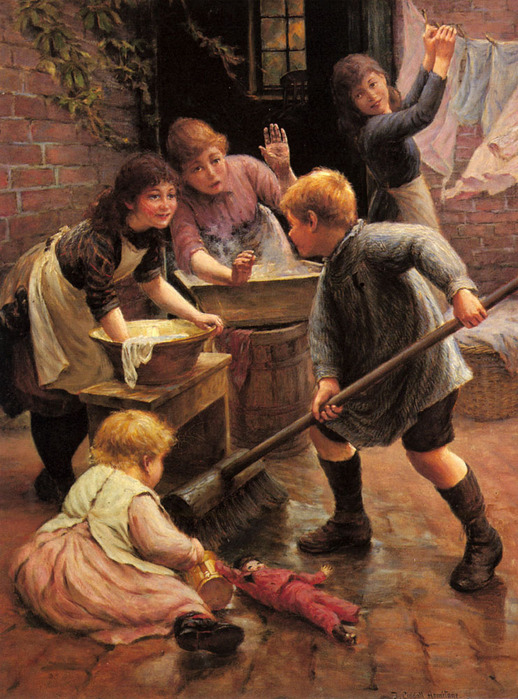
Britannica’s history of how work was organised sets out what the household actually required before machines. Women ground grain by hand in a stone quern. They drew and carried the water. They gathered the wood. They churned the milk until it turned into butter.³
Laundry was not slotted between two other things. It took the better part of a day, which is why so many households gave it one, and the water had to be carried and heated before anything got wet.
Then the century turned the house inside out. Britannica puts the shift in one sentence: industrialisation moved the location of work from the home to the factory.³ The house stopped being the place where things were produced. And the encyclopaedia records something that surprises most people reading it for the first time. The arrangement of the man as provider, with women taking on most of the domestic work, only really settles into place around the middle of the 19th century.³
Which is worth sitting with for a second. The arrangement a great many women still quietly measure themselves against is not ancient and nobody designed it. It is roughly as old as the postage stamp.
What did the 20th century actually change?
Almost everything, and then not the thing it advertised.
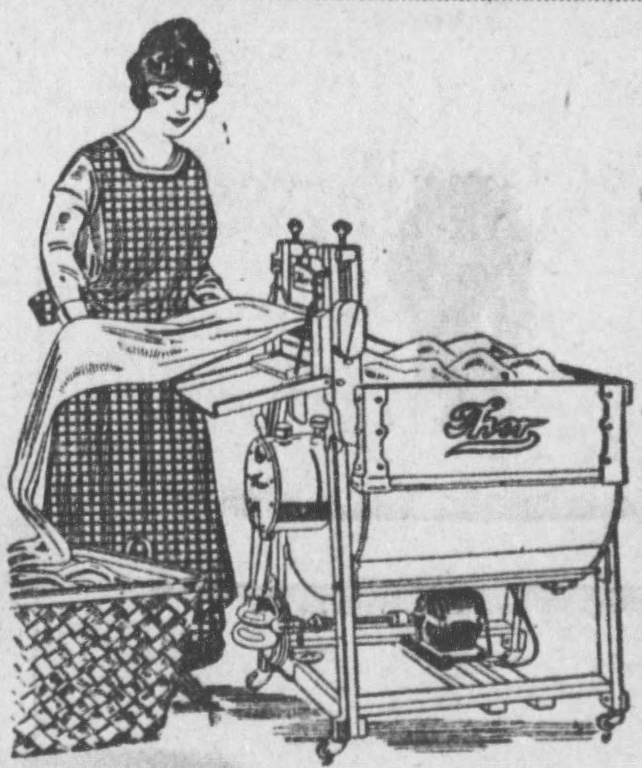
Britannica defines home appliances as electric, electromechanical or gas-powered devices introduced mainly in the 20th century to save labour and time in the household, and credits them with eliminating a great deal of drudgery.¹ That half is true and worth being glad about. Nobody misses hauling water.
The same century moved women into paid work at a scale the 19th had no category for.

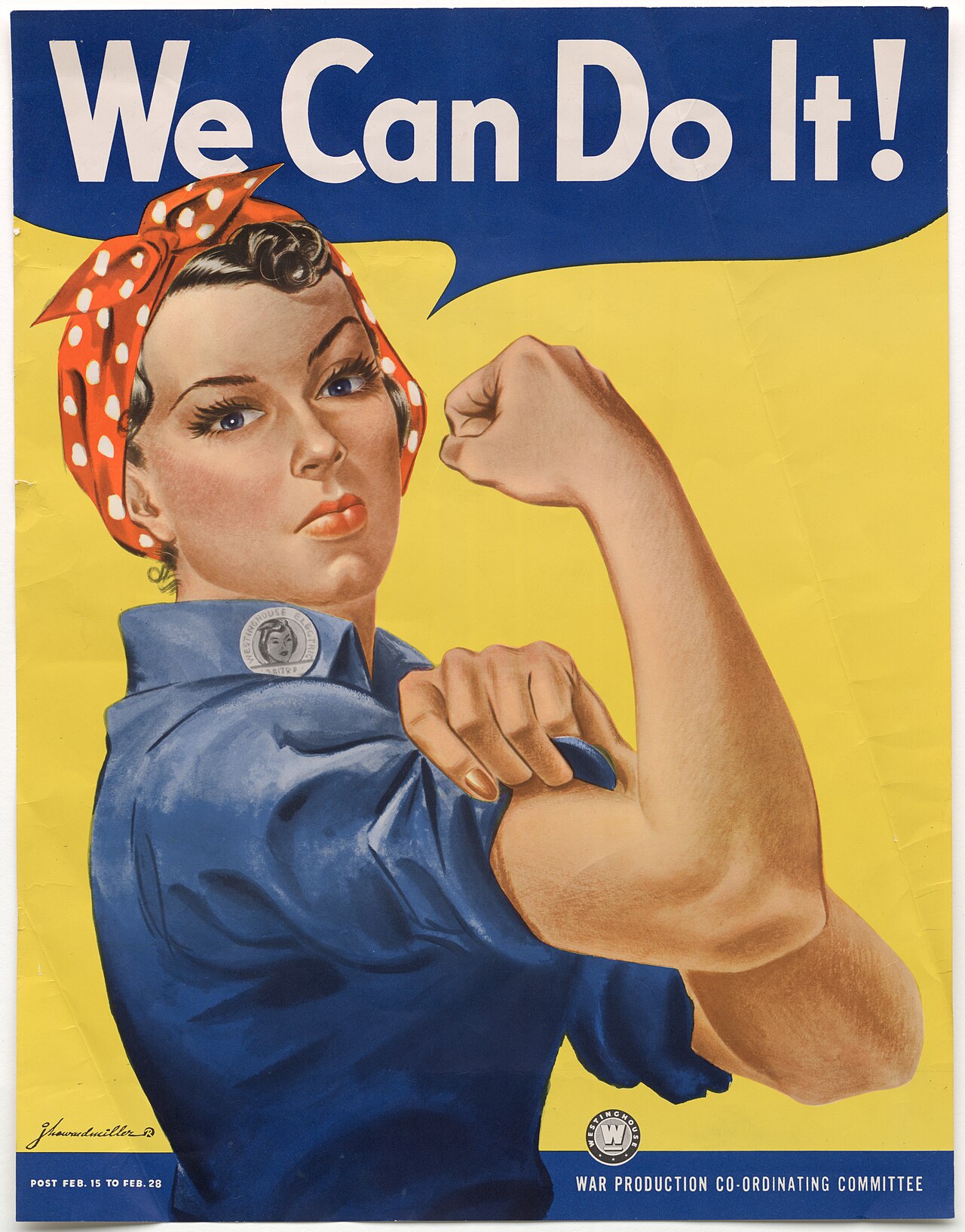
By mid-century the machines were in the shops, priced and lit and lined up in the window, every one of them sold on the same sentence.
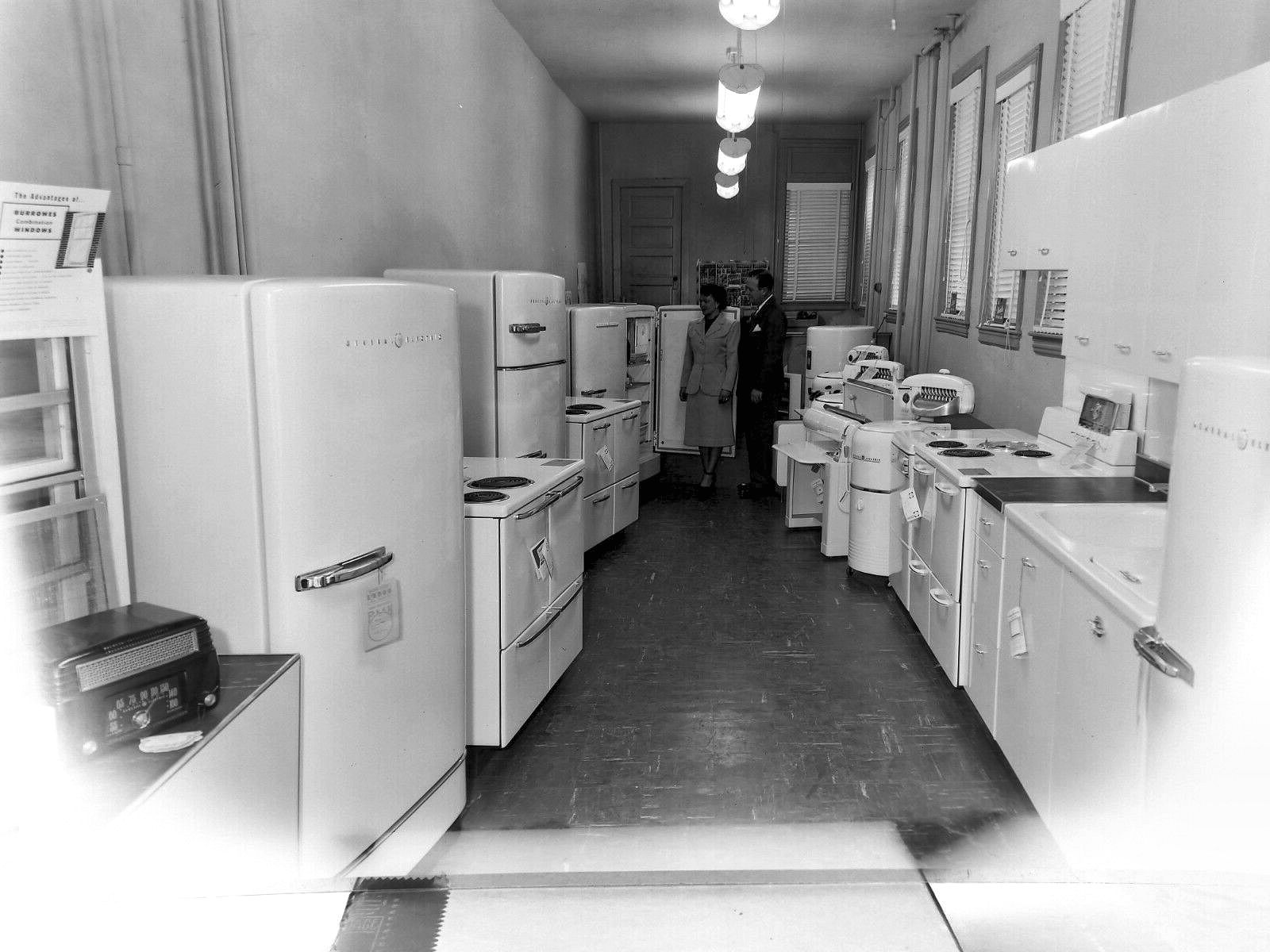
Here is the part where Britannica stops being polite. Having credited the machines with removing drudgery, the entry adds that these innovations “did little to lessen the amount of time she spent on household duties.”¹ An encyclopaedia does not write a sentence like that for effect. It is there because the pattern had been documented for a century.
The numbers came later and they are worth having. Economists at the University of Michigan’s Institute for Social Research tracked American households through the Panel Study of Income Dynamics, one of the longest-running household surveys anywhere. Women’s weekly housework fell from roughly 40 hours in 1965 to about 27 by the late 1990s. Men’s moved the other way across the same period, from about 12 hours to about 16.⁴
Then the finding that explains your Tuesday. Across the 1989 to 1999 decade, women’s paid working hours rose 17 per cent, while their total work time, paid job and housework added together, rose 2 per cent.⁴ The hours the machines handed back did not turn into evenings. They turned into the job.
What the research found
Cowan’s argument, built from household manuals, advertisements and industrial records rather than from opinion, is that a household machine does two things at once. It makes one task faster, and it resets what an adequately run home is expected to look like. The second effect eats the time the first one saved. Clean clothes every day was not a standard anyone held in 1850. The washing machine created it.²
The limitation: the historical record here is mostly American and mostly middle-class, because those are the households that left manuals, receipts and magazines behind. The time-use figures are American too, and they count hours rather than attention, which is precisely the thing that got harder after 1999.⁴ Nobody has run Cowan’s analysis on a smartphone, so the 21st-century half of this article rests on a well-evidenced pattern rather than on a study of your exact Tuesday.
If the pattern is recognisable but you want to see which part of it is running in your own week, that is worth ten quiet minutes on your own. Start here.
The source for this piece
Ruth Schwartz Cowan, PhD
Professor Emerita in the Department of History and Sociology of Science at the University of Pennsylvania, and one of the founding figures in the history of technology. Her work covers domestic technology, the history of medical technology, and gender and science.
What we read: More Work for Mother: The Ironies of Household Technology from the Open Hearth to the Microwave, her 1983 book tracing two centuries of household machines and what each one did to the hours.²
Where to follow her work: Faculty profile, University of Pennsylvania
Three centuries, side by side
The clearest way to see it is to put the same six questions to all three centuries at once.
| 19th century | 20th century | 21st century | |
|---|---|---|---|
| Laundry | Most of a day, by hand, starting with water you carried and heated | A machine in the basement, and clean clothes expected daily | A machine that sends your phone a message when it has finished |
| Dinner | Built from raw ingredients, after you lit the fire | Bought at a shop, cooked on a gas ring, on the table at six | Ordered, delivered, or assembled in nine minutes |
| Knowing things | Whatever the neighbours knew | The doctor, and the encyclopaedia on the shelf | Everything, instantly, including at 3am |
| Where the work stopped | When the daylight went | At the front door, mostly | It no longer has a place to stop |
| What the hard part was | Your back and your hands | Your hours | Your attention |
| Who could see the work | Everybody. It was visible from the yard | Partly. Paid work was counted, home work was not | Almost nobody, until researchers started measuring it |
Read the bottom two rows together and the whole three-century story is sitting there. The work did not get heavier. It got quieter.
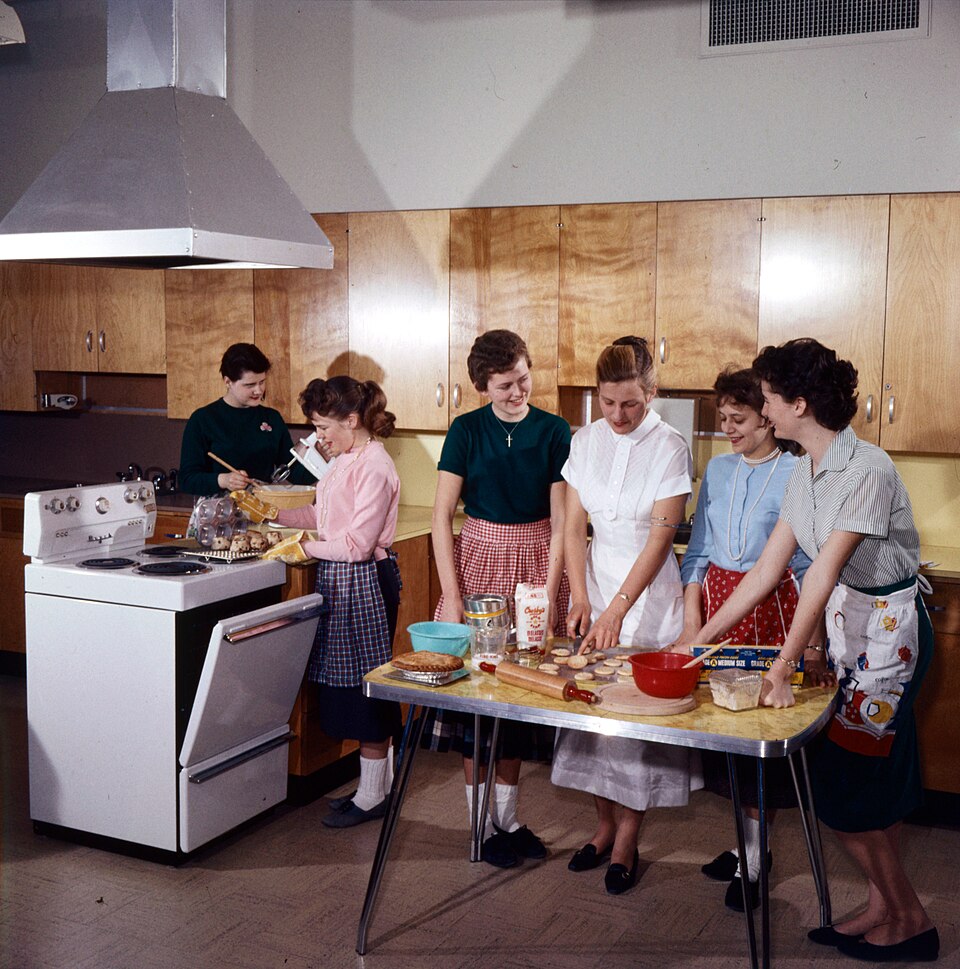
You can watch the standard being taught, formally, in a classroom.
Who else has measured this
Cowan’s finding is not one historian’s argument, and the 21st-century half of it has its own separate research trail.
Judy Wajcman, PhD, Emeritus Professor of Sociology at the London School of Economics and Principal Investigator for Women in Data Science and AI, has spent the last decade on the digital version of exactly this question. Her book Pressed for Time argues that digital technology did not steal our hours so much as reorganise them, and that the feeling of acceleration comes from how the time is fragmented rather than from how much of it there is.⁵ Researcher profile · The book
Frank P. Stafford, PhD, Professor Emeritus of Economics at the University of Michigan, is one of the economists behind the time-use analysis in this article, drawn from the Panel Study of Income Dynamics, which has followed the same American families since 1968.⁴ Faculty profile · The study
Arlie Russell Hochschild, Professor Emerita of Sociology at the University of California, Berkeley, named the pattern for a general readership in The Second Shift, her study of what happened inside two-job households once paid work was added and domestic work was not subtracted. Faculty profile
A historian working from 19th-century household manuals, a sociologist working on digital time, an economist working from sixty years of survey data, and the researcher who named the second shift. Four methods, one shape.
The work did not get heavier. It got quieter.
So why don’t women have more free time in the 21st century?
Because the newest machines removed the one thing every older machine kept, which was a place where the task lived and then stopped.

The washing machine stayed in the laundry room. The typewriter stayed on the desk. Even the 1950s telephone was screwed to a wall in the hall, and when you walked away from it you had genuinely walked away.
The phone in your pocket goes to the school gate, to dinner and onto the bedside table. Email did not only replace slower post; it reset how quickly a reply is owed, from a working day, to an afternoon, to an hour in some jobs. This is Wajcman’s point rather than a complaint about phones. The hours did not vanish. They got cut into pieces small enough that none of them holds a whole thought.⁵

So the honest scoreboard for your century reads like this. The physical work is a fraction of what it was. The tracking job is larger than it has ever been. You hold the calendar, the appointments, the shoe sizes, the birthdays, the state of the fridge and the shape of everyone’s week, which is the mental load, and it keeps running after the visible tasks are finished.
Which century would you actually pick?
This one. It is not close.
You did not carry water this morning. You have not ground grain, gathered firewood or churned anything into butter, and the entire question of whether the clothes get clean was settled by a machine while you were doing something else. Britannica is unambiguous that the drudgery went, and the drudgery was enormous.
But the better reason to pick this century is in the bottom row of that table.
The 19th-century woman had no word for the part of the work nobody could see. Neither did the woman in the 1959 home economics class. There was no research, no measurement, no term for it, and nowhere to point when the day had emptied her out and the house looked fine.
You have all of it. What you are carrying has a name, a body of research behind it, and a growing number of women describing it in the same words you would use. That ordering matters more than it sounds, because in every century in this article the work got named before anything about it changed. Cowan named the machinery in 1983. Hochschild named the second shift in 1989. The naming came first, every time.
Your great-grandmother would take your Tuesday without a second’s hesitation. She would also want to know what you plan to do with the half she never got to name.
The one move: the two-column minute
Five minutes tonight, with a pen, and nothing to tick off afterwards.
Write down the last three things you did on a phone or a laptop after 8pm yesterday. Beside each one write a single word: finished, or watching. Finished means it had an end you reached, like sending the one email. Watching means there was no natural stopping point, like the inbox or a group chat.
Your great-grandmother’s list would have been three out of three finished. Every job she had ended. That is the whole difference between her century and yours, in your own handwriting, in about a minute. You are not being asked to give up the phone. You are being asked to see which column your evenings are going into, because that is the thing no previous century could see.
Common questions about women, housework and free time
Did household appliances actually save time?
On each individual task, yes, and dramatically. Britannica credits them with removing a great deal of drudgery while recording that the total time spent on household duties barely moved.¹ Both halves of that are true at once, and the second half is the one nobody advertises.
How many hours a week did women spend on housework in the 1950s?
The best long-run American figures start in 1965, at about 40 hours a week, falling to roughly 27 by the late 1990s.⁴ The 1950s kitchen looks calm in photographs because a photograph does not show the hours.
Is this article saying men do not help?
No, and the data points the other way. Men’s housework rose from about 12 hours a week in 1965 to about 16 by the late 1990s.⁴ The mechanism in all three centuries is machinery and rising standards, not anybody’s bad behaviour, which is exactly why it is so hard to see and so useless to be angry at a person about.
What is the mental load, and when did it get a name?
It is the planning, remembering and monitoring that keeps a household running, as distinct from the tasks themselves. Cowan described the standard-raising machinery in 1983 and Hochschild named the second shift in 1989. The cognitive half has only been measured properly in the last decade or so, which is why no earlier century had a word for it.
When is being this tired worth a doctor’s appointment?
Rough markers: if the exhaustion has been most days for more than a fortnight, if it now covers things you used to look forward to, or if sleep, appetite or mood have shifted with it. Being able to run everything in public says nothing about whether you should have to, and a history article is not a substitute for someone who knows your history.
The one move
Tonight, write the last three things you did on a screen after 8pm and mark each one finished or watching. One minute, one pen, no plan attached.
If most of your evenings look like the one at the top of this article, that pattern is worth a proper look. The Quiet Audit is a private ten-minute pass through where the hours are actually going. Start here.
Related reading: the same machinery shows up in the list nobody else can see, in the two words that quietly cost the most, and in the phases of housework nobody counts.
On the sources. Ruth Schwartz Cowan is a historian of technology, not a clinician or an economist: her work explains how domestic machinery changed household expectations, and it says nothing about any individual woman’s health or circumstances. Britannica is a reference work, cited here for definitions and historical framing rather than for original research.
Sourcing, disclosure and disclaimers
This is not medical advice. Blue Leaf Journal publishes general information for a general readership. Nothing here is a diagnosis, a treatment recommendation, or a substitute for care from a clinician who knows your history.
We are not historians or economists. Blue Leaf Journal is an independent publication. We read published research and reference scholarship and translate it. The findings belong to the researchers and institutions named and linked above; the plain-English rendering is ours, and so is any error in it.
No affiliation and no endorsement. Blue Leaf Journal is not affiliated with Ruth Schwartz Cowan, Judy Wajcman, Frank P. Stafford, Arlie Russell Hochschild, Encyclopaedia Britannica, the University of Pennsylvania, the London School of Economics, the University of Michigan or the University of California, Berkeley. None of them has reviewed, approved or endorsed this article, and none of them is responsible for it. They are cited because their published work is the evidence for what it says.
No commercial relationship. Nobody named above paid for or was paid for this coverage. There are no affiliate links, no sponsored placements and no gifted products in this article. Historical images are public domain, sourced through Wikimedia Commons from the Imperial War Museum, the U.S. National Archives, the Library of Congress and Library and Archives Canada, and credited under each image.
How this was checked. Every quotation and figure above was checked against the cited source on 9 September 2026, and each source is linked in the references. If you find something we have got wrong, write to norawhitfield@blueleafjournal.com and we will correct it and say that we did.
References
1. Encyclopaedia Britannica, “Home appliance”. Definition and history of 20th-century labour-saving household devices.
2. Cowan, R.S. (1983). More Work for Mother: The Ironies of Household Technology from the Open Hearth to the Microwave. Basic Books. Author profile, University of Pennsylvania.
3. Encyclopaedia Britannica, “History of the organization of work: organization of work in the industrial age”. Pre-industrial domestic labour, the move of work from home to factory, and the mid-19th-century emergence of the provider arrangement.
4. University of Michigan Institute for Social Research, “U.S. husbands are doing more housework while wives are doing less”, reporting analysis of Panel Study of Income Dynamics data by F. Thomas Juster, Hiromi Ono and Frank P. Stafford.
5. Wajcman, J. (2015). Pressed for Time: The Acceleration of Life in Digital Capitalism. University of Chicago Press.
Nora Whitfield writes for Blue Leaf Journal, where the working rule is that a mechanism you can name is easier to live with than one you cannot. She reads the limitations section before the conclusion, and passes on what she finds there.
Written by Nora Whitfield for Blue Leaf Journal. Updated: 9 September 2026.