Before 1974, the Answer Depended on the Bank. And on Whether You Were Married.
Load · The Britannica Series, Vol. 11 · 10 min read · the two answers page one gives you, what the 1972 hearings actually found, and the gap that is left
Based on the published work of Louis Hyman, PhD, Dorothy Ross Professor of Political Economy in History at Johns Hopkins University, whose Debtor Nation (Princeton University Press, 2011) traced how American credit was built and who it was built for, and on the congressional record and Federal Reserve research that followed. Johns Hopkins faculty page · his own site · on X · Britannica
Before 1974 the honest answer was: it depended on the bank, and on whether you were married. The law changed that in one sentence, and a congresswoman slipped the missing words into the bill herself.
Your mother has a story about this, or her sister does. The department store card that came in her husband’s name. The loan officer who asked what she planned to do about children. The account that closed the week she got married and reopened as Mrs. Somebody. You have heard it at a kitchen table, and then last month you saw a post saying the whole thing is a myth, and another saying women could not have credit cards at all until 1974, and you could not tell which one to believe.
So when could women get a credit card in their own name? Page one gives you both answers with equal confidence. A personal finance site says it was not until 1974 that women were allowed to apply for credit cards on their own. A policy blog answers, in its headline, that yes, women had access to credit before 1974. A history channel on YouTube calls the popular version debunked. None of them can all be right, and each is partly right.
This is a reading of published history, law review analysis and Federal Reserve research. We are not historians or financial advisers; the findings belong to the researchers and institutions named and linked below, and the plain-English version is ours.
The short answer: there was never a federal law saying women could not have credit. There was also no federal law saying lenders had to give it to them, and many did not. Under the old common-law rule of coverture, a married woman’s legal identity was folded into her husband’s, and states only began dismantling it from 1839.¹ ² By the 1960s the barrier was practice, not statute: husbands’ signatures required, wives’ salaries discounted, accounts closed on marriage.³ On 28 October 1974 President Gerald Ford signed the Equal Credit Opportunity Act, which made discrimination by sex or marital status illegal.⁴ Single women with income often did get cards before then. Married women, divorced women and widows were the ones the system was quietest about refusing.³
The skim version
- 1839. Mississippi passes the first Married Women’s Property Act, the start of the long unwinding of coverture.²
- 1972. A federal commission hears that eleven banks asked a woman for her husband’s signature on a $600 car loan they would have given a man without his wife’s.³
- 28 October 1974. The Equal Credit Opportunity Act bans credit discrimination by sex or marital status.⁴
- 1976. The Act is widened to race, religion, national origin, age and public assistance.⁵
- Today. Among sole mortgage applicants, men hold about $1,300 more in total card limits, while women hold $100 to $300 more at the median.⁶
- The honest part: nobody counted how many women were refused before 1974. The hearings collected cases and letters, not a rate, so any headline percentage for that era is a guess.
In this article: The 19th century: a wife was not a separate person · The 20th century: the letter of the law and the loan officer · The 21st century: what is left · Three centuries of her own name · Questions people ask
The 19th century: a wife was not a separate person
Start with the rule underneath everything. Encyclopaedia Britannica describes coverture as the Anglo-American common-law concept that dictated a woman’s subordinate legal status during marriage.¹ In practice it meant a married woman could not, in her own name, sign a contract, sue or be sued, or control property. Her husband held the legal personality for both of them.¹
That is not the same as having no money, or no credit. Women in colonial Boston and Newport appear in debt litigation as both creditors and debtors, one account notes, in roughly equal proportions, and local shops ran tabs on trust and reputation.⁷ Widows and single women, who were not under coverture, could and did do business. The rule bit hardest at exactly the moment most women’s financial lives began: the wedding.
The unwinding was slow and uneven. Mississippi passed the first Married Women’s Property Act in 1839, and New York’s 1848 Act let a married woman enter contracts and sue on her own behalf. Britannica notes that judges often read these statutes narrowly, so women had to keep going back for more.² By the late 1800s department stores and mail-order catalogues were issuing charge plates, the ancestors of the card in your wallet, and plenty of them went to women.⁷
The 20th century: the letter of the law and the loan officer
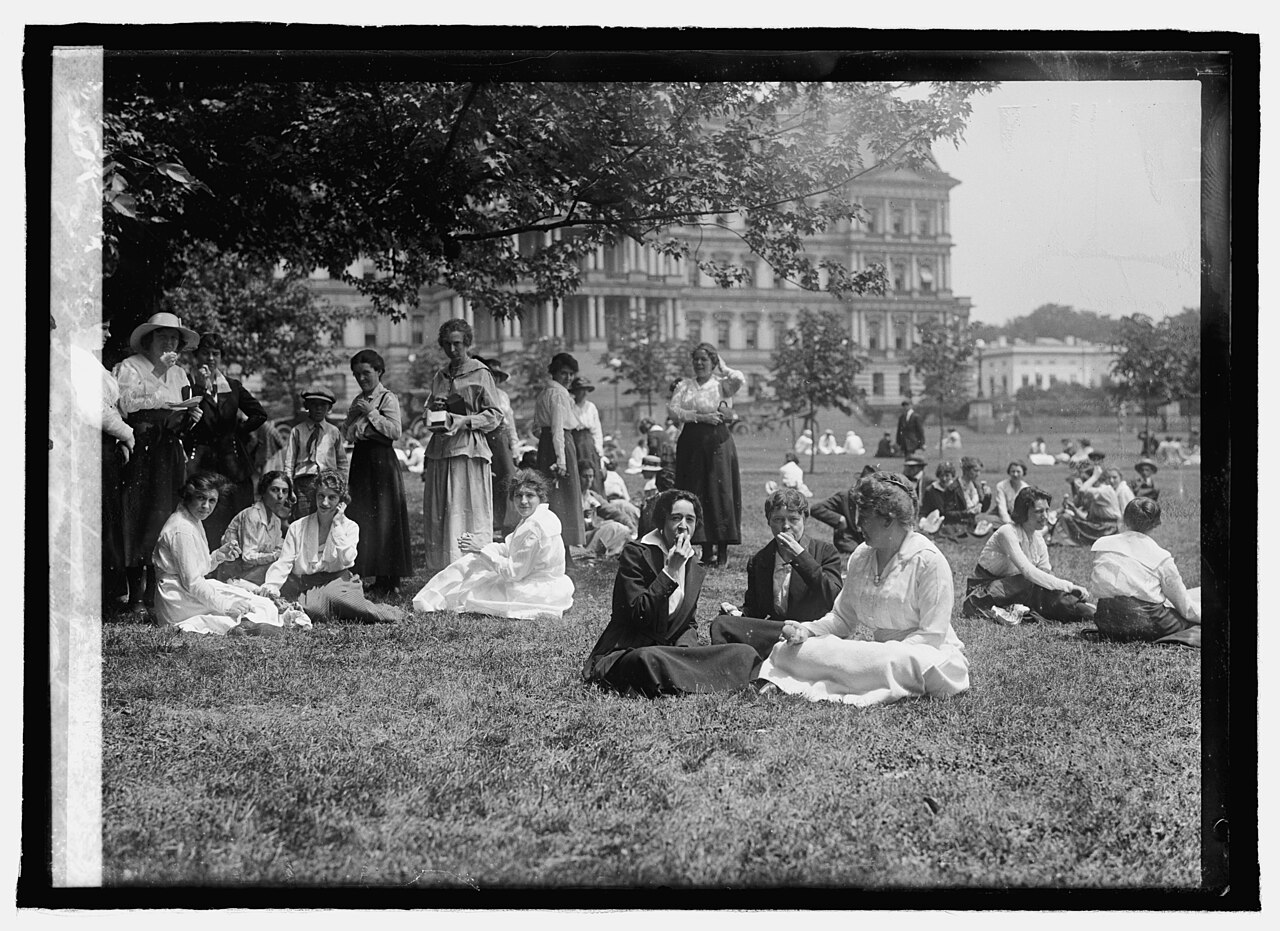
By the middle of the century nothing in federal law stopped a bank lending to a woman. Nothing required it either, and the modern credit system was being built on a picture of a household with one earner.
Louis Hyman, whose Debtor Nation devotes a chapter to race, gender and credit access, describes how the machinery of American consumer lending was assembled around that picture.⁸ Credit scoring, mortgage underwriting and department store accounts all took the male breadwinner as the unit. A wife’s income looked, to an underwriter, like a temporary thing that would stop when the first baby came.
The congressional record is where the practice becomes visible. A 1976 analysis in the San Diego Law Review, drawing on the 1972 hearings of the National Commission on Consumer Finance, catalogued what women were reporting.³ Banks discounted all or part of a working wife’s salary on joint applications. Some creditors asked about birth control and childbearing plans, and a few wanted an affidavit that she would not endanger repayment by having children. Accounts a woman had held for years were closed when she married, and she was told to reapply in her husband’s name. After a divorce she started from zero, and lenders were reluctant to count alimony or child support as income, with delays of up to twelve months.³
The same record noted studies finding that single women were better credit risks than men.³ The refusals were not about risk. They were about a picture.
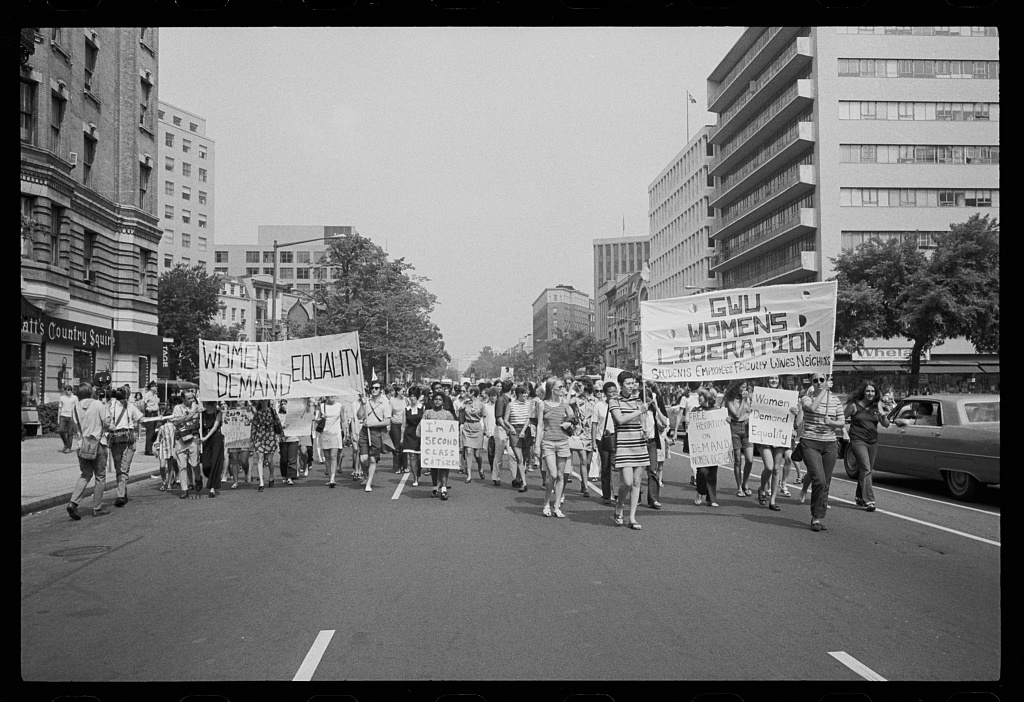
Then two women moved it. Emily Card, a political scientist working as a legislative fellow for Senator Bill Brock, helped draft the bill and gathered thousands of letters from women who had been refused.⁹ And in the House, Lindy Boggs of Louisiana found that the committee’s version of a credit bill did not mention sex or marital status at all. She added the words to the bill, had copies made, and told her colleagues: “Knowing the members composing this committee as I do, I’m sure it was just an oversight that we didn’t have ‘sex’ or ‘marital status’ included.”⁴ The committee approved it unanimously.⁴
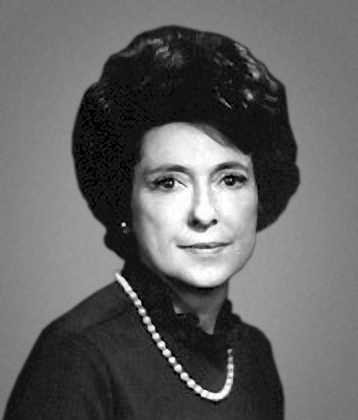
President Ford signed the Equal Credit Opportunity Act on 28 October 1974.⁴ In March 1976 he signed amendments that extended it to race, colour, religion, national origin, age and receipt of public assistance, and required lenders to give reasons for a refusal.⁵ The National Archives’ own summary calls the barriers it removed arbitrary, which is the right word.⁵
If you grew up with a money rule you never chose, the account in his name, the card you did not apply for because someone said not to bother, that is worth ten quiet minutes of its own. Start here.
The 21st century: what is left
Fifty years on, the gap has shrunk, changed shape and in places turned around.
Nathan Blascak of the Federal Reserve Bank of Philadelphia and Anna Tranfaglia of the Federal Reserve Board studied borrowers who applied for a mortgage on their own, so that household income could not blur the picture.⁶ Men held about $1,300 more in total credit card limits than women. The gap sat in the top of the distribution; at the median and below, women held $100 to $300 more than men.⁶ The authors call the gaps small in economic magnitude and note that they have moved over time in women’s favour.⁶
A follow-up looked at 5.9 million limit changes for 860,000 people between 2006 and 2017.¹⁰ In dollars, men got bigger increases. In percentages there was no difference at all, which means the lenders were treating men and women the same way after the card was issued. Whatever gap remains is set on the day the account opens.¹⁰
What the research found
Both answers on page one are describing the same fact from opposite ends. Women had credit before 1974, and plenty of single women had cards.⁷ Married, divorced and widowed women faced documented, routine refusal and conditions that men did not, and nothing in federal law stopped it until the Equal Credit Opportunity Act.³ ⁴
Now. Among comparable borrowers the remaining card-limit gap is small, concentrated at the top, and reversed at the median.⁶ After origination, lenders adjust men’s and women’s limits in the same proportion.¹⁰
The limitation: the pre-1974 evidence is testimony and case collection, gathered by people campaigning for a law, so it shows the practice was common without telling us how common. The Federal Reserve studies cover people who applied for a mortgage alone, which is a narrower and probably more affluent group than all women, and they measure limits rather than approvals.
The source for this piece
Louis Hyman, PhD
Dorothy Ross Professor of Political Economy in History, SNF Agora Institute, Johns Hopkins University, and formerly of Cornell’s ILR School. Author of Debtor Nation: The History of America in Red Ink (Princeton University Press, 2011), whose sixth chapter treats race, gender and credit access, and of Borrow and Temp. He is a historian, not a financial adviser.
What we read: the published record of Debtor Nation and its account of how consumer credit was designed around the male-earner household, read alongside the 1976 law review analysis of the 1972 hearings and the Federal Reserve research below.³ ⁶ ⁸
Where to follow his work: Johns Hopkins · louishyman.com · his Substack
Three centuries of her own name
| 19th century | 20th century | 21st century | |
|---|---|---|---|
| Could a married woman sign a contract? | Not under coverture; state by state from 1839¹ ² | Yes, legally | Yes |
| What stopped her getting credit | The law | The loan officer, until 1974³ ⁴ | Mostly her own file |
| What getting married did | Merged her legal identity with his¹ | Closed her accounts; reapply as Mrs.³ | Nothing, by law⁴ |
| Her income, as the bank saw it | His, if she was married | Discounted, pending children³ | Counted |
| The gap, measured | Not measured | Documented in cases, never as a rate³ | About $1,300 at the top; women ahead at the median⁶ |
Who else has measured this
Nathan Blascak, PhD, Advisor and Research Fellow at the Consumer Finance Institute, Federal Reserve Bank of Philadelphia, co-authored both Federal Reserve studies of gender and card limits cited here.⁶ ¹⁰
Philadelphia Fed page · the work · RePEc profile
Anna E. Tranfaglia, Business Analyst in the Division of Consumer and Community Affairs at the Board of Governors of the Federal Reserve System, is the co-author of both.⁶ ¹⁰
Federal Reserve page · the 2024 note
Emily Card, PhD, political scientist, helped draft the 1974 Act as a Senate legislative fellow and later founded the Women’s Credit and Finance Project at Harvard. Her papers are held at Tulane University.⁹
her reference entry
The National Archives keeps the record of the 1976 amendments, including President Ford’s signing statement.⁵
“On the Basis of Sex” · Lindy Boggs at the House archives
Four words, added at the last minute, and called “an oversight.”
What this actually changes
It settles the argument at the kitchen table. Your mother is not misremembering, and the post calling it a myth is not lying. They are describing different women. The single teacher with a salary in 1968 probably got her card. The married one down the hall, earning the same, may well have been asked for her husband’s signature.
It also explains an inheritance a lot of women your age carry without having chosen it. If you were raised by a woman who could not borrow in her own name, the rule that money is safer in his name, or that you should not apply because you will be refused, may have reached you as family common sense. It was a response to a bank policy that has been illegal for fifty years.
The one move
This week, pull your own credit report and read who each account belongs to. The official free source is AnnualCreditReport.com. You are looking for one thing: which cards, loans and mortgage are in your name alone, which are joint, and which you only use as an authorised user on someone else’s account.
If most of your history lives on his file, that is worth knowing now rather than on a bad day. It is a fact about paperwork, and it can be changed.
When could women get a credit card: questions people ask
Could a single woman get a credit card in 1970?
Often, yes. No federal law barred it, and the congressional record itself cites studies finding single women were better credit risks than men.³ But nothing required a lender to say yes, and some still asked for a male co-signer. The documented pattern of refusal fell most heavily on married, separated, divorced and widowed women.³
What year could a woman open a bank account without a man?
There is no single year, because there was never a federal law forbidding it. Coverture was dismantled state by state from 1839, and by the twentieth century women could legally open deposit accounts.¹ ² Some banks still imposed their own conditions on married women. The 1974 Equal Credit Opportunity Act made sex and marital status discrimination illegal in credit, which is where the refusals had been concentrated.⁴
What year could a woman get a mortgage?
Women could take out mortgages before 1974, but lenders routinely discounted a wife’s income or ignored it, which in practice kept many women from qualifying.³ The Equal Credit Opportunity Act of 1974 made that discrimination illegal in all credit, mortgages included.⁴
Was the 1974 law really because of one congresswoman?
Not only. Emily Card and a coalition of women’s and civil rights groups built the case and the evidence, and Representative Margaret Heckler played a leading role in drafting.⁴ ⁹ Lindy Boggs added the words sex and marital status to the committee bill at a decisive moment, and the committee approved it unanimously.⁴
Is there still a gender gap in credit?
A small one, and not where you might expect. Among people applying for a mortgage alone, men hold about $1,300 more in total card limits, concentrated among the highest limits, while women hold slightly more at the median.⁶ After a card is issued, men’s and women’s limits move by the same percentage.¹⁰ This is general information, not financial advice; for decisions about your own accounts, a fee-only financial planner is the right person to ask.
Ten quiet minutes, when you want them
The one move
Pull your credit report and check which accounts are in your name alone.
And if what you found in yourself while reading this was less about paperwork and more about how long you have been arranging your life around someone else’s name, that is worth ten quiet minutes. No advice, no programme, just the document. Start here.
Your mother needed a congresswoman and a photocopier. You only need the report.
Related reading: the 1950s housewife’s full-time job that nobody called a job, what happened to Rosie the Riveter after the war, and the first legal Saturday afternoon off, and who it was written for.
On the sources. This volume rests on one academic history, one contemporary law review analysis of the congressional hearings, two Federal Reserve research papers, the National Archives’ account of the 1976 amendments, two encyclopaedia entries and reference accounts of named individuals. The Boggs quotation comes from a documented secondary account, not a transcript. We name the page-one sources we are correcting and do not link them, because a link is a recommendation.
Disclosure
This article is informational and reflects published history and research. It is not financial, legal or credit advice.
We are not historians, lawyers or financial advisers. We read published research and translate it into plain English. The findings belong to the researchers and institutions named and linked above.
Blue Leaf Journal has no affiliation with, and no endorsement from, Professor Louis Hyman, Johns Hopkins University, Princeton University Press, Nathan Blascak, Anna E. Tranfaglia, the Federal Reserve Bank of Philadelphia, the Board of Governors of the Federal Reserve System, Emily Card, the National Archives, the Library of Congress, the U.S. House of Representatives, AnnualCreditReport.com or Encyclopaedia Britannica. Naming their work is citation, not partnership.
No commercial relationship. Nobody named above paid for or was paid for this coverage, and there are no affiliate links in this article.
Every figure was checked against the source listed below on 23 September 2026. If you find an error or a broken link, write to corrections@blueleafjournal.com and we will correct it and date the correction.
References
1. “Coverture.” Encyclopaedia Britannica.
2. “Married Women’s Property Acts.” Encyclopaedia Britannica.
3. Cairns, J. W. “Credit Equality Comes to Women: An Analysis of the Equal Credit Opportunity Act.” San Diego Law Review 13(4), 1976. Source for the 1972 National Commission on Consumer Finance findings.
4. “Equal Credit Opportunity Act.” Wikipedia. Source for the signing date, the Boggs amendment and quotation, and the Heckler drafting role.
5. Belback, C. “On the Basis of Sex: Equal Credit Opportunities.” National Archives, Pieces of History, March 2023.
6. Blascak, N. and Tranfaglia, A. “Decomposing Gender Differences in Bankcard Credit Limits.” Finance and Economics Discussion Series, Federal Reserve Board, 2021, revised February 2026.
7. Patnode, P. “Yes, women had access to credit before 1974.” Competitive Enterprise Institute, March 2025. Source for the colonial litigation finding and nineteenth-century charge plates.
8. Hyman, L. Debtor Nation: The History of America in Red Ink. Princeton University Press, 2011. Chapter 6, “Legitimating the Credit Infrastructure: Race, Gender, and Credit Access.”
9. “Emily Card.” Wikipedia.
10. Blascak, N. and Tranfaglia, A. “A Note on Gender Differences in Credit Card Limit Changes.” FEDS Notes, Federal Reserve Board, 20 December 2024.
About the researcher
Louis Hyman is the Dorothy Ross Professor of Political Economy in History at the SNF Agora Institute, Johns Hopkins University. A historian of capitalism, work and debt, he is the author of Debtor Nation, Borrow: The American Way of Debt and Temp: How American Work, American Business, and the American Dream Became Temporary. He previously held the Neufeld professorship at Cornell University’s ILR School.
Johns Hopkins faculty page · his own site · X · LinkedIn · Debtor Nation
His PhD is in history. He is not a financial adviser or a lawyer.
Written by Nora Whitfield for Blue Leaf Journal. Updated: 23 September 2026.