The 1950s Housewife Had a Full-Time Job Nobody Called a Job
Load · The Britannica Series, Vol. 2 · 12 min read · The 1950s housewife full-time job, counted in hours and priced by the government, set beside 1850 and 2026
Based on the published research of Nancy Folbre, PhD, Professor Emerita of Economics at the University of Massachusetts Amherst and Director of the Program on Gender and Care Work at the Political Economy Research Institute, and on the reference scholarship of Encyclopaedia Britannica. Faculty profile · Britannica, American Home Economics Association
The hours were measured. They were measured again and again, from the 1920s onward, and decades later the United States government went back and put a price on them. The number is not the one in the caption.
The photograph comes round about once a month. A woman in 1955, apron pressed, kitchen gleaming, one hand resting on a chrome handle, and a caption underneath suggesting she managed all of this without complaining.
You scroll past it. It lands anyway, somewhere just below the ribs.
So this is a piece about the 1950s housewife full-time job as the researchers who counted the hours describe it, rather than as the caption does. It is a reading of published research and reference scholarship. We are not historians or economists; the findings below belong to the people named and linked, and the plain-English version is ours.
The short answer: the work was real, it was longer than a full-time week, and the reason nobody called it a job is that the national accounts were built to leave it out. Time diary studies put a mid-century American homemaker at just over fifty hours a week of home production, more than the paid working week of the man who left the house at eight.¹ The Bureau of Economic Analysis later went back and priced that work: counting household production would have raised US GDP by 39 percent in 1965.² The hours existed. The standard that generated them was written by a professional association at a conference. Only the counting was missing.
The skim version
- Time spent in home production by prime-age American women fell by around six hours a week between 1900 and 1965, and by another twelve between 1965 and 2005. A mid-century homemaker was still at just over fifty hours.¹
- Joann Vanek, writing in Scientific American in November 1974, found that women not in the labour force were spending about as much time on housework in the mid-1960s as their mothers had in the 1920s.³
- The Bureau of Economic Analysis estimates that counting household production would have raised US GDP by 39 percent in 1965 and by nearly 26 percent in 2010.²
- The standard for a well-run home was not folklore. Britannica dates the American Home Economics Association to a summer conference at Lake Placid, New York, in December 1908, convened to set standards, course outlines and study guides.⁴
- Men’s time in home production rose by about thirteen hours a week between 1900 and 2005. The direction of travel is not what the caption says either.¹
- The honest gap: the hours were counted, the strain was not. No mid-century study measured what carrying the standard did to the woman holding it, so the 21st-century half of this article rests on a well-evidenced pattern rather than on a study of your Tuesday.
In this article: The 19th century · The hours, counted · All three, side by side · The 21st century · The woman who found the loophole · Which century would you pick · The one move · FAQ
What did a well-run home mean in the 19th century?
Fed, warm, and nobody ill. That was most of it.
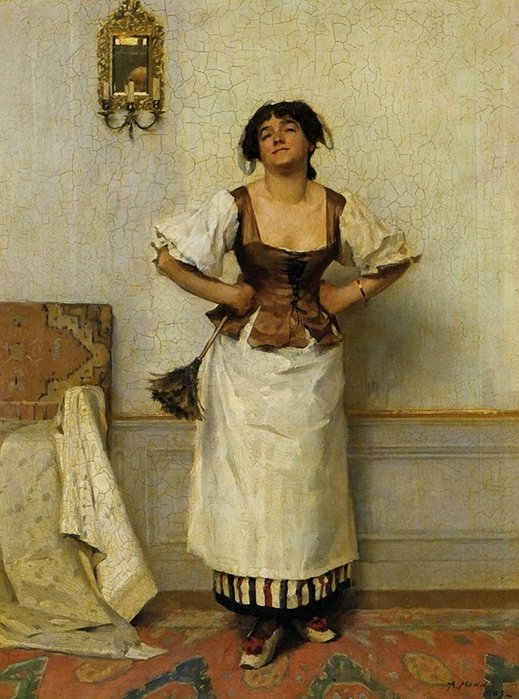
There was no written standard because there was no need for one. The work was survival, and survival is self-explanatory. Water had to be carried because the alternative was thirst. Bread had to be made because there was no shop selling it. Nobody had to be persuaded that any of this mattered, and nobody wrote a curriculum for it.
Which also means nobody was grading it. A 19th-century woman could be exhausted, but she was unlikely to be exhausted and unsure whether she was doing it properly. The standard was set by weather, harvest and the neighbours, and all three were visible from the yard.
Then, at the very end of that century, something genuinely new happened. Housework acquired a syllabus.
The 1950s housewife full-time job, counted in hours
Start with who decided what the job was.
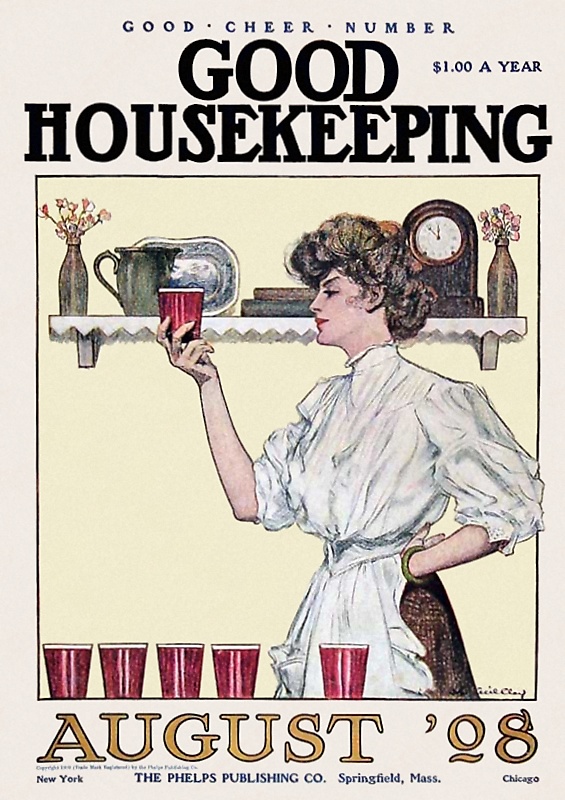
Britannica records the American Home Economics Association being founded in December 1908, at a summer conference at Lake Placid, New York, to establish standards, course outlines and study guides for the field then called domestic science.⁴ Its first president, from 1908 to 1910, was the chemist Ellen Swallow Richards, whom Britannica describes as the founder of the home economics movement in the United States.⁵
Sit with the shape of that for a moment. A group of educated women, most of them scientists, met at a lake in the Adirondacks and drafted the specification for a job that several generations of women would then be measured against, in schools, in magazines and eventually in advertisements. They meant it as elevation. They were arguing that running a household was technical work deserving of training and status, and on the evidence of the hours they were right.
What arrived with the specification, though, was a grade. Once a well-run home has a syllabus, it can be failed.
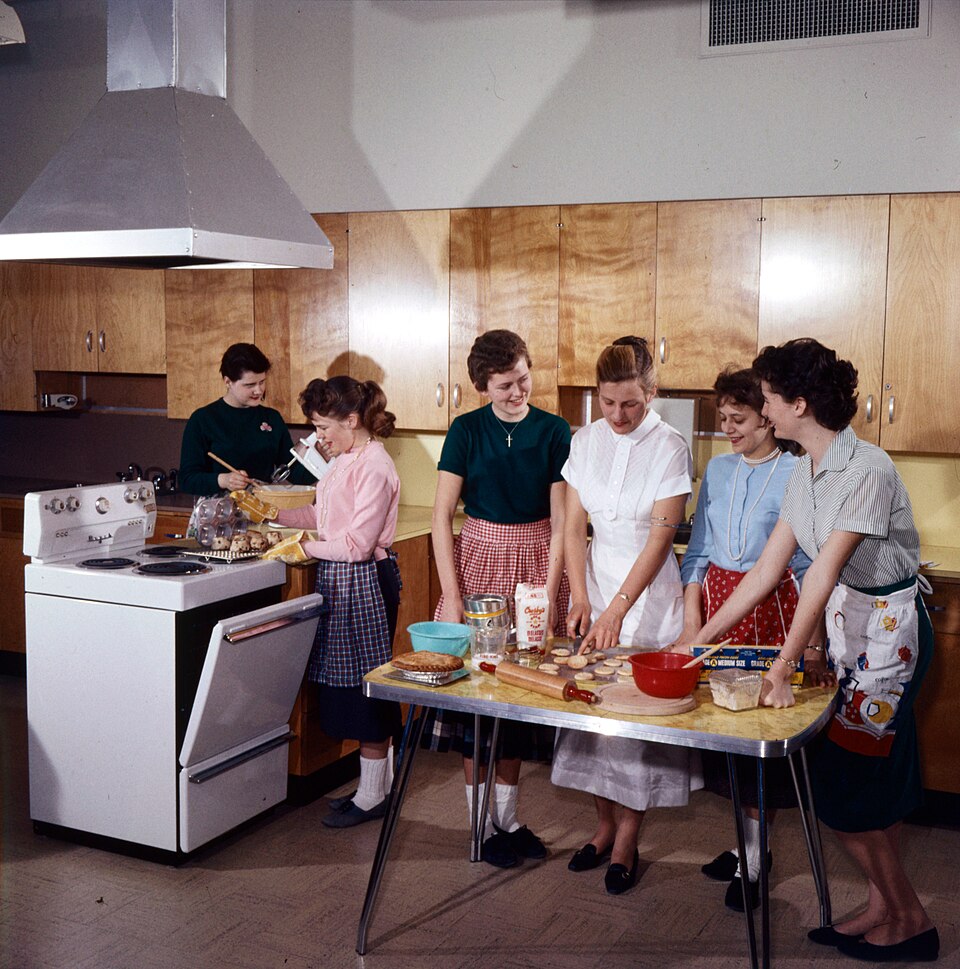
Now the hours. Valerie A. Ramey, an economist who went back to the original time diary studies and rebuilt the century-long series from them, reports that time spent in home production by prime-age American women “fell by around six hours from 1900 to 1965 and by another 12 hours from 1965 to 2005.”¹ Six hours. Across sixty-five years that contained electricity, plumbing, the washing machine, the refrigerator, the vacuum cleaner and the supermarket.
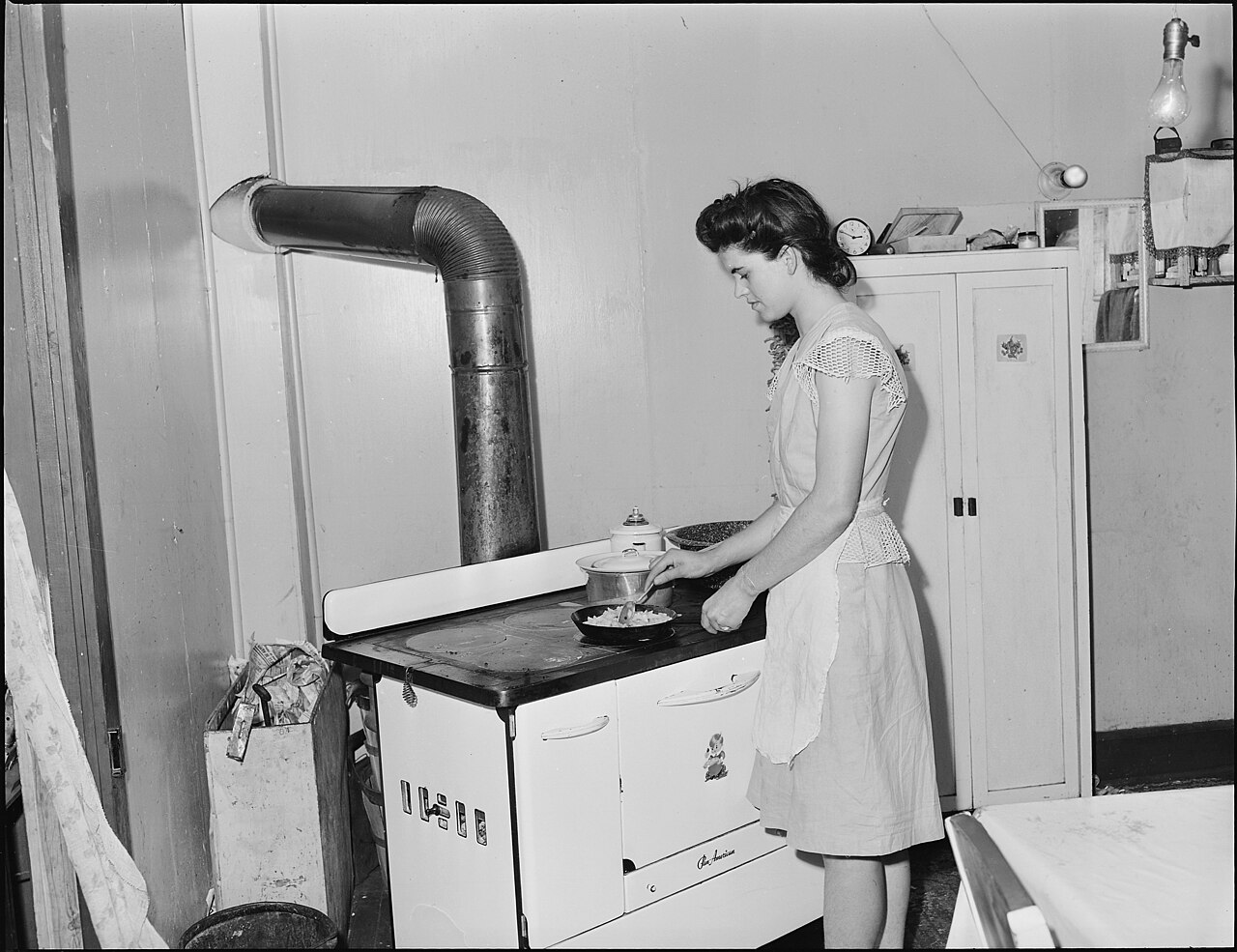
Joann Vanek had reached the same conclusion from the other direction. Writing in Scientific American in November 1974, she reported that “working women spend less time in housework than their mothers and grandmothers did some 50 years ago. Women who are not in the labor force, however, spend just as much time.”³ Fifty years of appliances, and for the full-time homemaker the clock had barely moved.
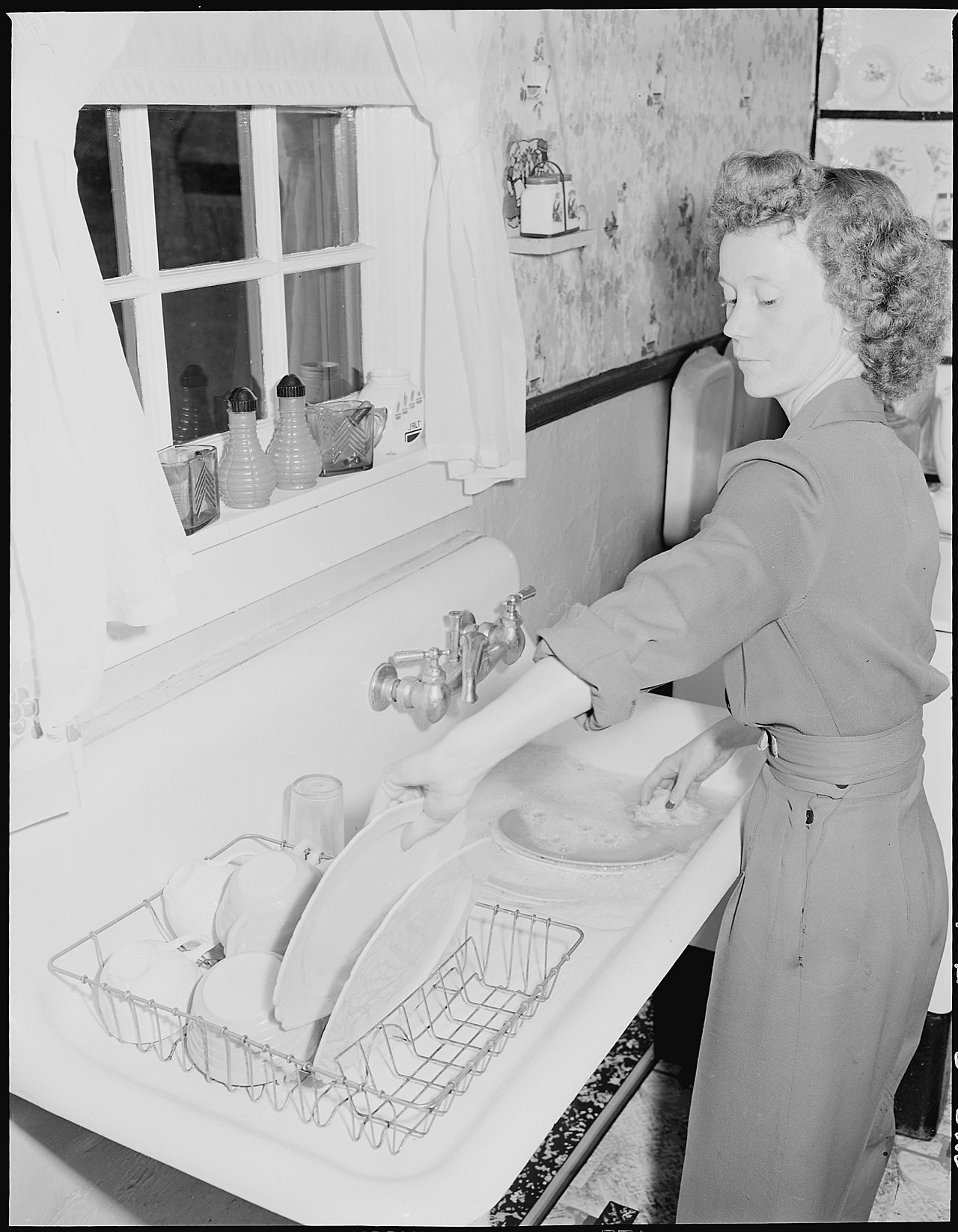
Meanwhile the shopping had quietly turned into a second job of its own. Before self-service, a grocer stood behind a counter and fetched things for you. After it, the fetching, comparing, choosing and carrying became the customer’s work, and the customer was almost always her.
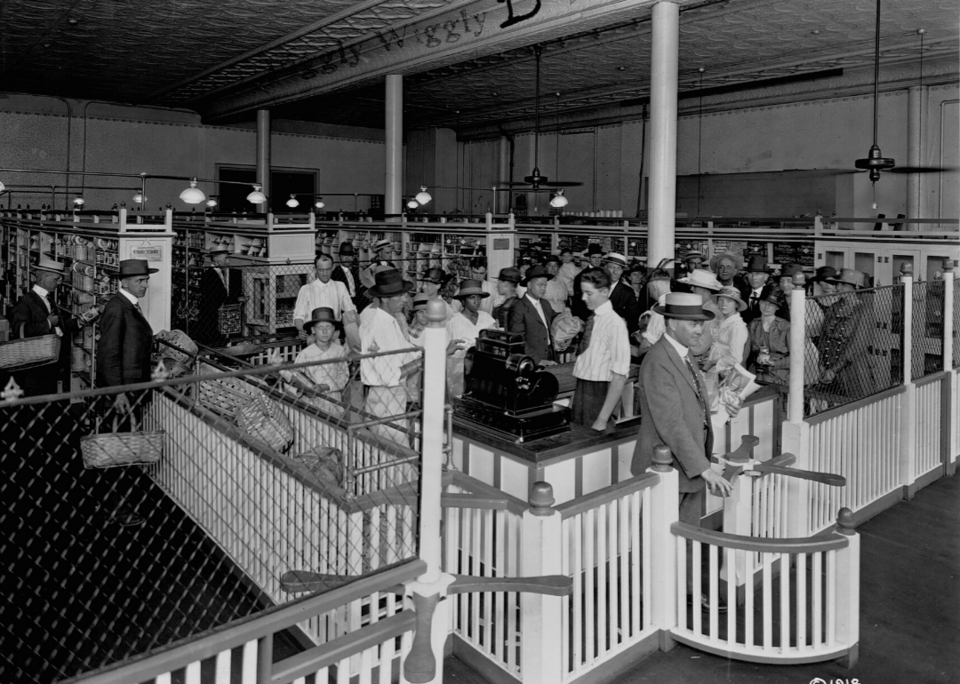
So by 1955 you have a fifty-hour week, a written standard, a shop that has handed you part of its labour, and a national accounting system with no column for any of it. Not because anyone was hiding it. Because the accounts were designed to measure what was bought and sold, and none of this was.
Decades later the arithmetic was done anyway. The Bureau of Economic Analysis built a satellite account for household production and found that including it would have raised nominal US GDP by 39 percent in 1965, and by nearly 26 percent in 2010.² That is not a rhetorical flourish. That is the United States Department of Commerce, going back over its own books.
What the research found
Nancy Folbre’s contribution, across four decades of work on the economics of care, is the finding that unpaid domestic and caring work is not a soft category sitting outside the economy. It is an input the economy runs on and does not pay for, and the decision to leave it out of the accounts was a methodological choice rather than a fact about its value.⁶ Once you see it as a choice, the 1950s stop looking like a golden age of calm and start looking like a period with excellent record-keeping about steel production and none at all about the fifty hours.
The limitation: the time diary record is American, and the early decades of it lean rural and white, because those were the households the surveys reached.¹ Valuation estimates also depend heavily on which wage you use to price an hour of unpaid work, and reasonable economists pick different ones, which moves the totals.² And none of this measures strain. The hours were counted; nobody was asked how the week felt, which is the one number that would settle the argument in the caption.
If the shape of this is familiar and you want to see which part of it is running in your own week, that is worth ten quiet minutes on your own. Start here.
The source for this piece
Nancy Folbre, PhD
Professor Emerita of Economics at the University of Massachusetts Amherst and Director of the Program on Gender and Care Work at the Political Economy Research Institute. Her work is on the economics of care: what unpaid domestic and caring labour is worth, who does it, and what happens to national accounts that leave it out.
What we read: her published work on valuing unpaid care work, including The Invisible Heart: Economics and Family Values and Valuing Children: Rethinking the Economics of the Family.⁶
Where to follow her work: Political Economy Research Institute, University of Massachusetts Amherst
Three centuries, side by side
The clearest way to see it is to put the same six questions to all three centuries at once.
| 19th century | 20th century | 21st century | |
|---|---|---|---|
| What a well-run home meant | Everyone fed, warm and not ill | Spotless, scheduled, and worthy of the magazine | Spotless, scheduled, worthy of the magazine, and photographed |
| Who set the standard | Weather, harvest and the neighbours | A profession founded at Lake Placid in 1908, then the advertisers | A feed, and everyone you have ever met |
| Weekly hours of home production | Not counted. Survival was not treated as a job | Just over fifty for a full-time homemaker | Around twenty-seven, on top of paid work |
| Was it in the economy? | No | No, though it would have added 39 percent to GDP in 1965 | Still outside GDP, now estimated in a separate account |
| Who you measured yourself against | The women on your street | The women in the advertisements | Everyone, permanently, including strangers |
| What made it hard | The work itself | The standard | The standard, and having to argue that the work exists |
Read the second row and the last row together and the whole three-century story is sitting there. The standard kept getting more specific, and the address you could send a complaint to kept getting harder to find.
Who else has measured this
Folbre’s argument is not one economist’s opinion, and each strand of it has its own separate research trail.
Valerie A. Ramey, PhD, Professor Emerita of Economics at the University of California, San Diego and Thomas Sowell Senior Fellow at the Hoover Institution, Stanford University, rebuilt the twentieth-century time series from the original diary studies, which is where the fifty-hour figure and the six-hour decline come from.¹ Faculty profile, UC San Diego · Hoover Institution · The paper
Marilyn Waring, Professor of Public Policy in the Faculty of Culture and Society at Auckland University of Technology, wrote the book that put the accounting question on the international agenda. If Women Counted, published in 1988, argued that the rules governing national accounts treated unpaid domestic and caring work as economically invisible, and that this was a design decision with consequences.⁸ Biography and publications
Ruth Schwartz Cowan, PhD, Professor Emerita in the Department of History and Sociology of Science at the University of Pennsylvania, supplies the mechanism for why the appliances did not cut the hours: each machine raised the standard for what an adequately run home looked like, and the new standard absorbed the time the machine had freed.⁷ Faculty profile
Benjamin Bridgman and colleagues at the Bureau of Economic Analysis, the US federal agency that produces the national accounts, built and maintain the household production satellite account that puts a dollar figure on the work.² The satellite account
An economist of care, an economic historian working from time diaries, a policy scholar working on national accounts, a historian of technology, and a federal statistical agency. Five methods, one shape.
The hours were real. Only the counting was missing.
So what does a well-run home mean in 2026?
The physical work has genuinely collapsed. American women’s weekly housework fell to roughly twenty-seven hours by the late 1990s, and it has kept falling since.¹⁰ Nobody is heating water on a stove to do the washing.

What has not collapsed is the standard, and the standard now has two features the 1955 version did not have.
The first is that it is unbounded. The Lake Placid syllabus was demanding, but it was finite: it could be written down, taught, and completed. A feed cannot be completed. There is always a kitchen more organised than yours, and it is available at 11pm.
The second is that the job is now argued about. In 1955 nobody disputed that running a house was work; they simply did not pay for it or count it. In 2026 you are quite likely to be doing the tracking, the scheduling, the remembering and the monitoring while being told, gently, that these are not really tasks. That is the mental load, and it keeps running after the visible jobs are finished. Which means the 21st-century version of the problem is not the hours. It is holding a fifty-hour standard on twenty-seven hours of visible work, in a house where the other half of it is invisible, while also holding down the paid job the 1955 woman did not have.
The woman who found the loophole
Every era produced women who found a pocket of relief inside the overload by working the seam rather than fixing the system. The 1960s produced Erma Bombeck.
Bombeck, born in Dayton in 1927, could not change the standard, so she made it funny in more than 900 newspapers.⁹ Her column At Wit’s End reported the everyday collapse of the well-run home from the inside, and Britannica notes that her self-deprecating humour “struck a chord of familiarity among readers, who saw their lives mirrored in the situations she described.”⁹
That is the loophole in one sentence. She did not tell women to lower the standard, which was not on offer, and she did not tell them to meet it, which was not possible. She told them, several times a week, that the woman down the street was not meeting it either. Recognition was the relief. Her book titles alone did the work: The Grass Is Always Greener over the Septic Tank was published in 1976 and it is still funny, because the gap between the syllabus and the Tuesday has not closed.⁹
Bombeck deserves her own piece, and she will get one later in this series.
Which century would you actually pick?
This one, and the reason is not the appliances.
You would pick it because you can see the mechanism. The 1955 woman had a fifty-hour week, a written standard she had not helped write, and no vocabulary at all for the fact that none of it counted. If she said the quiet part out loud, the available explanation was that something was wrong with her. There was no BEA satellite account to point at. There was no Folbre, no Waring, no Cowan, no research literature on unpaid care. There was Erma Bombeck, and she was doing heroic work with a column and no data.
You have the data. The work you do that nobody counts has been counted, priced, published by a federal agency and argued over in journals. None of that returns an hour to your Tuesday. What it removes is the private theory that the problem is your character, and for most women reading this, that theory has cost more than the hour would have.
The woman in the photograph would take your Tuesday. She would also want to know what you intend to do with the evidence she never had.
The one move: the uncounted three
Two minutes tonight, on paper, with nothing to fix afterwards.
Write down three things you did today that no system anywhere recorded. Not the meeting, which is in a calendar. Not the invoice, which is in a ledger. The noticing that the prescription was running low. The mental arithmetic about whether there was enough for dinner. The decision not to raise something at 9pm because of how the evening was going.
Then leave the list alone. You are not building a case, and you are not handing it to anybody. The point is that for the length of writing those three lines, the work existed in the record, which for most of three centuries it did not. Do it once and see whether the day looks different in your own handwriting. That is the whole exercise.
Common questions about the 1950s housewife and unpaid work
How many hours did a 1950s housewife work?
Just over fifty hours a week of home production, on the best long-run American time diary estimates.¹ Popular articles put the figure anywhere from under twenty-five hours a week to fifty-seven, which is why the argument never settles and why it is usually had with anecdotes. The peer-reviewed reconstruction of the original diaries lands in the low fifties, and finds that number falling by only about six hours across the whole stretch from 1900 to 1965, despite electricity, plumbing and every major appliance arriving in between.¹
What were typical 1950s housewife duties?
Cooking, laundry, cleaning, shopping, childcare, and the scheduling that held all of it together. The list is not the interesting part, because the 1850 list contains most of the same words. What changed across the twentieth century was the standard applied to the list: how often the floors, how white the shirts, how varied the meals, how presentable the children. That standard was taught in schools and sold in magazines, and it is the reason the hours did not fall when the machines arrived.⁷
How many hours did people work in 1950?
The standard American paid working week was around forty hours. The measured home production week for a full-time homemaker was in the low fifties.¹ Put the two side by side and the arithmetic is the whole article: the unpaid week was the longer of the two, and only one of them appeared in the national accounts.²
Why was housework never counted in the economy?
Because national accounts were built to measure market transactions, and unpaid domestic work is not one. Marilyn Waring’s 1988 book If Women Counted made this the subject of an international argument.⁸ The US Bureau of Economic Analysis now estimates the value separately, in what is called a satellite account, and puts the 1965 figure at 39 percent of GDP.²
Is this saying men in the 1950s did nothing?
No, and the data points the other way. Men’s time in home production rose by about thirteen hours a week between 1900 and 2005.¹ The mechanism in all three centuries is a rising standard and an accounting rule, not anybody’s bad behaviour, which is exactly why it stayed invisible for so long and why being angry at a person about it changes nothing.
When is being this tired worth a doctor’s appointment?
Rough markers: if the exhaustion has been most days for more than a fortnight, if it now covers things you used to look forward to, or if sleep, appetite or mood have shifted with it. Being able to run everything in public says nothing about whether you should have to, and a history article is not a substitute for someone who knows your history.
The one move
Tonight, write down three things you did today that no system anywhere recorded. Two minutes, one pen, nothing attached to it.
If the list comes out longer than three and you want to know what it is costing you, the Quiet Audit is a private ten-minute pass through where the hours are actually going. Start here.
Related reading: the same machinery runs through three centuries of women’s work read side by side, through the four phases of housework and the two nobody sees, and through the question of who ends up holding the calendar.
On the sources. Nancy Folbre and Valerie Ramey are economists, and Marilyn Waring is a policy scholar: their work explains how unpaid household labour has been measured and valued, and says nothing about any individual woman’s health or circumstances. The Bureau of Economic Analysis figures are official estimates from a satellite account, not part of headline GDP. Britannica is a reference work, cited here for definitions, dates and historical framing rather than for original research.
Sourcing, disclosure and disclaimers
This is not medical advice. Blue Leaf Journal publishes general information for a general readership. Nothing here is a diagnosis, a treatment recommendation, or a substitute for care from a clinician who knows your history.
We are not historians or economists. Blue Leaf Journal is an independent publication. We read published research and reference scholarship and translate it. The findings belong to the researchers and institutions named and linked above; the plain-English rendering is ours, and so is any error in it.
No affiliation and no endorsement. Blue Leaf Journal is not affiliated with Nancy Folbre, Valerie A. Ramey, Marilyn Waring, Ruth Schwartz Cowan, Benjamin Bridgman, Joann Vanek, Encyclopaedia Britannica, the University of Massachusetts Amherst, the Political Economy Research Institute, the University of California, San Diego, the Hoover Institution, Auckland University of Technology, the University of Pennsylvania, or the U.S. Bureau of Economic Analysis. None of them has reviewed, approved or endorsed this article, and none of them is responsible for it. They are cited because their published work is the evidence for what it says.
No commercial relationship. Nobody named above paid for or was paid for this coverage. There are no affiliate links, no sponsored placements and no gifted products in this article. Historical images are public domain, sourced through Wikimedia Commons from the U.S. National Archives and Library and Archives Canada, and credited under each image.
How this was checked. Every quotation and figure above was checked against the cited source on 10 September 2026, and each source is linked in the references. If you find something we have got wrong, write to norawhitfield@blueleafjournal.com and we will correct it and say that we did.
References
1. Ramey, V.A. (2009). “Time Spent in Home Production in the Twentieth-Century United States: New Estimates from Old Data.” The Journal of Economic History. Journal version · NBER working paper 13985.
2. U.S. Bureau of Economic Analysis, “What is the Value of Household Work?”, and Bridgman, B. et al., “Accounting for Household Production in the National Accounts”, Survey of Current Business.
3. Vanek, J. (1974). “Time Spent in Housework”. Scientific American, Vol. 231, No. 5, November 1974.
4. Encyclopaedia Britannica, “American Home Economics Association”. Founding at Lake Placid, December 1908, and its remit for standards and course outlines.
5. Encyclopaedia Britannica, “Ellen Swallow Richards”. Founder of the home economics movement in the United States and first president of the association, 1908 to 1910.
6. Folbre, N. Published work on the economics of care and the valuation of unpaid work. Author profile, Political Economy Research Institute, University of Massachusetts Amherst.
7. Cowan, R.S. (1983). More Work for Mother: The Ironies of Household Technology from the Open Hearth to the Microwave. Basic Books. Author profile, University of Pennsylvania.
8. Waring, M. (1988). If Women Counted: A New Feminist Economics. Author biography and publications.
9. Encyclopaedia Britannica, “Erma Bombeck”. Syndication in more than 900 newspapers, At Wit’s End, and the books.
10. University of Michigan Institute for Social Research, “U.S. husbands are doing more housework while wives are doing less”, reporting analysis of Panel Study of Income Dynamics data.
Nora Whitfield writes for Blue Leaf Journal, where the working rule is that a mechanism you can name is easier to live with than one you cannot. She reads the limitations section before the conclusion, and passes on what she finds there.
Written by Nora Whitfield for Blue Leaf Journal. Updated: 10 September 2026.