They Put Her to Bed for Six Weeks. She Got Better by Going Back to Work.
Load · The Britannica Series, Vol. 12 · 10 min read · what the rest cure was, the two myths page one tells about it, and what recovery research says rest actually needs
Based on the published work of Anne Stiles, PhD, Professor of English and Coordinator of the Medical Humanities programme at Saint Louis University, whose essay “The Rest Cure, 1873 to 1925” traces who was prescribed it, who was spared it and how it ended, and on the recovery research that came a century later. SLU faculty page · her curriculum vitae · the essay, at BRANCH · Britannica
In 1887 a famous doctor put an exhausted woman to bed and told her never to pick up a pen again. She nearly lost her mind, then got better by going back to work, and the reason it worked is the thing modern recovery research now measures.
Someone told you to rest. Your doctor, your sister, a colleague who meant well. So you took the Friday off, or the week at the lake, and lay on the sofa with a book you did not read, and felt worse. Not rested, just stopped. By Sunday evening you were more tired than when you started, and slightly ashamed of that, because resting is supposed to be the one thing that cannot go wrong.
It can. It went badly wrong once before, on a large scale, and it had a name. So what was the rest cure, and why does it matter to a tired woman in 2026? Page one will tell you two things about it with confidence. A leading psychiatry journal describes it as prescribed almost exclusively for women. And the story everyone repeats is that Charlotte Perkins Gilman’s “The Yellow Wallpaper” shamed its inventor into changing his treatment. Both are only half true, and the half that is missing is the useful part.
This is a reading of published history, a primary source and occupational health research. We are not historians or clinicians; the findings belong to the researchers and institutions named and linked below, and the plain-English version is ours.
The short answer: the rest cure was a treatment for nervous exhaustion devised by the Philadelphia neurologist S. Weir Mitchell, described by him in 1873 and set out in his 1877 book Fat and Blood.¹ ² It meant six weeks to two months of enforced bed rest, isolation from family, a fattening diet, massage and electrical stimulation, with reading, writing and conversation forbidden.² Exhausted men were more often sent west instead, to ride and hunt.² The women were kept in bed, and many of them, Gilman included, found that the thing taken away from them was the thing they needed. A century later, recovery research found that the experiences most strongly linked to lower exhaustion are detachment from work and a sense of control over your own time.³ The rest cure removed the second one entirely.
The skim version
- 1873 to 1877. S. Weir Mitchell describes the rest cure and publishes Fat and Blood: bed, isolation, feeding, massage, electricity.² ¹
- Men went west. Theodore Roosevelt, Thomas Eakins, Walt Whitman and Owen Wister were among those given the “West Cure” of riding, roping and hunting.²
- 1887. Gilman is told to have “but two hours’ intellectual life a day.”⁴
- 1908. Mitchell is still promoting whole hospitals for the rest cure, sixteen years after “The Yellow Wallpaper.”⁵
- 2007. Psychologists Sonnentag and Fritz identify four recovery experiences: detachment, relaxation, mastery and control.³
- The honest part: the 2007 findings are associations from surveys of working adults, not a trial of the rest cure, and the history rests on case records and memoirs rather than outcome data.
In this article: The 19th century: fat, blood and a closed door · The 20th century: the cure that would not die · The 21st century: what rest needs · Three centuries of being told to rest · Questions people ask
The 19th century: fat, blood and a closed door
The diagnosis first. Encyclopaedia Britannica defines neurasthenia as a syndrome marked by physical and mental fatigue accompanied by withdrawal and depression.⁶ In the late nineteenth century it was the fashionable name for what a lot of overextended people were feeling, and the fashionable patients were educated, busy and middle class.
S. Weir Mitchell, born in Philadelphia in 1829, had built his reputation as an army surgeon in the Civil War, and Britannica notes he became well known for his rest cure.¹ Anne Stiles of Saint Louis University sets out what it involved: rest, a fattening diet, massage and electricity, in strict isolation, with intellectual activity forbidden, for six weeks to two months.² The patient was kept in bed and away from her family, and was not allowed to read or write.
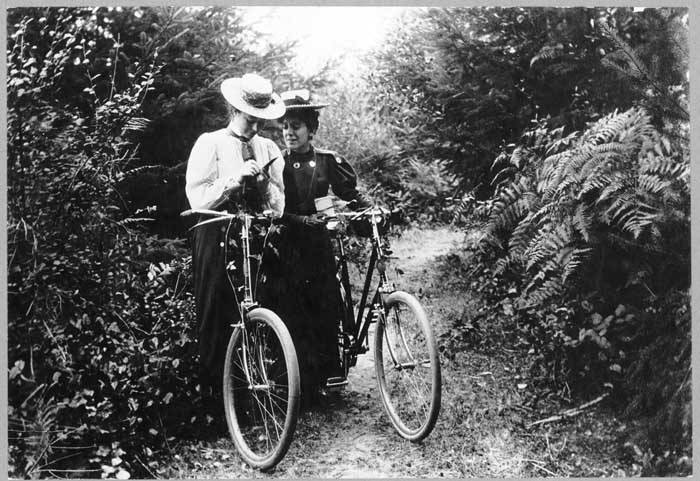
Here is where page one goes thin. The diagnosis was not only a women’s diagnosis. Stiles records that exhausted men were more often prescribed a different regimen, the “West Cure”: cattle roping, rough riding and hunting on the frontier. Its recipients included Theodore Roosevelt, the painter Thomas Eakins, Walt Whitman and the novelist Owen Wister.² So the gender split was real, but it ran the other way from the one usually described. Nobody sent the men to bed. The men were sent out to do something.
The women’s list is long. Stiles names Charlotte Perkins Gilman in 1887, Virginia Woolf repeatedly between 1913 and 1915, Jane Addams, and Winifred Howells, who died after treatment.²
The 20th century: the cure that would not die
Gilman told the story herself, twenty-six years later, in a short piece called “Why I Wrote The Yellow Wallpaper.” The specialist, she wrote, sent her home with advice to “live as domestic a life as far as possible,” to “have but two hours’ intellectual life a day,” and “never to touch pen, brush, or pencil again” as long as she lived.⁴
She obeyed for about three months, and “came so near the borderline of utter mental ruin that I could see over.”⁴ Then she did the opposite. With help from a friend she went back to work, and recovered, she said, some measure of power.⁴ The story she wrote about it appeared in The New England Magazine in January 1892.⁵
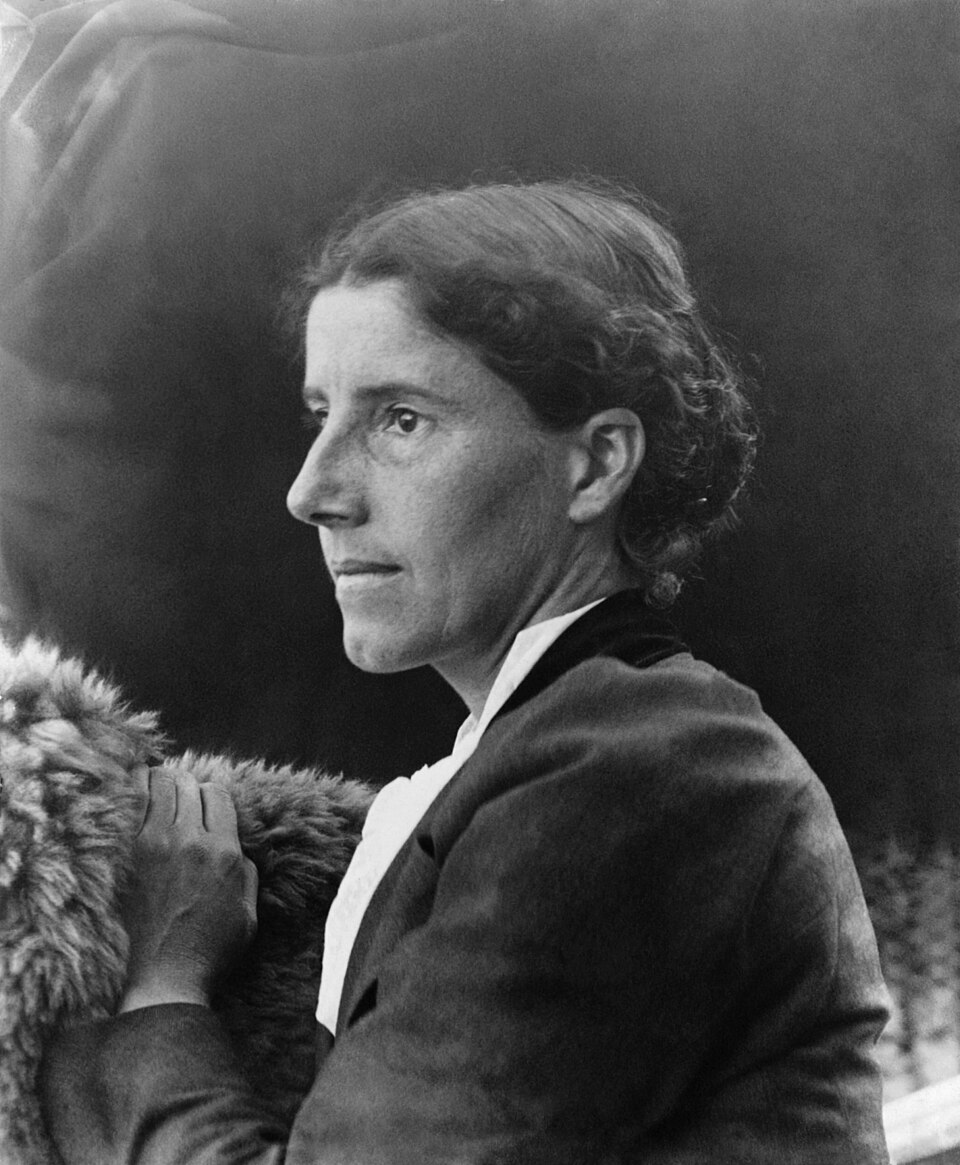
The famous ending is the second myth. Gilman wrote that she had been told, years later, that the great specialist had altered his treatment of neurasthenia after reading her story.⁴ It is a satisfying ending and it is probably not true. The literary historian Julie Bates Dock, who edited the documentary casebook on the story’s publication and reception, found no evidence for it, and as late as 1908, sixteen years after the story appeared, Mitchell was still interested in founding whole hospitals devoted to the rest cure.⁵
What ended it was a change of theory. Stiles traces its fade in the early twentieth century as psychoanalysis and talking treatments displaced purely physical ones, and by the 1940s psychiatrists such as Karl Menninger were criticising it as unscientific.²
If the rest you have been taking leaves you flatter than before, it may be missing the same ingredient Gilman’s was, and that is worth ten quiet minutes to look at properly. Start here.
The 21st century: what rest needs
A century after Mitchell, occupational psychologists started asking a more careful question. Not whether people rested, but what kind of rest was associated with actually recovering.
Sabine Sonnentag, now Professor of Work and Organizational Psychology at the University of Mannheim, and Charlotte Fritz, then at Bowling Green State University, built a questionnaire for it in 2007.³ In the Journal of Occupational Health Psychology they showed that four distinct recovery experiences could be told apart: psychological detachment from work, relaxation, mastery, and control.³
All four were associated with better well-being. Two stood out. Detachment and control showed the strongest negative relationships with health complaints, emotional exhaustion, depressive symptoms, need for recovery and sleep problems.³ Mastery, time spent on something challenging you are learning, was also linked to lower exhaustion.³
Now lay the rest cure over that list. Detachment, yes, enforced. Relaxation, arguably. Mastery, forbidden: no reading, no writing, no pencil. Control, removed completely. The West Cure the men got had control and mastery built into it. The bed the women got had neither.
What the research found
Rest is not one thing. Of four measurable recovery experiences, detachment from work and control over your own time had the strongest links to lower exhaustion and fewer health complaints, with mastery also linked to lower exhaustion.³ The nineteenth-century rest cure imposed detachment while removing control and forbidding mastery.² ⁴
The historical record fits. The best-documented account of recovering from it, Gilman’s own, describes getting better by doing the opposite: choosing her work again.⁴
The limitation: the 2007 study validated a questionnaire with working adults and reports associations, so it cannot show that adding control causes recovery, only that the two travel together. It was not a study of women in midlife or of anyone with a medical cause for fatigue. The historical evidence is case-based, and we could not open the 2007 psychiatry commentary that page one quotes, so we cite it only as the claim it makes.
The source for this piece
Anne Stiles, PhD
Professor, Department of English, and Coordinator of the Medical Humanities Interdisciplinary Minor, Saint Louis University. Her work sits where nineteenth-century literature meets neurology, and her books include Popular Fiction and Brain Science in the Late Nineteenth Century (Cambridge University Press, 2011). Her doctorate is in English; she is a historian of medicine, not a clinician.
What we read: her essay “The Rest Cure, 1873 to 1925,” published by BRANCH, alongside Gilman’s 1913 account and the recovery research below.² ³ ⁴
Where to follow her work: Saint Louis University · the rest cure essay · Academia profile
Three centuries of being told to rest
| 19th century | 20th century | 21st century | |
|---|---|---|---|
| What it was called | Neurasthenia. Nerves⁶ | A breakdown | Burnout |
| What she was told | Bed, six weeks, no pen² | Talk about it² | Take a break, practise self-care |
| What he was told | Go west and ride² | Take a holiday | Take a break |
| Control over her own time | None, by design² | Some | Measured, and linked to recovery³ |
| Who wrote it down | The doctor | The patient: Gilman, 1913⁴ | The researchers³ |
Who else has measured this
Sabine Sonnentag, PhD, Professor of Work and Organizational Psychology and chair holder at the University of Mannheim, is the lead author of the recovery experience research cited here, and has spent much of her career on how people recover from work.³
Mannheim faculty page · the 2007 paper · Google Scholar
Charlotte Fritz, PhD, organisational psychologist, co-authored the 2007 study while at Bowling Green State University and went on to research recovery and work stress.³
Google Scholar · ResearchGate
Julie Bates Dock, literary historian, compiled the critical edition and documentary casebook on the publication and reception of “The Yellow Wall-paper” for Penn State University Press (1998), the work that tested Gilman’s claim that Mitchell changed his methods.⁵
the book, at Penn State University Press · PhilPapers record
Encyclopaedia Britannica supplies the two anchors: Mitchell himself and the diagnosis he was treating.¹ ⁶
Britannica on S. Weir Mitchell · Britannica on neurasthenia
They sent the men outside. They sent the women to bed.
What this actually changes
It explains the bad Sunday. If your rest keeps failing, the likeliest reason is not that you are bad at resting. It is that the rest you are taking has the rest cure’s shape: stopped, but not detached, and chosen by nobody. Lying on the sofa with the phone face-up is neither detachment nor control. A week away that is planned around everyone else’s needs has no control in it at all.
It also gives you permission Gilman had to take by force. Recovery is allowed to include doing something. The research lists mastery, being absorbed in something you are learning, as one of the four ingredients, not as a failure to rest.³
The one move
Tonight, take one hour and give it two properties. Put the phone in another room, which is the detachment. And decide yourself what the hour is for, without asking whether it is useful to anyone, which is the control.
It can be a walk, a pencil and a sketchbook, a language app or nothing at all. The only rule is that it is yours, which is the one thing the rest cure never allowed.
The rest cure: questions people ask
What was the rest cure supposed to do?
Mitchell believed nervous exhaustion reflected depleted physical reserves, so the cure aimed to rebuild them: the title of his 1877 book was Fat and Blood.² The rest, feeding, massage and electrical stimulation were meant to add weight and strength, and the isolation and ban on mental work were meant to stop the patient spending what she had.²
Why was the rest cure controversial?
Because many patients got worse, and because it treated intellectual and creative work as the illness. Gilman described coming close to “utter mental ruin” after following it.⁴ Virginia Woolf underwent it repeatedly and loathed it, and Winifred Howells died after treatment.² By the 1940s it was being dismissed as unscientific.²
Who mostly prescribed the rest cure?
S. Weir Mitchell of Philadelphia devised and popularised it, and it spread through American and British neurology in the late nineteenth century.¹ ² It was given mainly to women; men with the same diagnosis were more often sent on the more active West Cure instead.²
Did “The Yellow Wallpaper” make Mitchell change his treatment?
Gilman believed so and said so in 1913.⁴ The documentary record does not support it. Mitchell continued the method, and in 1908 was still interested in establishing hospitals devoted to the rest cure.⁵
If rest is not helping me, when is it worth seeing a doctor?
When the tiredness has lasted more than a few weeks despite real breaks, or comes with unexplained weight change, feeling cold, heavy periods or other new bleeding, breathlessness, snoring with daytime sleepiness, or low mood most days. Thyroid problems, low iron, sleep apnoea, perimenopause and depression can all present as exhaustion that rest does not fix, and all of them can be checked. A useful sentence to bring: “I have been resting properly and it is not working, and it has been like this for [how long].”
Ten quiet minutes, when you want them
The one move
One hour tonight. Phone in another room. You decide what it is for.
And if deciding what an hour is for, with nobody else’s needs in it, turns out to be the hard part, that is the thing worth ten quiet minutes. No advice, no programme, just the document. Start here.
Gilman got better by picking up the pencil again. Your version can be smaller than that.
Related reading: why competence hides burnout instead of preventing it, why something in you starts a timer the moment you sit down, and how to tell burnout from something medical.
On the sources. This volume rests on one academic history essay, one primary source in the public domain, one peer-reviewed occupational psychology paper, two encyclopaedia entries and reference accounts of the story’s reception and the 1913 suffrage hike. The Gilman quotations are taken from her 1913 essay, which is out of copyright. We name the page-one claims we are correcting and do not link them, because a link is a recommendation.
Disclosure
This article is informational and reflects published history and research. It is not medical advice, and it is not a substitute for seeing a doctor about persistent fatigue.
We are not historians or clinicians. We read published research and translate it into plain English. The findings belong to the researchers and institutions named and linked above.
Blue Leaf Journal has no affiliation with, and no endorsement from, Professor Anne Stiles, Saint Louis University, BRANCH, Professor Sabine Sonnentag, the University of Mannheim, Charlotte Fritz, Bowling Green State University, Julie Bates Dock, Penn State University Press, the Museum of History and Industry, the Library of Congress or Encyclopaedia Britannica. Naming their work is citation, not partnership.
No commercial relationship. Nobody named above paid for or was paid for this coverage, and there are no affiliate links in this article.
Every figure was checked against the source listed below on 23 September 2026. If you find an error or a broken link, write to corrections@blueleafjournal.com and we will correct it and date the correction.
References
1. “S. Weir Mitchell.” Encyclopaedia Britannica.
2. Stiles, A. “The Rest Cure, 1873 to 1925.” BRANCH: Britain, Representation and Nineteenth-Century History, ed. Dino Franco Felluga. Source for the regimen, Fat and Blood, the West Cure and its recipients, the named patients and the decline.
3. Sonnentag, S. and Fritz, C. “The Recovery Experience Questionnaire: Development and Validation of a Measure for Assessing Recuperation and Unwinding From Work.” Journal of Occupational Health Psychology 12(3), 2007, pp. 204 to 221.
4. Gilman, C. P. “Why I Wrote The Yellow Wallpaper.” The Forerunner, October 1913. Full text also at American Literature.
5. “The Yellow Wallpaper.” Wikipedia. Source for the January 1892 publication and for Dock’s finding that Mitchell continued his methods, citing Dock, J. B., ed., Charlotte Perkins Gilman’s “The Yellow Wall-paper” and the History of Its Publication and Reception, Penn State University Press, 1998.
6. “Neurasthenia.” Encyclopaedia Britannica.
7. “Suffrage Hikes.” Wikipedia. Source for the 1913 departure date, distance and duration.
About the researcher
Anne Stiles is Professor of English at Saint Louis University, where she coordinates the Medical Humanities Interdisciplinary Minor. She writes on literature, science and religion in nineteenth-century Britain and North America. Her books include Popular Fiction and Brain Science in the Late Nineteenth Century and Children’s Literature and the Rise of “Mind Cure”, both from Cambridge University Press, and the edited volume Neurology and Literature, 1860 to 1920.
SLU faculty page · curriculum vitae · Academia · ResearchGate
Her PhD is in English. She is a historian of medicine and literature, not a medical doctor, and nothing here is clinical advice.
Written by Nora Whitfield for Blue Leaf Journal. Updated: 23 September 2026.