Three Quarters of Them Said They Wanted to Stay.
Load · The Britannica Series, Vol. 4 · 9 min read · What the women themselves said they wanted in 1944, who asked them, and why the answer almost never travels with the story
Based on the published research of Ruth Milkman, PhD, Distinguished Professor of Sociology at the CUNY Graduate Center, and on the reference scholarship of Encyclopaedia Britannica. CUNY Graduate Center · Wikipedia · Scholars Strategy Network · Britannica, Rosie the Riveter
Somebody actually asked them. The survey exists, the number is on record, and it is not the number in the story everybody tells.
You know the poster. Red bandana, sleeve pushed up, the arm. It is on a fridge magnet somewhere in your house or in your mother’s, and it has been used to sell you everything from a bank account to a marathon.
And you know how the story ends, because everybody does. The men came home, the women handed back the rivet guns, and the whole country went off to the suburbs to be happy about it. What happened to Rosie the Riveter after the war is told, almost always, as a homecoming. A borrowed moment, cheerfully returned.
Somebody thought to ask the women. That is the part that got lost.
This is a reading of published research and reference scholarship. We are not historians; the findings below belong to Ruth Milkman and the researchers named, and the plain-English version is ours.
The short answer: in 1944, while the war was still running, the United States Department of Labor’s Women’s Bureau surveyed women war workers about what they wanted to do afterwards. Seventy-five per cent said they intended to keep working. Eighty-six per cent wanted their postwar job in the same kind of industry they were already in.¹ They left anyway, in enormous numbers, and the share of women in the automobile industry fell from 24.4 per cent in 1944 to 8.9 per cent by 1946.¹ The wanting was never the variable. The door was.
The skim version
- The Women’s Bureau’s 1944 survey found 75 per cent of women war workers intended to go on working after the war, and 86 per cent wanted to stay in the same industrial group.¹
- Women in the iron and steel industry fell from 22.3 per cent of the workforce in 1944 to 9.4 per cent in 1946. In automobiles, from 24.4 per cent to 8.9 per cent.¹
- Britannica records that the recruitment campaign from 1942 had to actively persuade middle-class women into factory work, with childcare provision and a patriotic frame.² It was a sales job, not a spontaneous rush.
- Ruth Milkman’s study of the car and electrical industries found the jobs were re-labelled as men’s or women’s work by the employers, not sorted by anybody’s ability, and that the labels flipped when it suited the plant.³
- Claudia Goldin, who won the 2023 Nobel in economics for work on women’s labour markets, found the war’s direct effect was more modest than the legend: over half of married women working in 1950 had already been working in 1940, and of those who joined during the war, almost half had left again by 1950.4
- The honest gap: a 1944 survey records stated intention, not what any individual woman actually did or why. It cannot separate the women who were pushed from the women who chose, and it was not designed to.
In this article: The century when the work did not count · The survey nobody quotes · Three centuries, side by side · Why this is still your century · The one move · FAQ
Did women work before the war?
Constantly. It simply was not counted as employment.
Britannica’s history of how work was organised describes a pre-industrial household in which production happened at home and women did a great deal of it: grinding grain, drawing water, gathering fuel, churning butter.5 When industrialisation moved production out of the house and into the factory, it did not abolish that labour. It reclassified it. Work done in a factory for a wage became employment. The identical effort done at home became something else, something without a job title.
Through the nineteenth century enormous numbers of women were also in paid work, and mostly in the categories nobody kept good records of: domestic service, laundry, piecework taken in at home, farm labour, the family shop. So the 1940s story of women entering the workforce is, strictly, a story about women entering the part of the workforce that had a payroll and a union and a statistician looking at it.
That distinction is going to matter in a minute, because it is the same distinction running through your own week.
What happened to Rosie the Riveter after the war?
She was asked, she answered, and then the answer was filed.
Britannica puts the recruitment campaign in its proper light. From 1942, with men enlisting, women were needed in the plants, and the government had to convince middle-class women who were new to paid work to go in, supporting them with childcare and framing the work as patriotic duty.² J. Howard Miller made the “We Can Do It” image for a Westinghouse recruitment campaign. Redd Evans and John Jacob Loeb wrote the song in 1943. Norman Rockwell put his much more muscular version on the cover of the Saturday Evening Post on 29 May 1943.²
All of which is to say: Rosie was advertising. Very good advertising, for a real and urgent need, but a campaign with a budget and a target audience rather than a documentary record of how women felt.
The documentary record is elsewhere, and it is duller and much more interesting. In 1944 the Women’s Bureau of the US Department of Labor asked women war workers what they wanted to do when it ended. Seventy-five per cent said they intended to keep working. Eighty-six per cent wanted to stay in the same industrial group.¹
Then look at what happened to the payrolls. Women were 22.3 per cent of iron and steel in 1944 and 9.4 per cent by 1946. In automobiles, 24.4 per cent down to 8.9 per cent.¹ Three quarters said they wanted to stay. Roughly two thirds of the female share of those industries was gone inside two years.
What the research found
Ruth Milkman went into the archives of the automobile and electrical industries and read how the jobs themselves were classified. Her finding is that the line between men’s work and women’s work was drawn by employers, moved when production needs moved, and then explained afterwards as though it had come from the nature of the work or the nature of women. The same job could be women’s work in one plant and men’s work in another, and the justification arrived after the decision.³ The war did not prove women could do the work. Everyone already knew. The war briefly removed the reason to pretend otherwise.
The limitation: Milkman’s study covers two industries in one country and cannot be stretched to all work everywhere. The Women’s Bureau survey records what women said they intended in 1944, which is not the same as what they did, and it cannot separate a woman who was laid off from one who left willingly. Claudia Goldin’s work sharpens exactly this point: the war’s direct effect on women’s employment was smaller than the legend suggests, since more than half of married women working in 1950 had already been in work in 1940, more than half of the decade’s new entrants arrived after the war ended rather than during it, and almost half of those who entered during the war years had left again by 1950.4
If the gap between what you actually want and what the arrangement around you permits is starting to look familiar, that gap is worth ten quiet minutes on your own. Start here.
The source for this piece
Ruth Milkman, PhD
Distinguished Professor of Sociology at the Graduate Center, City University of New York, and a former president of the American Sociological Association. Her work covers labour, gender and work organisation in the United States.
What we read: Gender at Work: The Dynamics of Job Segregation by Sex during World War II, her study of the automobile and electrical manufacturing industries.³
Where to follow her work: CUNY Graduate Center · the book, University of Illinois Press · Wikipedia · Scholars Strategy Network · EINet steering committee
Three centuries, side by side
| 19th century | 20th century | 21st century | |
|---|---|---|---|
| Did women work? | Yes, constantly, in categories nobody counted | Yes, and for four years somebody put it on a poster | Yes, and it is counted, taxed and measured |
| Who decided what was women’s work | Custom, and nobody you could name | Employers, plant by plant, and they moved the line when it suited them | Largely you, within limits you did not set |
| Was anybody asked what they wanted | No | Once, in 1944, and 75 per cent said they wanted to stay | Constantly, and mostly by people selling something |
| What the exit was called | Nothing. There was no entrance to exit from | Going home. A homecoming, in the newsreels | Stepping back. Leaning out. A personal choice |
| What was actually happening | Uncounted labour | A reclassification of jobs, dressed as a return to nature | A set of constraints, dressed as a preference |
Read the bottom row across. The mechanism barely changes. What changes is what it gets called, and each century’s name for it is more flattering than the last.
Who else has measured this
This is not one sociologist’s reading of one archive. Three separate methods, from three fields, point the same way.
Claudia Goldin, PhD, Henry Lee Professor of Economics at Harvard University, was awarded the 2023 Sveriges Riksbank Prize in Economic Sciences in Memory of Alfred Nobel for advancing understanding of women’s labour market outcomes. Her 1991 paper on the war used retrospective survey data from 1944 and 1951 and concluded that the war’s indirect effects were significant but its direct influence on women’s employment was considerably more modest than the popular account allows.4
Harvard faculty site · the paper · Nobel Prize · NBER · Harvard Gazette · Wikipedia
Maureen Honey, PhD, Professor Emerita at the University of Nebraska–Lincoln, read the propaganda itself rather than the payrolls. Creating Rosie the Riveter examines how wartime magazine fiction and government campaigns constructed the image, and how sharply the messaging turned once the war ended.6
University of Nebraska directory · English emeriti faculty · the book, UMass Press · university profile on her career · Internet Archive
Evan K. Rose, PhD, of the Kenneth C. Griffin Department of Economics at the University of Chicago, put modern quantitative methods on the same question. His 2018 paper in the Journal of Economic History traces the rise and the fall of female labour force participation across the war years and after, and finds the wartime surge substantially unwound.7
his research page · Journal of Economic History · free PDF · ResearchGate · CV
The Women’s Bureau, United States Department of Labor, established in 1920 and still operating, is the body that ran the 1944 survey. It exists specifically to collect the data about working women that nobody else was collecting.¹
US Department of Labor, Women’s Bureau · the wartime figures, CUNY Social History for Every Classroom
The wanting was never the variable.
Why this is still, easily, the better century
Because the sentence changed owner.
In 1946 a woman who wanted to keep her job was in a room where the decision belonged entirely to somebody else, and where the public explanation for her leaving was that she had wanted to. She had no survey to point at. She could not say, accurately, that three quarters of the women beside her had said the same thing, because she had no way of knowing it. She was left holding the private suspicion that she was the only one, which is the loneliest arrangement in this entire article.
You are in a different position, and it is worth being specific about how. The 1944 survey is public. The economics is peer-reviewed and downloadable. The mechanism by which a constraint gets renamed as a preference has been documented across three fields. If someone tells you that you stepped back because you wanted to, you can check, and so can they.
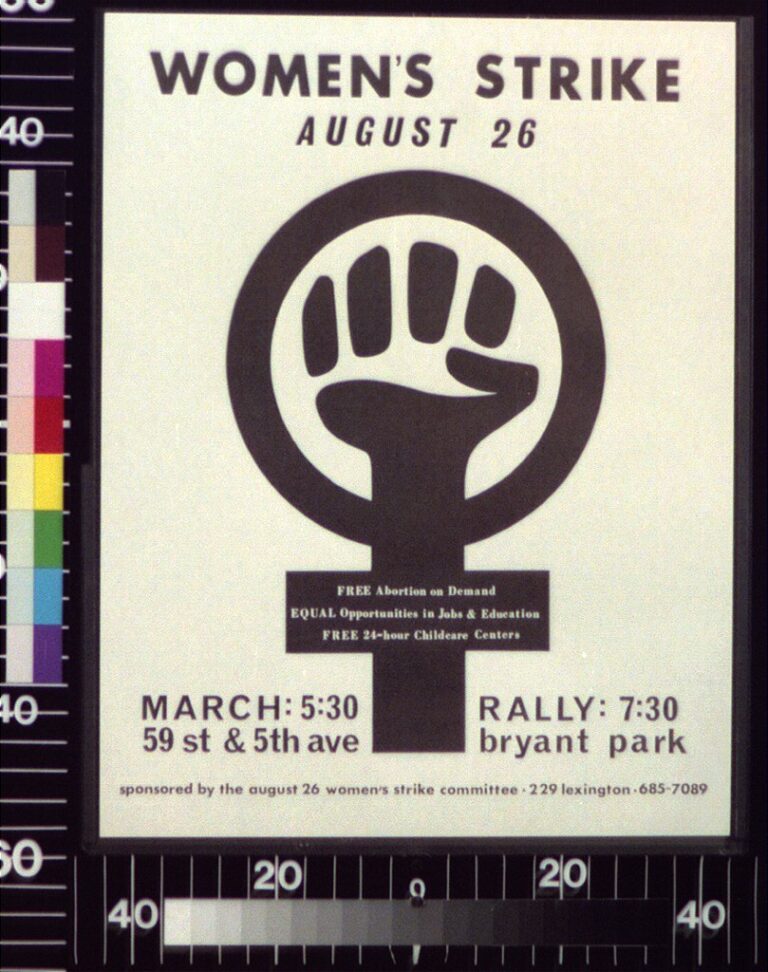
The rest of the pattern is still recognisable, and this is where it stops being history. Work that happens where nobody is counting still gets classified as not-work, which is exactly the mechanism behind the mental load. Arrangements that were somebody’s decision still get described afterwards as natural, which is the joke a woman put on one page in 1970. And the freed hours still go somewhere other than your evening, which is what three centuries of housework data show.
What is genuinely new is that all of it is written down. In 1946 the only version of the story on record was the newsreel.
The one move: name it back
Two minutes, and it is a sentence rather than a task.
Think of one thing in your week that you have described, out loud, as a choice. The role you did not put your name forward for. The trip you said you did not really want. The thing you handle because you are better at it.
Now say the true version to yourself once, in the flat voice you would use for someone else’s situation. Not I did not want it, but the actual sentence: I wanted it and the arrangement did not have room for it. Or I wanted it and I decided the cost was too high, and here is what the cost was.
Both of those may be true and neither is a failure. The point is only that you are the one holding the pen this time. In 1946 the women in that survey did not get to write the caption on their own photograph. You do, and that is the entire distance between her century and yours.
Common questions
Did women want to keep working after World War II?
Most of those surveyed did. The Women’s Bureau of the US Department of Labor asked women war workers in 1944 and found 75 per cent intended to go on working, with 86 per cent wanting to stay in the same industrial group.¹ The popular version of the story, in which women were relieved to go home, is not what the contemporaneous survey recorded.
How many women lost their factory jobs after the war?
The clearest way to see it is the female share of an industry. Women were 22.3 per cent of iron and steel in 1944 and 9.4 per cent in 1946; in automobiles the fall was 24.4 per cent to 8.9 per cent.¹ Roughly two thirds of the female share of those industries disappeared within two years.
Was Rosie the Riveter a real person?
Rosie was a campaign, not a person. Britannica describes her as a symbol used to recruit women into factory work from 1942, carried by a 1943 song, J. Howard Miller’s “We Can Do It” poster for Westinghouse, and Norman Rockwell’s Saturday Evening Post cover of 29 May 1943.² Several real women have been identified as models or inspirations over the years, which is a separate and much-disputed question.
So did the war change women’s employment or not?
Both, and the distinction matters. Claudia Goldin found the war’s direct effect considerably more modest than the legend: over half of married women working in 1950 had already been working in 1940, and almost half of those who joined during the war had left again by 1950.4 What the war did change was harder to measure and probably larger, which is what a great many people had privately seen with their own eyes.
When is being this tired worth a doctor’s appointment?
Rough markers: exhaustion most days for more than a fortnight, or spreading to things you used to look forward to, or arriving alongside a shift in sleep, appetite or mood. Being able to keep everything running in public says nothing about whether you should have to, and a history article is not a substitute for somebody who knows your history.
The one move
Take one thing you have called a choice out loud this year, and say the accurate version to yourself once, flatly. Two minutes. Nothing to decide afterwards.
If more of your week turns out to be arrangement rather than preference, that is worth seeing on one page. The Quiet Audit is a private ten-minute pass through it. Start here.
The survey is eighty-two years old and it is still sitting there, saying the same thing it said in 1944. Somebody asked, and three quarters of them said they wanted to stay.
Related reading: the same machinery runs through the four phases of housework, why handing one job over rarely lightens anything, and the full-time job nobody called a job.
On the sources. Ruth Milkman is a sociologist of labour and work, not a clinician or an economist; her archival work explains how jobs were classified by sex in two American industries and says nothing about any individual woman’s circumstances. The Women’s Bureau figures record stated intentions in 1944 and industry shares in 1944 and 1946, not individual outcomes. Britannica is a reference work, cited here for definitions, dates and framing rather than for original research.
Sourcing, disclosure and disclaimers
This is not medical advice. Blue Leaf Journal publishes general information for a general readership. Nothing here is a diagnosis, a treatment recommendation, or a substitute for care from a clinician who knows your history.
We are not historians or economists. Blue Leaf Journal is an independent publication. We read published research and reference scholarship and translate it. The findings belong to the researchers and institutions named and linked above; the plain-English rendering is ours, and so is any error in it.
No affiliation and no endorsement. Blue Leaf Journal is not affiliated with Ruth Milkman, Claudia Goldin, Maureen Honey, Evan K. Rose, the CUNY Graduate Center, Harvard University, the University of Nebraska–Lincoln, the University of Chicago, the United States Department of Labor, the Women’s Bureau or Encyclopaedia Britannica. None of them has reviewed, approved or endorsed this article, and none of them is responsible for it. They are cited because their published work is the evidence for what it says.
No commercial relationship. Nobody named above paid for or was paid for this coverage. There are no affiliate links, no sponsored placements and no gifted products in this article.
How this was checked. Every quotation and figure above was checked against the cited source on 10 September 2026, and each source is linked in the references. If you find something we have got wrong, write to norawhitfield@blueleafjournal.com and we will correct it and say that we did.
References
1. United States Department of Labor, Women’s Bureau, 1944 survey of women war workers, and industry-share figures for 1944 and 1946, compiled in “Statistics on Women in the World War II Era Workforce”, Social History for Every Classroom, American Social History Project, CUNY. The Bureau itself: dol.gov/agencies/wb.
2. Encyclopaedia Britannica, “Rosie the Riveter”. The 1942 recruitment campaign, the Miller poster for Westinghouse, the 1943 Evans and Loeb song, and the Rockwell cover of 29 May 1943.
3. Milkman, R. Gender at Work: The Dynamics of Job Segregation by Sex during World War II. University of Illinois Press, 1987. press.uillinois.edu
4. Goldin, C. “The Role of World War II in the Rise of Women’s Employment.” American Economic Review, September 1991, 741–756. Harvard Scholars · NBER working paper
5. Encyclopaedia Britannica, “History of the organization of work: organization of work in the industrial age”. Pre-industrial domestic labour and the move of work from home to factory.
6. Honey, M. Creating Rosie the Riveter: Class, Gender, and Propaganda during World War II. University of Massachusetts Press, 1984. umasspress.com · Internet Archive
7. Rose, E. K. “The Rise and Fall of Female Labor Force Participation During World War II in the United States.” Journal of Economic History, 2018, 78(3):673–711. Cambridge Core · free PDF
Keep reading
Written by Nora Whitfield for Blue Leaf Journal. Updated: 10 September 2026.