The Cursor Blinking on a Half-Written Email
Mind · The Reading Room, Vol. 57 · 8 min read · why the cursor won’t move, and the two-minute start that gets past it
Can’t focus at work · Vol. 1 of 4
Vol. 1 — You know exactly what to do and cannot start it you are here
Vol. 2 — You start, and part of you is still on the last thing
Vol. 3 — Nothing slipped and you are wrecked anyway
Vol. 4 — Nobody interrupted you and it still did not work
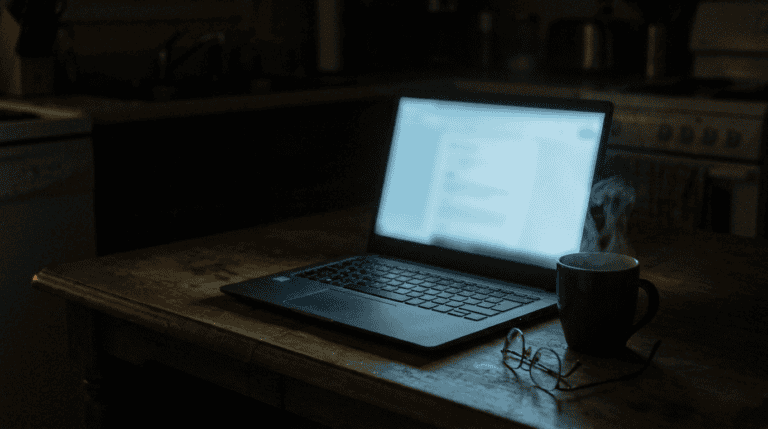
The subject line is done. The greeting is done. Then the cursor just sits there, blinking, at the start of a sentence you’ve started and deleted four times. You know what the email needs to say. You could probably say it out loud in ten seconds if someone asked. Somehow it will not come out onto the screen, and forty minutes later the tab is still open, the coffee’s gone cold, and three other things you were supposed to answer today haven’t been touched either.
If you’re here because you typed something close to can’t focus at work into a search bar, that gap, between knowing exactly what to do and actually being able to start doing it, is the real subject of this article, not the email itself.
The short answer: not being able to focus at work is usually a starting problem, not a laziness problem or an intelligence problem. Stress makes starting specifically harder, and there’s a concrete, two-minute way around it.¹
Key takeaways
- Research on procrastination consistently points to starting, not the task itself, as the actual barrier.²
- Stress makes you more likely to act on how you feel right now instead of what the moment actually calls for, which is why focus tends to disappear exactly when you need it most.¹
- Procrastination is increasingly understood as a problem of managing difficult feelings, not managing time.³
- Ordinary work-avoidance is different from the flat, joyless kind of avoidance that can signal something more, and it’s worth knowing which one you’re looking at.¹
- A task broken down to under two minutes of actual starting effort reliably gets further than a vague intention to “just focus.”
In this article: Why starting is the hard part · What stress does to focus · Is it really about time management · The two-minute start · FAQ
Why is starting the task so much harder than actually doing it?
Because your brain isn’t resisting the email. It’s resisting the size of “write the email” as a single, undivided block, and blocks that large trigger avoidance before you’ve even opened the document. Clinical psychologist Dr. Julie Smith addresses this directly in her work on procrastination: the fix isn’t willing yourself to feel more motivated, it’s shrinking the task down to something small enough that starting no longer feels like a decision that requires energy you don’t currently have.¹
This matters because “I just need to focus” is advice aimed at the wrong step. Focus is what happens after you’ve started. The actual barrier, the one that leaves you staring at a blinking cursor for forty minutes, sits earlier than that, at the moment of beginning, and no amount of wanting to focus harder addresses a problem that’s really about activation, not attention.
This shows up especially hard for women managing a long list of competing demands, where every open task feels like it’s silently ranked against every other open task. The email doesn’t just need writing. It needs writing correctly, quickly, and without taking attention away from the four other things also waiting, which turns a two-minute task into something that feels like it deserves far more deliberation than it does.
There’s an added layer for anyone whose reputation has been built on being reliably competent. A half-written email doesn’t just sit there as an unfinished task. It sits there as a small, private piece of evidence against a standard you’ve held yourself to for years, which raises the emotional stakes of a task that, looked at plainly, should take under five minutes. The cursor isn’t blinking on an email. It’s blinking on a decision about how carefully this particular thing needs to be done to still count as good enough.
What does stress specifically do to your ability to focus?
It shifts you toward whatever feels manageable right now instead of whatever actually matters, which is precisely backward from what focus requires. Dr. Smith has been direct about this mechanism: stress increases the likelihood that you’ll act on how you feel in the moment rather than on your actual goals, which is why a stressful morning so often produces an afternoon of small, low-value tasks instead of the one thing that genuinely needed doing.¹
There’s a documented tug-of-war behind this. Procrastination researcher Dr. Tim Pychyl describes it as a contest between the brain’s limbic system, built for immediate relief, and the prefrontal cortex, responsible for planning and follow-through, with the limbic system reliably winning when stress is high enough.² That’s not a character flaw showing up. It’s a fairly predictable outcome of a stressed nervous system doing exactly what stressed nervous systems do, prioritize immediate relief over long-term payoff.
Definition: difficulty focusing at work under stress is a starting problem driven by the brain’s short-term relief-seeking system overriding its planning system, distinct from a general lack of discipline or ability.²
| What it looks like | What actually helps | |
|---|---|---|
| The old explanation | “I just need to concentrate harder” | Willpower alone, which rarely holds under stress |
| The real mechanism | Starting is the barrier, not attention itself | Shrinking the task below the activation threshold |
| What stress does | Pulls you toward whatever feels easiest right now | A task small enough to feel easiest anyway |
| Result | Small, low-value tasks instead of the real one | The real task, started in under two minutes |
If the focus goes because something else is running underneath it, the Quiet Audit is ten minutes on what is running. Start here.
Is this really about time management, or something else?
Something else, according to a growing body of research. Professor Fuschia Sirois, whose work has reshaped how procrastination is understood clinically, frames it as a problem of managing difficult feelings rather than managing time: people tend to avoid tasks that carry some uncomfortable emotional charge, boredom, anxiety about doing it wrong, dread of how tedious it’ll feel, and the avoidance is really an attempt to regulate that feeling in the short term.³
This reframing matters because it changes what actually helps. A better calendar system doesn’t touch an emotional-avoidance problem. What does help is lowering the emotional cost of starting, which is exactly what shrinking a task down to two minutes accomplishes. A two-minute version of the email doesn’t feel like much to be dreading.
It also explains why the same person can focus easily on some tasks and stall completely on others of similar size. Difficulty usually isn’t the deciding factor. A task tangled with the possibility of getting it wrong, disappointing someone, or opening a conversation you’d rather not have yet, resists starting far more than a task that’s simply tedious, even when the tedious one objectively takes longer to finish.
The two-minute start (before you try to “focus” on anything)
Open the document or the email and give yourself permission to do exactly one small thing: write a single sentence, or even just the greeting and one bullet point of what needs covering. Set an actual timer for two minutes if that helps make the smallness feel official rather than aspirational.
The two-minute version doesn’t need to be good. It needs to exist. Once there’s a sentence on the screen instead of a blinking cursor, the task has changed shape, from “write this email” to “finish this thing I’ve already started,” and the second version is measurably easier to return to and complete than the first.²
If two minutes produces nothing, that’s useful information too, not a failure. It usually means the task is bigger than it looks, tangled with a decision you haven’t made yet, or attached to more dread than the task itself warrants. Either way, the two-minute attempt tells you something a vague sense of “I can’t focus” never will.
Keep the bar genuinely low the first few times you try this. One sentence. One bullet point. The temptation is to use the two minutes to plan the whole email in your head instead of actually typing something, which quietly defeats the purpose. The goal is words on the screen, not a better mental outline of words you still haven’t written.
Common questions when you can’t focus at work
What if I try the two-minute start and still can’t get anywhere?
That’s a signal to look closer, not a sign the technique failed. A task that resists even two minutes of effort is often hiding an unmade decision, an unclear ask from someone else, or genuine dread worth naming rather than pushing through.
How is this different from ordinary procrastination everyone deals with?
It may not be different at all. Most days, this is exactly ordinary procrastination, stress making starting harder than it needs to be. The distinction worth watching for is whether tasks you used to find engaging now feel flat and pointless rather than just avoided, which is a different pattern worth naming to a doctor.
Why does this happen more on some days than others?
Because your stress load isn’t constant. A day that starts with a hard conversation, bad sleep, or a full inbox before 9 a.m. leaves less capacity for the prefrontal cortex to win its tug-of-war with the part of your brain chasing immediate relief.
Does caffeine or a to-do list app actually fix this?
They can help at the margins, but neither addresses the core mechanism. A longer to-do list doesn’t shrink the activation cost of the first item on it. The two-minute start does, because it changes what’s actually being asked of you in the moment.
What if the task genuinely is urgent and I don’t have time to “start small”?
Starting small takes less time than the forty minutes of staring it’s replacing. A two-minute entry point isn’t a delay tactic. It’s usually the fastest route through, especially on the days that feel too urgent to slow down for.
Is there a way to prevent this from happening in the first place?
Not entirely, since stress levels vary day to day, but noticing the pattern earlier helps. If you catch yourself opening five other tabs before you’ve written a word, that’s the moment to apply the two-minute start, rather than after forty minutes have already gone by. The earlier you catch it, the smaller the intervention needs to be.
What runs underneath the work is usually a sentence, and the blinking cursor is only what the shortfall looks like from outside. The same mechanism is at work in every thought you never think to question.
If not being able to focus is one thread in a bigger pattern, always behind, always pushing through, that’s worth a longer look than one two-minute trick. Start here. Ten quiet minutes of questions, not a program.
Starting is only the first of four reasons this happens, and it is the one most people stop at. The rest of the series takes the other three: what stays behind when you switch tasks, why a day where nothing slipped can still wreck you, and why a completely quiet afternoon produces nothing at all.
References
1. Smith, J., clinical psychologist, published commentary on procrastination, stress, and task avoidance. (Site · LinkedIn · Books · Linktree)
2. Pychyl, T., procrastination researcher, Carleton University, covered in the Association for Psychological Science’s “Why Wait? The Science Behind Procrastination.”
3. Sirois, F., research reframing procrastination as an emotion-regulation problem. (Faculty page · Scholar · ResearchGate)
Disclosure
This article is informational and is not medical or psychological advice.
We are not clinicians or psychologists. We read the published work and translate it into plain English.
Blue Leaf Journal has no affiliation with, and no endorsement from, any researcher or institution named above.
No commercial relationship exists with any person, institution, book or method mentioned here.
Every quotation and figure above was checked against the primary source on 6 September 2026. Corrections: the comment field below this article reaches the editor. We amend errors in place and note the change and its date here.
On the researcher: this draws on published commentary from clinical psychologist Dr. Julie Smith and peer-reviewed work by procrastination researchers Dr. Tim Pychyl (Carleton University) and Professor Fuschia Sirois; none of it is a diagnosis of your own pattern.
Written by Nora Whitfield for Blue Leaf Journal. Updated: July 18, 2026.