
Page 41. Again. I Bought This Book in March.
Mind · The Reading Room, Vol. 33 · 7 min read · What the eyes keep doing after the attention leaves, why hard pages are the worst place for it, and one change that costs nothing
Based on the published research of Sidney D’Mello, PhD — Professor, Institute of Cognitive Science, University of Colorado Boulder. Faculty profile
Why do I forget what I read has an answer that is oddly specific: the eyes keep going, the attention leaves, and you are the last person in the room to notice.
I read four pages of a novel on Sunday and could not have told you the name of a single character in it.
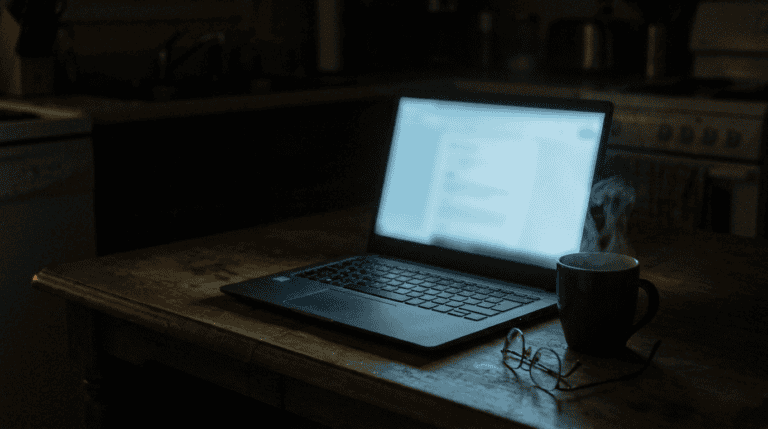
Not skimmed. Read. Sat in a chair with a cup of tea and no phone in the room, which I had made something of a production of, and went from page 37 to page 41 in the ordinary way, and arrived at the bottom with nothing.
The part I disliked was not the forgetting. It was that I had felt fine the entire time. There was no moment where I noticed myself drifting and pulled back. As far as I was aware, I had been reading.
So, why do I forget what I read when nothing was interrupting me. It turns out this has been measured, and the finding is more precise than I expected.
The short answer: reading and paying attention are two separate processes, and the first one carries on perfectly well without the second. In one study, undergraduates reading passages one sentence at a time were interrupted at random and asked whether their mind had been wandering. It had, on 42.3 per cent of the probes during difficult passages and 36.2 per cent during easy ones.¹ When they had been mind wandering, they were about 1.5 times less likely to answer the comprehension question correctly.¹ The eyes go on moving. Nothing tells you.
The skim version
- Eighty readers were stopped at random points and asked, in the moment, whether their mind had wandered.¹
- They said yes on more than a third of the probes, and on over four in ten during the harder passages.¹
- Readers were 1.24 times more likely to drift on difficult text than on easy text.¹
- Comprehension took the hit: 1.5 times less likely to get the question right after drifting.¹
- The damage was concentrated in the difficult passages. On easy text, drifting cost them almost nothing.¹
Why do I forget what I read when I was genuinely paying attention?
Because you were not, and there was no signal to tell you so.
This is the part of the finding that changed how I think about it. The researchers did not ask people afterwards whether they had concentrated, because afterwards everybody says yes. They interrupted them mid-passage and asked about the sentence they had just read.¹ That is a much harder test to pass, and a third to a half of the time, people failed it in real time.
Which means the experience of reading is not a reliable report on whether reading happened. You can feel attentive, look attentive, hold the book properly, and produce nothing on the other side. There is no jolt, no gap, no sense of having gone somewhere. That is why the discovery always arrives at the bottom of the page and always feels like evidence about your memory.
It is not really a memory problem. Nothing failed to be stored. It never went in.
Why the hard pages are the worst place for this
Because drifting is more likely exactly where it costs the most.
The study ran the same passages in an easy version and a difficult version, with denser sentences and less common words.¹ You would assume difficult text demands more attention and therefore holds it better. The opposite happened. Readers drifted more on the difficult passages, 1.24 times more often.¹
And here is the bit worth keeping. On the easy passages, drifting barely affected whether they got the question right. On the difficult ones it clearly did.¹ So the two effects stack in the wrong direction: you wander more on the material that punishes wandering, and less on the material that would have forgiven you.
Which explains the specific humiliation of the board papers. Nobody drifts off during a menu. They drift off during the paragraph that has three subordinate clauses and a number in it, arrive at the end having absorbed nothing, and read it again with a growing sense that something has gone wrong with them since about 2019.
Between us
One study is doing the heavy lifting here and you should see its shape. Eighty undergraduates, eight short passages from a standard reading test, presented one sentence at a time on a screen, with 2,080 thought probes between them.¹ It is a clean design and the result is specific, which is why I trust it.
Being fair about it: those were students, in a lab, reading test passages on a computer, for a short session, with no reason to care about the content. None of them was a fifty-four-year-old reading a hundred pages of committee papers at ten at night after a day that had already used everything up. What the study establishes is that attention leaves without announcing itself and that comprehension pays for it. What it cannot tell you is how much worse that gets when you are running on five and a half hours. I am not going to pretend it does.
If the only reading you get is at the end of a day that has already been spent, the reading is not really the problem worth solving. The Quiet Audit is a private ten-minute pass through where the day actually goes. Start here.
Two different things that both look like forgetting
| It never went in | It went in and will not come back | |
|---|---|---|
| What it feels like | Blank. No sense of ever having known it | On the tip of your tongue, circling |
| When you notice | At the bottom of the page | In the meeting, mid-sentence |
| What helps | Catching the drift earlier | A cue, or leaving it and coming back |
| What you conclude | My memory is going | My memory is going |
Same conclusion from two entirely different mechanisms, which is how one worry ends up standing in for everything. The word-finding version has its own explanation, and if the drifting is happening in meetings as well as in books, the switching cost is worth understanding separately.
What to change, and it is smaller than a reading habit
Stop re-reading from the top.
The reflex when you arrive at the bottom with nothing is to go back to the start of the page and do it properly this time, with more effort. That is the worst available move. You are re-running the identical conditions with the added weight of feeling stupid, and effort is not the missing ingredient. Attention is, and you cannot get more of it by squeezing.
What works better is to interrupt yourself before the drift has cost you a page. At the end of each section or each page, look up and say what it was about, in one short sentence, out loud or in your head. Not a summary. Six words. She has decided not to tell him. The savings come from headcount.
Two things happen. If you can produce the sentence, you read it. If you cannot, you have caught it one page in rather than eleven, and you go back one page, not to the beginning of the chapter.
The cost of the habit is about four seconds a page. Which is a good deal less than the twenty minutes I spent on Sunday going back to page 37 and getting the same result, twice, before deciding the book was badly written. The tiredness underneath it is a real thing with its own shape, and it does not respond to trying harder either.
The source for this piece
Sidney D’Mello, PhD
Professor at the Institute of Cognitive Science, University of Colorado Boulder, and co-author of the mind-wandering-while-reading research this piece is built on.
What we read: Feng, S., D’Mello, S., & Graesser, A. C., Psychonomic Bulletin & Review (2013).¹
Where to follow his work: Faculty profile
Who else has measured this
This study did not stand alone even at the time. Its senior co-author has spent a career on the same question from a different angle.
Arthur C. Graesser, PhD (Wikipedia · ResearchGate), Distinguished University Professor at the University of Memphis and a co-author of the 2013 study, is one of the field’s most cited researchers on text comprehension and has since led further work on detecting mind-wandering from reading behaviour itself.¹
Two co-authors, one original study, and a continuing programme of research confirming the same shape: attention leaves reading without announcing itself, and comprehension pays for it.
The eyes go on moving. Nothing tells you.
Questions worth having an answer to
Is this a menopause thing?
Some of it can be. Broken sleep and a changing hormonal picture both make attention harder to hold. What is worth resisting is filing the whole thing under hormones, because the drifting mechanism described here operates in twenty-year-olds in a quiet lab and responds to different things.
Should I be worried about my memory?
Losing the thread of a page you were reading is not the pattern that concerns clinicians. What is worth raising is forgetting recent conversations entirely, getting lost somewhere familiar, or family noticing a change before you do. If any of that is happening, book the appointment rather than reading another article.
Does reading on paper help?
Possibly, mostly by removing the things a screen keeps offering you. But the study found substantial drifting on a plain computer screen with nothing on it but one sentence at a time, so paper is not a cure. The drift comes from inside.
Why is it worse at night?
Because the resource being spent is the same one the day has been spending since seven in the morning. Nothing about the book changed between two in the afternoon and ten at night. What you had left to bring to it did.
The one move
Tonight, at the bottom of each page, say what it was about in six words before you turn it. If nothing comes, go back one page. Never back to the start.
If the reading only ever gets what is left at the end of the day, the reading was never the thing to fix. The Quiet Audit is a private pass through what your week is actually spending. Start here.
On the researcher. Sidney D’Mello is a cognitive scientist studying attention and learning, not a physician: the 2013 study reviewed here was run on undergraduates reading test passages, and nothing in it addresses memory disorders.
Sourcing, disclosure and disclaimers
This is not medical advice. Blue Leaf Journal publishes general information for a general readership. Nothing here is a diagnosis, a treatment recommendation, or a substitute for care from a clinician who knows your history.
We are not clinicians. Blue Leaf Journal is an independent publication. We read published research and translate it. The findings belong to the researchers and institutions named and linked above; the plain-English rendering is ours, and so is any error in it.
No affiliation and no endorsement. Blue Leaf Journal is not affiliated with Sidney D’Mello, Arthur C. Graesser, the University of Colorado Boulder or the University of Memphis. None of them has reviewed, approved or endorsed this article, and none of them is responsible for it. They are cited because their published work is the evidence for what it says.
No commercial relationship. Nobody named above paid for or was paid for this coverage. There are no affiliate links, no sponsored placements and no gifted products in this article.
How this was checked. Every figure above is drawn from the primary papers, each linked in the references, and can be verified there. Sources were checked on 6 September 2026. If you find something we have got wrong, write to jobrennan@blueleafjournal.com and we will correct it and say that we did.
References
1. Feng, S., D’Mello, S., & Graesser, A. C. (2013). Mind wandering while reading easy and difficult texts. Psychonomic Bulletin & Review, 20(3), 586-592. Read the study
Jo Brennan writes the Mind and Load desks at Blue Leaf Journal: the overthinking, the noticing, and the jobs that are technically nobody’s and therefore hers. She finished the novel in the end. She has told two people it was excellent and could not, under questioning, name the ending.
Written by Jo Brennan for Blue Leaf Journal. Updated: 31 August 2026.